
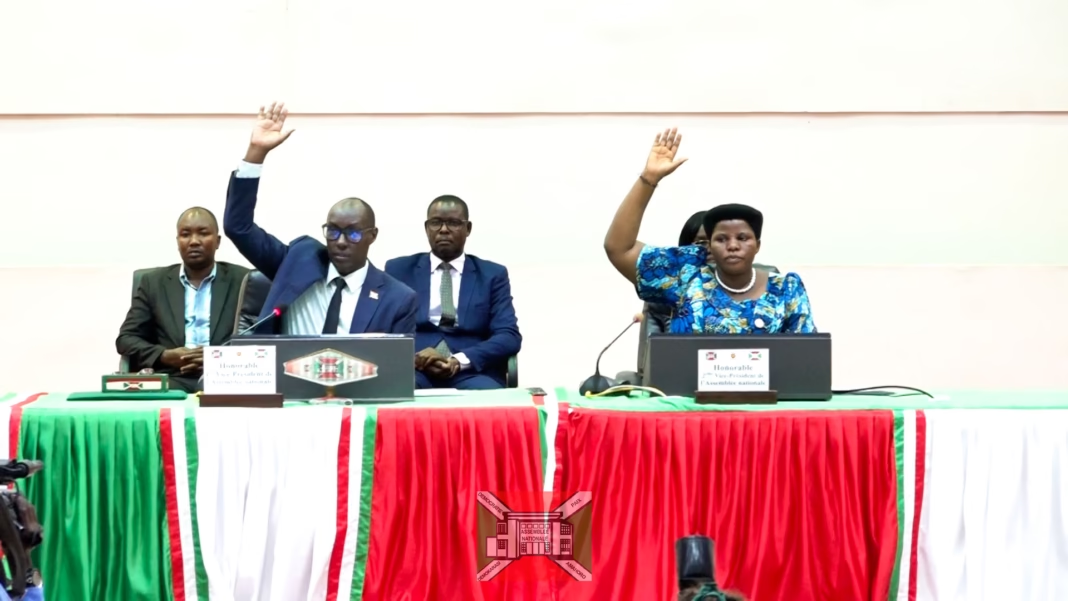

Burundi’s Parliament has passed legislation expanding criminal penalties for sexual abuse and harassment in schools, closing a legal loophole that previously left adult students without specific protections against school-related offenses.
The National Assembly unanimously approved the bill on Oct. 1 after Education and Scientific Research Minister François Havyarimana informed lawmakers that current laws fail to cover multiple offenses committed within the educational system.
Under Burundi’s existing Penal Code, students aged 18 and older who are victims of sexual acts are classified as consenting adults, a designation Havyarimana said has driven many victims to drop out.
“It has been found that, at the level of fundamental and post-fundamental schools, the Penal Code considers students aged 18 or older who are victims of sexual acts as adults,” Havyarimana told lawmakers.
The measure aims to impose harsher penalties on perpetrators, particularly teachers and school administrators. It updates a 1993 decree-law that largely focused on academic fraud rather than personal misconduct.
“Faults committed in the education system have multiplied, but the Penal Code does not qualify them as offenses,” Havyarimana said.
In addition to curbing sexual abuse, the bill regulates private educational institutions and establishes procedures for peer-on-peer sexual misconduct. Addressing lawmaker concerns regarding pregnancies resulting from sexual acts between students, Havyarimana said authorities would rely on school disciplinary regulations, such as Article 14, rather than criminal prosecution.
“The objective is to sanction the acts, while taking into account the age and situation of the student concerned, so as not to permanently compromise their schooling,” Havyarimana told law makers.
While peer misconduct will be handled through administrative channels, sexual abuse perpetrated by adults will carry direct criminal consequences under the updated framework.
The debate also touched on broader systemic challenges in Burundian education, including severe shortages of qualified teachers and desks, as well as multi-year administrative backlogs in issuing secondary school certificates. Havyarimana noted that some certificates dating back to 2018 remain unsigned, warning that school officials who fail to submit lists of affected students face immediate suspension.
Lawmakers adopted the measure following several substantive amendments, including renaming the bill to reflect its broader mandate.