
Burundi’s parliament on Friday said state revenue collection exceeded projections during the first half of the 2025-26 fiscal year, while lawmakers expressed concern over rising tax exemptions and called for an investigation into the production and sale of beverages deemed harmful to public health.
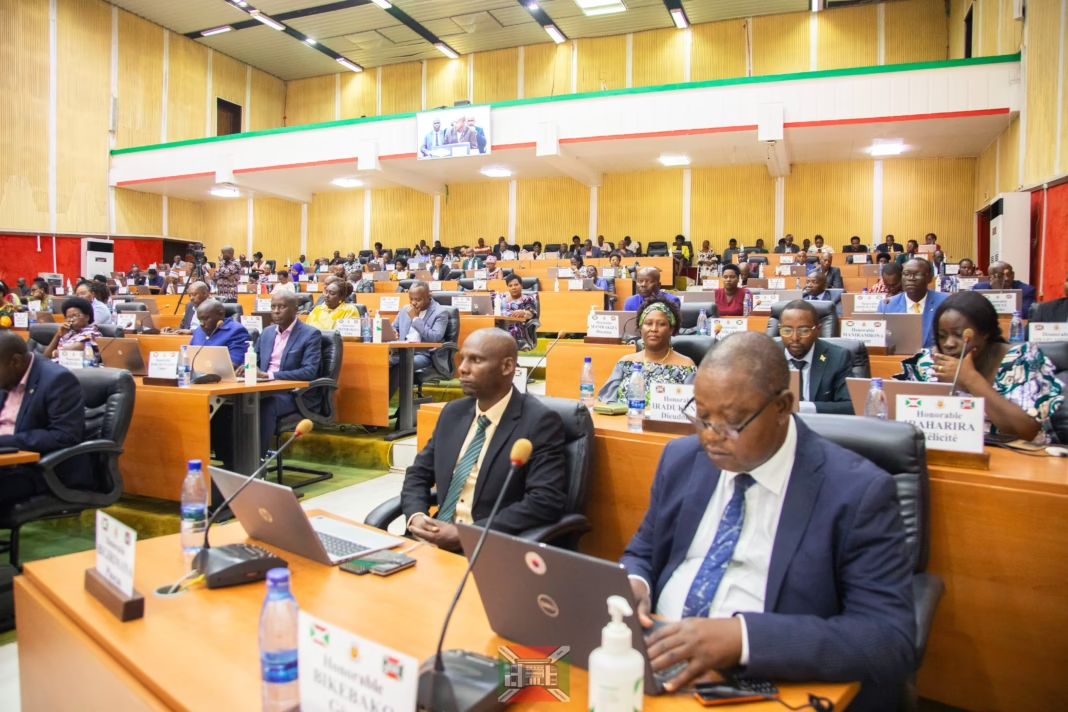
The findings were presented during a plenary session reviewing government budget execution and performance reports for the first and second quarters of the fiscal year.
Finance Minister Alain Ndikumana, responding to lawmakers’ questions, said budget implementation took place during a period of government restructuring that reduced the number of ministries from 15 to 13 and coincided with the implementation of administrative redistricting reforms.
“The execution of this budget took place in a context of reorganisation of government institutions and the implementation of administrative redistricting, which required transitional measures in certain sectors,” Ndikumana told lawmakers.
According to figures presented to parliament, the government collected 590 billion Burundi francs ($201 million) in revenue during the first quarter, surpassing the projected 488 billion francs. Authorities attributed the increase to tax administration reforms, including the use of electronic invoicing systems and the recovery of outstanding tax obligations.
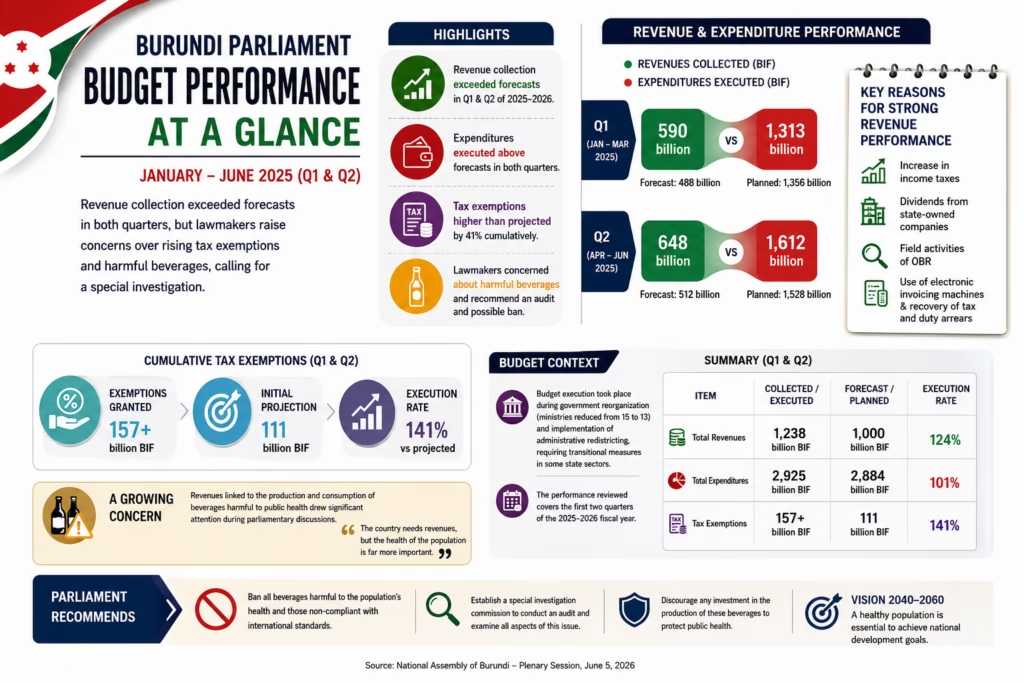
Government expenditures for the quarter reached 1.313 trillion francs, compared with planned spending of 1.356 trillion francs.
In the second quarter, revenues reached 648 billion francs against a forecast of 512 billion francs. The government said higher income tax receipts, dividend payments from state-owned enterprises and increased field operations by the Burundi Revenue Authority contributed to the improved performance.
Expenditures during the second quarter totaled 1.612 trillion francs, exceeding the projected 1.528 trillion francs.
Lawmakers also examined tax exemptions granted during the two quarters. The cumulative value of exemptions exceeded 157 billion francs, compared with an initial projection of 111 billion francs, representing an execution rate of 141%.
The issue of revenues generated from the production and consumption of certain beverages drew significant attention during the debate, with lawmakers weighing the fiscal benefits against public health concerns.
“The country needs revenues, but the health of the population is far more important,” lawmakers said during deliberations, according to the parliamentary report.
The National Assembly recommended that the government prohibit beverages considered harmful to public health and those that do not comply with international standards. Lawmakers argued that public health concerns should take precedence over revenue considerations.
Parliament also called for the establishment of a special commission of inquiry to conduct an audit and examine the production, regulation and distribution of such beverages.
The recommendations come as Burundi pursues its long-term Vision 2040-2060 development agenda, which lawmakers said requires a healthy population to achieve its objectives.
The government has not yet publicly responded to parliament’s recommendations.