
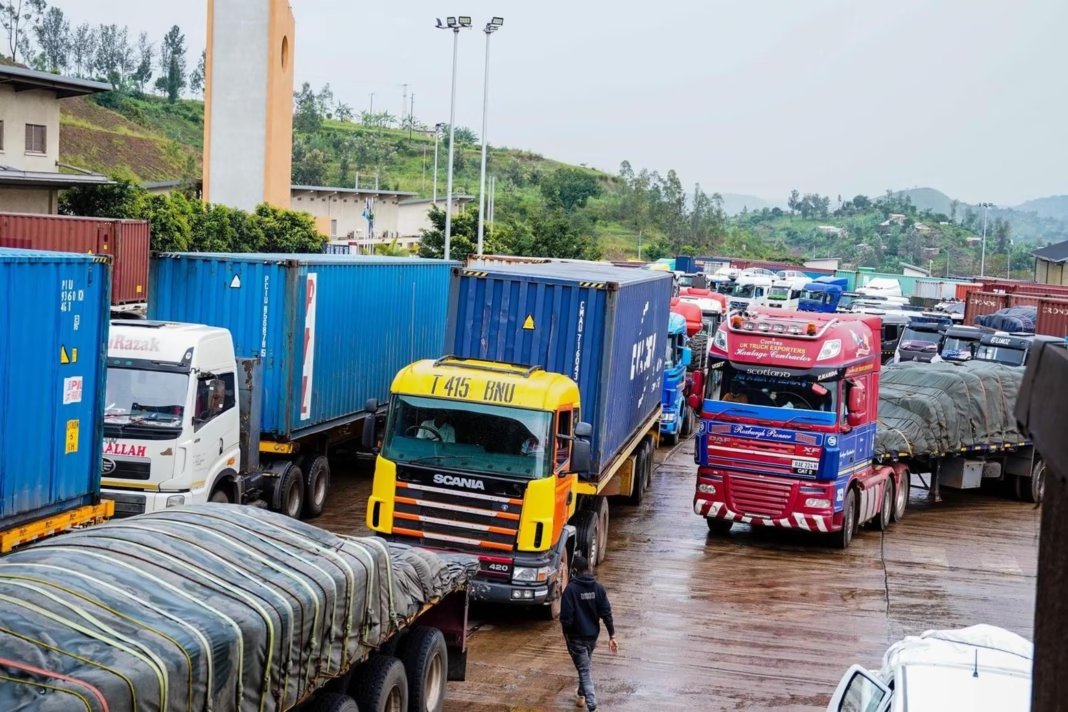

The East African Community (EAC) is preparing to review operations at the Kobero/Kabanga One Stop Border Post on the Burundi-Tanzania frontier as part of a broader push to overhaul regional border management, arguing that existing systems are struggling to keep pace with growing trade volumes.
The regional bloc said Monday that while One Stop Border Posts (OSBPs) have significantly reduced border crossing times since their introduction, a new phase of reforms is needed to address persistent bottlenecks that continue to slow the movement of goods and people across East Africa.
The review comes as the EAC expands a monitoring mission that has already assessed the Horohoro/Lungalunga and Namanga/Namanga border posts between Kenya and Tanzania. The delegation is expected to continue to Kobero/Kabanga, one of Burundi’s busiest international trade gateways, before visiting border posts in Rwanda and Uganda.
For Burundi, the assessment could have significant implications. Kobero serves as a critical corridor for imports and exports moving between Burundi and the Port of Dar es Salaam, making its efficiency central to the country’s regional trade and supply chains.
“We must remove the remaining bottlenecks that increase the cost of doing business and undermine the competitiveness of our region,” EAC Deputy Secretary General for Customs, Trade and Monetary Affairs Annette Ssemuwemba said during the mission.
Rather than simply expanding existing facilities, the EAC is calling for what it describes as a “new generation” of border reforms centered on digitalisation, coordinated border management, business process re-engineering and greater use of risk-based inspections.
The shift reflects growing pressure on border infrastructure as trade within the bloc continues to increase.
Delays Persist Despite Customs Reforms
Although the EAC credits the One Stop Border Post model with cutting clearance times by allowing officials from neighbouring countries to operate under one roof, the mission found that significant delays remain.
According to the assessment, many hold-ups now occur outside customs itself.
Cargo often waits for approvals from multiple government agencies responsible for standards, health, agriculture and other regulatory checks, creating lengthy processing times that increase transport costs, storage charges and delivery delays—particularly for perishable goods.
The mission also identified shortages of customs and border personnel, limited truck parking, ageing infrastructure, inadequate passenger facilities and the absence of key equipment such as cargo scanners and weighbridges.
Officials warned that these shortcomings are becoming more pronounced as traffic volumes continue to grow.
Despite the operational challenges, the EAC said border traffic across the region continues to increase.
At the Namanga One Stop Border Post, connecting Kenya and Tanzania, authorities reported handling about 66,500 cargo trucks, 23,000 private vehicles and 48,400 export consignments over the past year.
Passenger clearance at the crossing now averages around three minutes, while private vehicle processing takes about 15 minutes, illustrating the gains achieved through coordinated border management.
At the Horohoro/Lungalunga border, officials similarly reported rising cargo and passenger numbers, attributing the growth to closer cooperation between Kenyan and Tanzanian agencies and improved implementation of the EAC’s Simplified Trade Regime, which eases customs procedures for small-scale cross-border traders.
The inclusion of Kobero/Kabanga in the regional review signals that Burundi’s main trade corridor will also come under scrutiny as the EAC seeks to identify obstacles affecting cross-border commerce.
The findings could shape future investments in staffing, digital systems and border infrastructure, while informing reforms to strengthen implementation of the EAC Customs Union.
The review also comes as Burundi seeks to deepen regional integration and expand trade with neighbouring countries through the East African Community.
Whether Kobero faces the same operational constraints identified elsewhere—including staffing shortages, infrastructure gaps and delays caused by multiple regulatory agencies—will become clearer once the assessment is completed.
For transporters, importers and exporters, improvements at Kobero could help lower logistics costs and reduce transit times, while delays left unresolved risk increasing the price of goods moving through one of Burundi’s most important commercial gateways.
The EAC said the findings from the multi-country mission will inform regional policy reforms aimed at improving border performance, facilitating trade and supporting further growth in intra-EAC commerce.