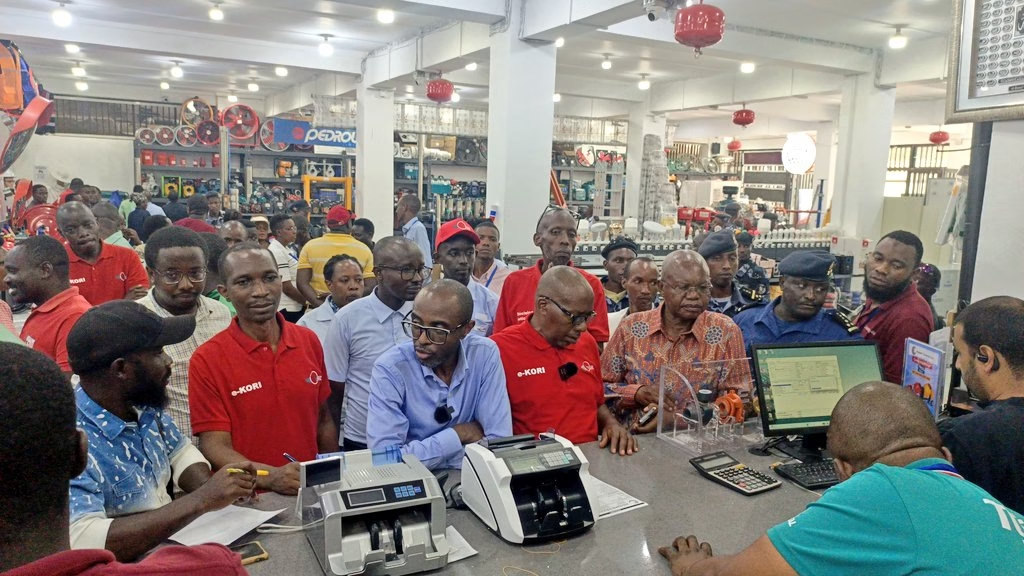

Burundian authorities have stepped up efforts to combat tax fraud, launching a series of inspections targeting businesses suspected of failing to comply with invoicing regulations, officials said Wednesday.
Finance Minister Dr. Alain Ndikumana, accompanied by the commissioner general of the Burundi Revenue Authority (OBR), led an enforcement operation in several commercial districts of the economic capital, including areas commonly known as Industrial and Asian neighborhoods. The inspections focused on verifying whether merchants are properly using government-issued electronic billing machines (EBMs).
The initiative comes amid concerns over declining public revenues, which officials say remain below projections despite existing tax measures.
During the operation, authorities identified widespread irregularities and a low rate of use of the electronic billing machines. Despite the distribution of more than 13,000 devices nationwide, many merchants were found not using them. Others issued non-compliant receipts, failed to systematically provide invoices, or deliberately underreported quantities sold or unit prices on receipts.
According to Ndikumana, such practices significantly reduce tax revenues and undermine the state’s ability to finance essential public spending and development projects.
In response, the minister called for strict enforcement of existing laws and demanded exemplary sanctions against offenders.
“Sanctions of up to 100% of the value of goods sold without an invoice or with a price reduction must be strictly applied,” he said.
Under Burundian law, both merchants and customers face penalties for non-compliance. Consumers found in possession of goods without a proper invoice risk fines equivalent to 20% of the value of the goods, in addition to possible seizure. Authorities confirmed that some equipment was confiscated during the inspections for further examination.
Officials emphasized that the crackdown is not solely punitive but also aims to promote civic responsibility and improve compliance. Ndikumana underscored the role of taxes in funding national development, noting that tax discipline is essential as Burundi increasingly relies on domestic resources.
“Taxes are not paid by merchants, but by citizens,” he said, calling on all economic actors to ensure transparency in transactions and adherence to tax obligations.
The operation, carried out simultaneously across the country, marks the beginning of a sustained campaign to strengthen the use and generalization of electronic billing machines, enhance commercial transparency, combat invoice fraud and boost public revenue.
As Burundi looks to mobilize internal resources to support its development goals, authorities say proper invoicing is becoming a cornerstone of accountability and the broader social contract.