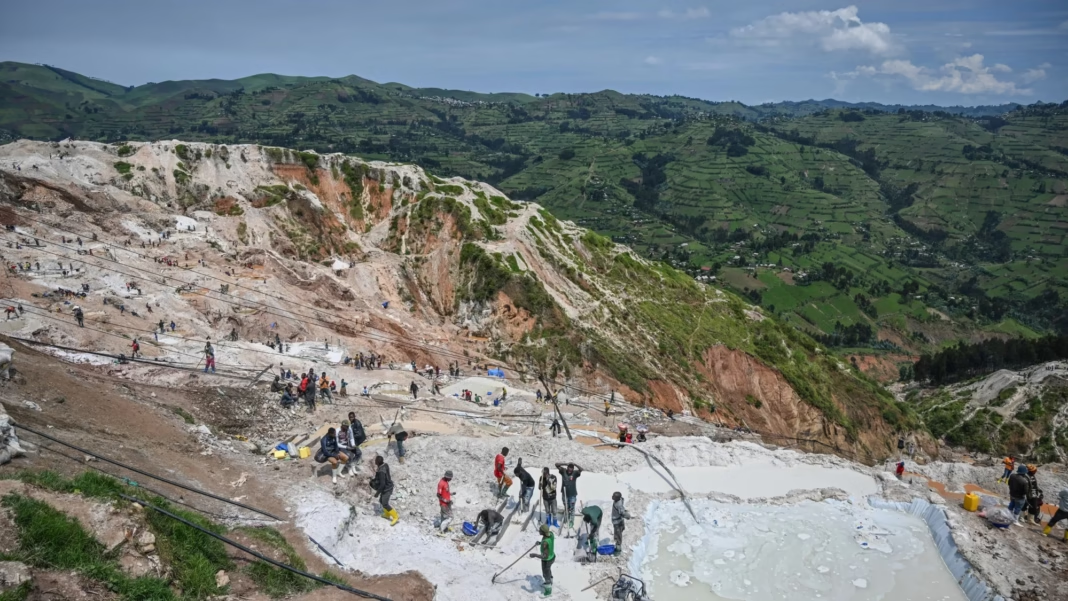

Burundi’s 2023 Mining Code introduced sweeping reforms to attract investment, improve transparency, and ensure communities benefit from mineral wealth — but gender disparities and weak enforcement continue to shadow the sector, according to a new regional report.
The East African Legislative Assembly (EALA), through its Committee on Agriculture, Tourism and Natural Resources (ATNR), noted that Burundi’s updated mining framework — Law No. 1/19 of August 4, 2023 — limits permit ownership, mandates companies to pay 0.5% of turnover to municipalities, and requires community development committees in mining zones.
The report, presented in Arusha on Tuesday, credited Burundi for modernising its legal environment but warned that challenges persist, including “limited transparency and traceability of minerals, weak environmental monitoring capacity, and lack of an independent regulator.”
Across the region, the committee found women remain underrepresented in mining, despite new gender policies. In Rwanda, women make up 13.8% of miners at the Bashyamba Tin Mine, with a national goal to reach 30% by 2027.
The report called for gender mainstreaming across EAC mining policies, stating that “low participation of women, youth, and people with special needs” remains a regional challenge. EALA recommended partner states strengthen training, enforce labor laws, and ensure communities — especially women — share in royalties and development projects funded by the mining industry.
Burundi’s 2023 Gender Equality Profile identifies extractive industries (i.e. mining) as one of several “priority areas” for gender analysis, alongside agriculture, financial inclusion, formal employment, and regional economies.
It reports that a very small proportion of mining titles are held by women in Burundi: in decision-making bodies related to mining, women held 2 out of 16 leadership or managerial positions in surveyed companies.
Additionally, the report finds that the financial resources allocated to gender equality in Burundi are severely limited: only 0.9% of the national budget is dedicated to the Gender Equality mission, with 42% coming from international partners.