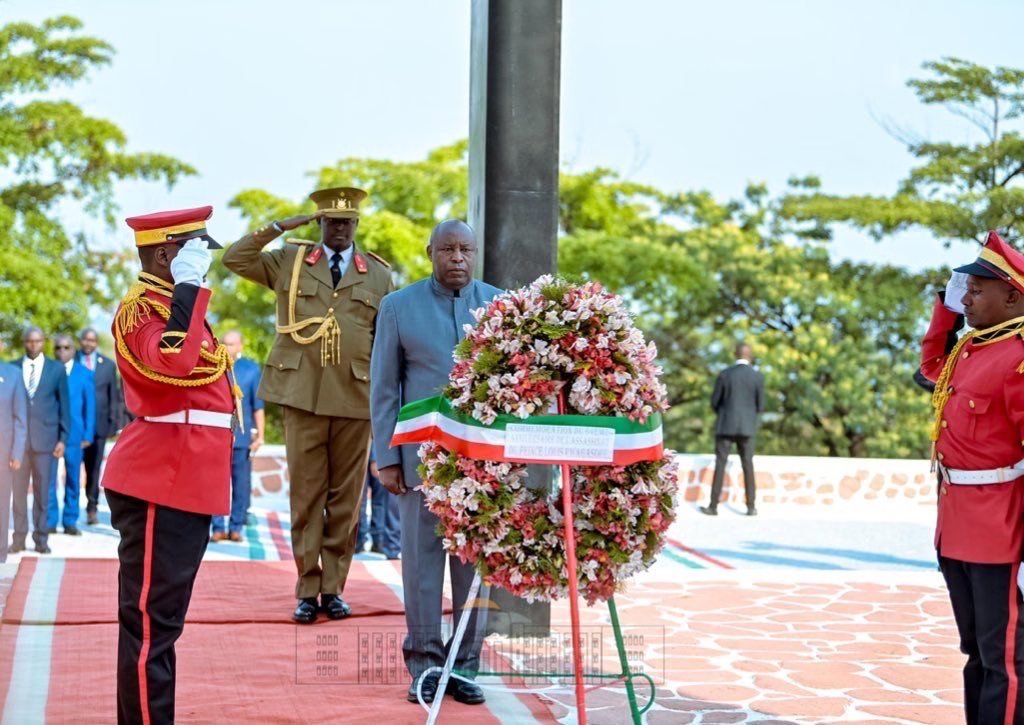

BUJUMBURA, Burundi — Burundi on Monday marked 64 years since the assassination of Prince Louis Rwagasore, a national hero who played a pivotal role in the country’s independence from Belgian colonial rule.
Rwagasore, founder of the Union for National Progress (UPRONA), was a key figure in Burundi’s political landscape and is celebrated for promoting nationalism, patriotism, and decolonization. He was assassinated on Oct. 13, 1961, in Bujumbura, months before Burundi officially gained independence in 1962.
At the Mausoleum, President Évariste Ndayishimiye was joined by high-ranking officials, including Parliament President Gélase Daniel Ndabirabe, Senate President Gervais Ndirakobuca, Vice President Prosper Bazombanza, Prime Minister Nestor Ntahontuye, members of the executive and legislature, as well as the presidents of the Supreme Court and the Constitutional Court. Former President Sylvestre Ntibantunganya and his wife, along with former First Ladies Laurence Ndadaye and Denise Nkurunziza, were also in attendance.
As tradition dictates, dignitaries laid wreaths at the Mausoleum to honor Rwagasore’s legacy. Ceremonies continued at Regina Mundi Cathedral in Bujumbura with a mass commemorating the independence hero.
Rwagasore, a member of the Tutsi ethnic group, worked to bridge ethnic divides and married a Hutu woman. His political leadership and UPRONA’s overwhelming victory in the 1961 pre-independence elections—winning nearly 80% of the vote—positioned him to become Burundi’s first elected prime minister. His assassination, during a dinner at a Bujumbura hotel, fueled internal party rivalries and set the stage for future ethnic tensions.
Burundi endured a long civil war that erupted in 1993 following the assassination of the country’s first democratically elected Hutu president, Melchior Ndadaye, just three months into his term. Ndadaye was killed in a failed coup on Oct. 21, 1993. The country will commemorate the 27th anniversary of his death next week.
Unlike neighboring Rwanda, where Hutus assumed political leadership after independence, Burundi was largely ruled by a Tutsi minority until a transitional government was formed in 2000, bringing an end to the long civil conflict.