
By Burundi Times Data Desk
For years, flooding in Gatumba and along the shores of Lake Tanganyika has been treated as a seasonal disaster. At the same time, deforestation has often been discussed as a separate environmental challenge.
But data suggest the two issues may be more closely linked than they appear.
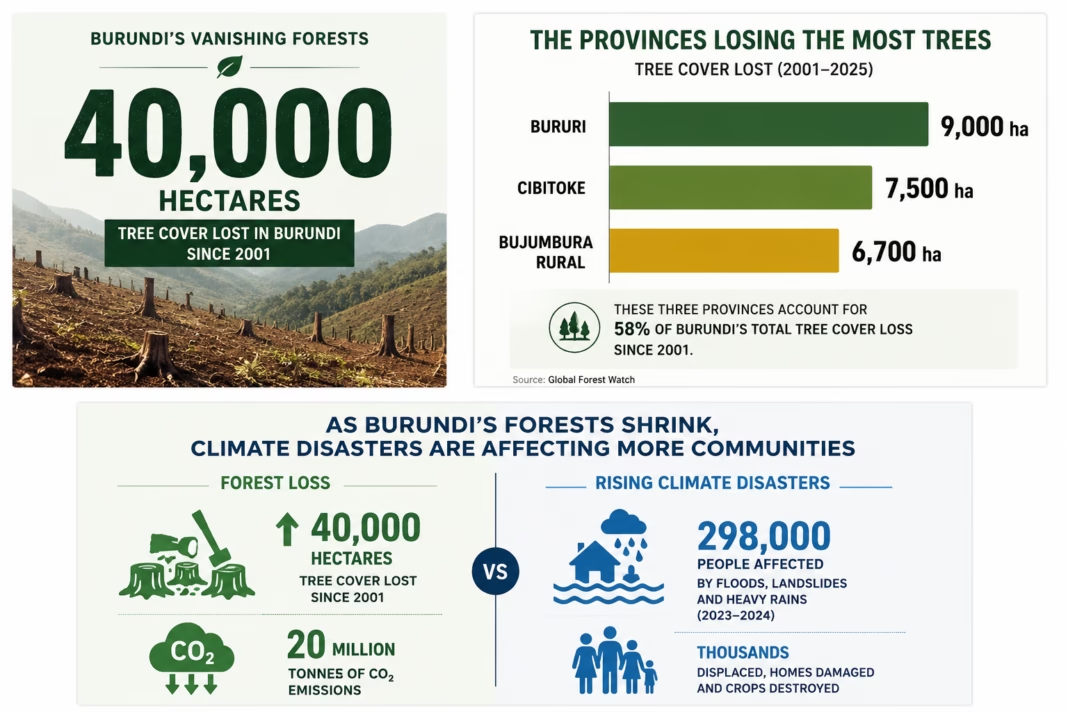
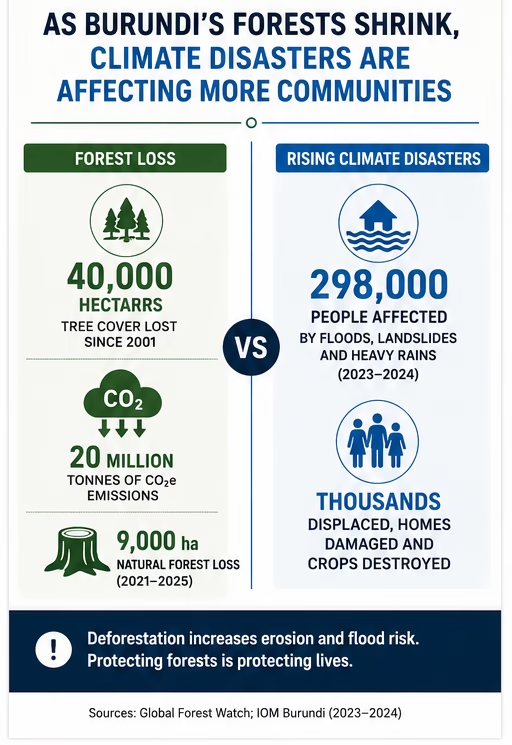
Between 2001 and 2025, Burundi lost approximately 40,000 hectares of tree cover, equivalent to about 7 percent of the country’s tree cover recorded in 2000, according to Global Forest Watch. During the same period, floods, landslides and extreme rainfall events increasingly affected communities across the country, displacing thousands of people and damaging homes, roads and farmland.
Burundi’s Forest Loss in Numbers
Tree Cover Lost Since 2001
| Indicator | Value |
|---|---|
| Tree cover lost | 40,000 hectares |
| Share of 2000 tree cover lost | 7% |
| Carbon emissions linked to loss | 20 million tonnes CO₂e |
| Natural forest loss (2021-2025) | 9,000 hectares |
Source: Global Forest Watch.
The data show that most of Burundi’s tree cover loss is associated with permanent land conversion, particularly agricultural expansion.
Global Forest Watch estimates that roughly 85 percent of tree-cover loss since 2001 occurred in areas where the dominant driver was deforestation rather than temporary disturbance.
The Provinces Losing the Most Trees
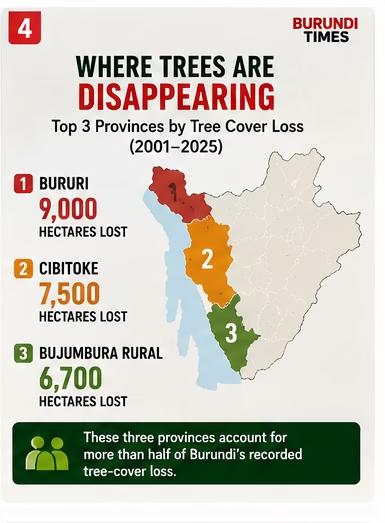
Three provinces account for more than half of Burundi’s recorded tree-cover loss over the last two decades.
| Province | Tree Cover Lost |
|---|---|
| Bururi | 9,000 ha |
| Cibitoke | 7,500 ha |
| Bujumbura Rural | 6,700 ha |
Together, these provinces account for approximately 58 percent of national tree-cover loss recorded between 2001 and 2025.
The pattern is significant because several of these areas also contain watersheds that influence downstream river systems and flood-prone zones.
Why Trees Matter During Heavy Rain
Forests act as natural barriers against flooding.
Tree roots help stabilize soil, absorb rainfall and slow the movement of water downhill. When forests disappear, rainwater reaches rivers faster, increasing erosion and raising the risk of flash floods.
In a country where much of the terrain consists of steep hillsides, the loss of tree cover can have consequences far beyond the area where trees were cut.
Environmental researchers have long identified deforestation and land degradation as factors that increase vulnerability to floods and landslides across East Africa.
The Other Side of the Story: Floods
Recent humanitarian assessments paint a troubling picture.
More than 298,000 people were affected by floods, landslides and heavy rains between September 2023 and September 2024. In the first months of 2025, climate-related disasters affected tens of thousands more people while damaging homes and crops across multiple provinces.
Among the hardest-hit communities are those around Gatumba and low-lying areas near Lake Tanganyika. Repeated flooding has forced some families to relocate more than once. Communities that once experienced occasional flooding now face the possibility of annual inundation.
What the Data Suggest
The available data do not prove that deforestation alone is causing Burundi’s flooding crisis.
Climate change, rising Lake Tanganyika water levels, more intense rainfall and urban expansion all play important roles.
However, the numbers indicate that Burundi is confronting two environmental trends at the same time:
- Forest cover continues to decline.
- Flood-related disasters continue to affect large numbers of people.
The overlap raises a critical question for policymakers:
Can Burundi reduce future flood risks without first addressing forest loss and land degradation?
What Happens Next?
Burundi has launched multiple reforestation initiatives in recent years, while international partners continue supporting climate adaptation and environmental restoration projects.
Yet the scale of the challenge remains considerable.
The country has already lost tens of thousands of hectares of tree cover since the beginning of the century. At the same time, climate-related disasters are becoming a recurring feature of life for many communities.
The data point to a simple reality: protecting forests is no longer only a conservation issue. It is increasingly becoming a question of disaster prevention, food security and economic resilience.
As Burundi prepares for future climate shocks, the condition of its forests may prove to be one of the most important indicators of the country’s environmental future.