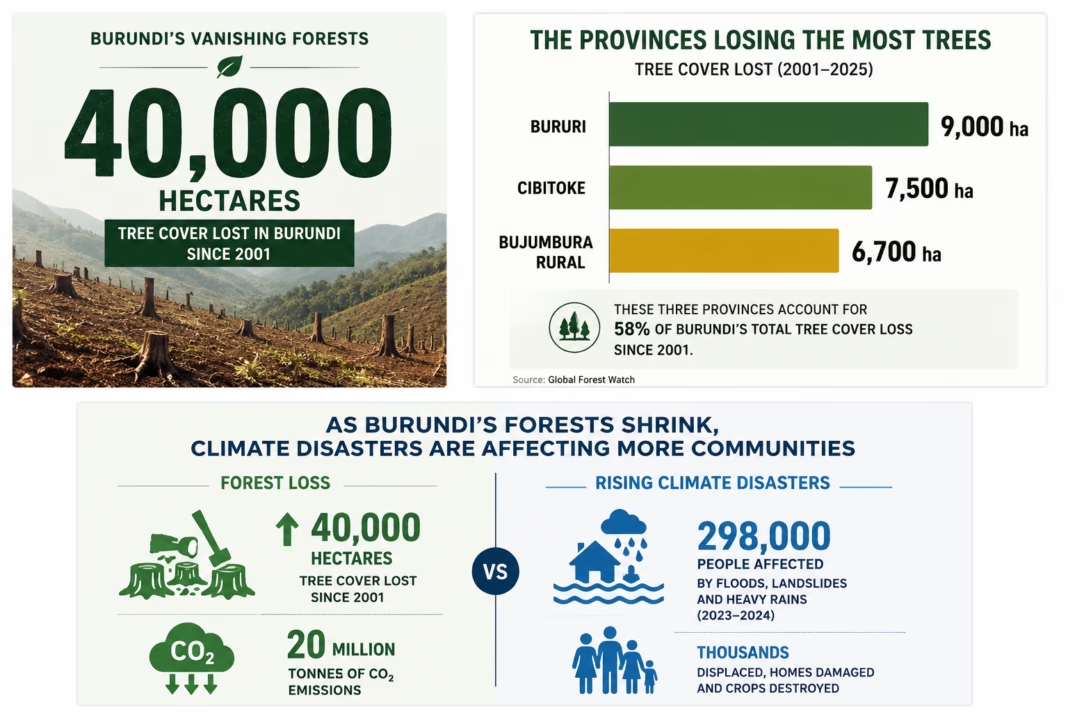

Burundi has lost 410 hectares of humid primary forest since 2002, according to new data from Global Forest Watch, raising concerns among environmental experts that continued forest degradation could worsen the country’s vulnerability to climate change, flooding and soil erosion.
The forest-monitoring platform reported that Burundi’s humid primary forest area declined by 2% between 2002 and 2025. While the loss may appear small compared with heavily forested countries in Central Africa, specialists say it carries significant consequences for a country where natural forests are already scarce and environmental pressures are mounting.
Primary forests are among the most ecologically valuable ecosystems because they store large amounts of carbon, regulate water cycles and provide habitat for wildlife. Their loss can reduce the land’s ability to withstand increasingly erratic weather patterns linked to climate change.
The findings come as Burundi grapples with recurring floods, landslides and shifting rainfall patterns that have affected communities across the country in recent years.
“What matters today for Burundi is meeting the challenge of restoring its forest cover and combating the ongoing degradation of these forests while responding to food security needs and the legitimate aspirations of its agricultural and industrial development,”President Évariste Ndayishimiye said during previous l environmental meetings.
The Burundian government has made environmental restoration a central component of its climate strategy. Authorities have launched nationwide tree-planting campaigns and promoted watershed protection projects aimed at reducing land degradation and strengthening resilience to climate shocks.
The Ministry of Environment has repeatedly warned that deforestation, combined with population pressure and unsustainable land use, contributes to declining soil fertility and increases the risk of natural disasters.
Environmental researchers say the challenge is particularly acute in Burundi, one of Africa’s most densely populated countries, where demand for farmland, firewood and construction materials continues to place pressure on remaining forest resources.
“Natural forests provide services that newly planted trees cannot immediately replace,” said an environmental specialist familiar with forest conservation efforts in the Great Lakes region. “They protect water sources, stabilize fragile hillsides and help absorb carbon emissions. Once they are degraded, those benefits are difficult to recover quickly.”
The consequences extend beyond biodiversity.
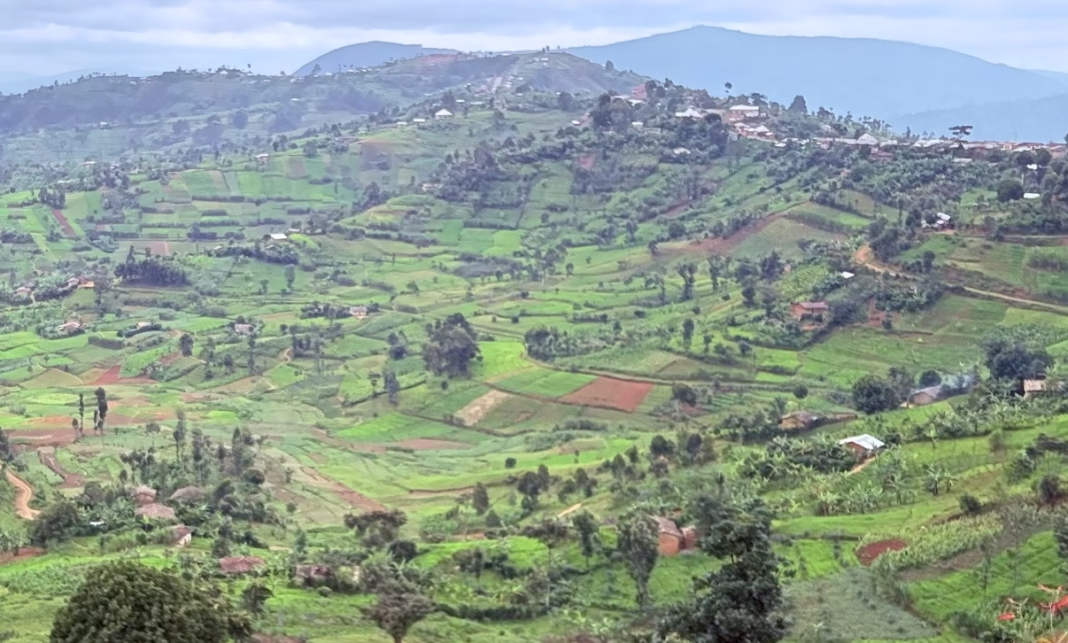
Across Burundi’s steep hillsides, forests play a critical role in preventing erosion. When vegetation is removed, heavy rains can wash away fertile soil, reducing agricultural productivity and increasing sedimentation in rivers and wetlands.
For a country where agriculture remains the backbone of the economy and the primary source of livelihoods for most households, environmental degradation poses both an ecological and economic threat.
Climate experts have long identified Burundi as one of the countries most vulnerable to the effects of climate change because of its dependence on rain-fed agriculture and limited capacity to absorb climate-related shocks.
Recent years have seen devastating floods along the shores of Lake Tanganyika and in low-lying communities, displacing thousands of people and damaging homes, roads and farmland. Scientists warn that extreme weather events are likely to become more frequent and intense as global temperatures continue to rise.
Against that backdrop, conservation advocates argue that protecting existing forests should receive as much attention as reforestation programs.
According to Global Forest Watch, the loss of Burundi’s primary forests accounted for about 1% of the country’s total tree-cover loss between 2002 and 2025. Though modest in absolute terms, the decline highlights the continuing pressure facing ecosystems that are increasingly important for climate resilience.
As Burundi seeks to balance economic development, food production and environmental protection, experts say safeguarding the country’s remaining natural forests will be essential in confronting the growing challenges posed by climate change.