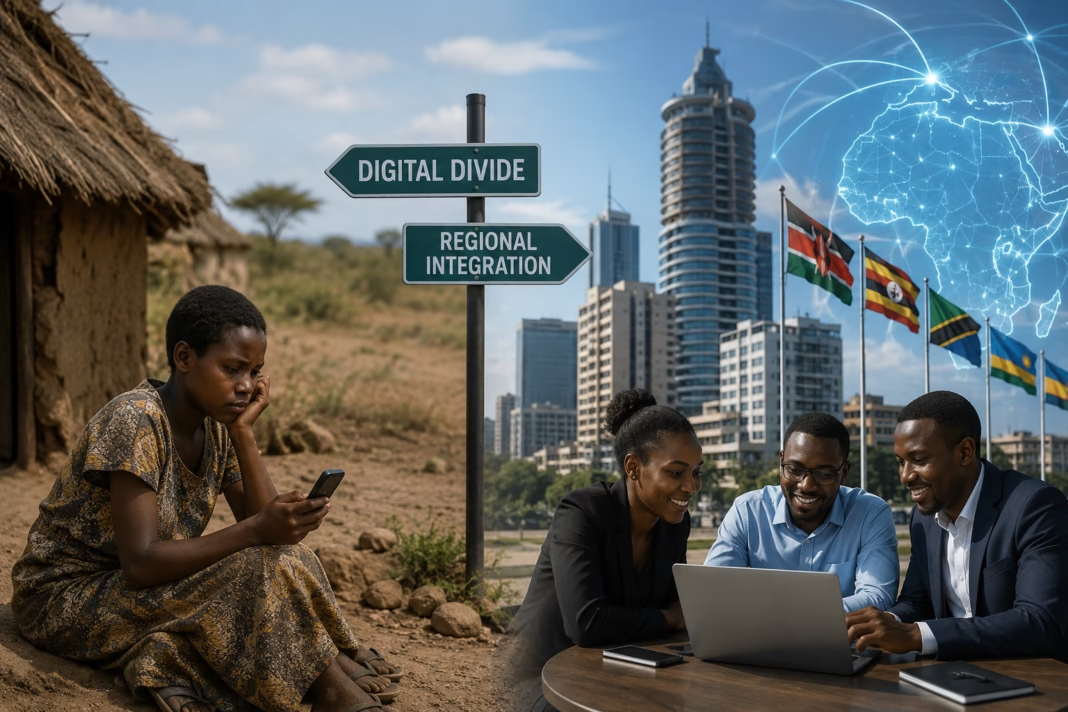

East African Community and Intergovernmental Authority on Development are intensifying cooperation on regional digital integration, positioning technology and cross-border connectivity as central pillars of East Africa’s economic future.
The renewed push emerged during a joint EAC-IGAD media training workshop on the Eastern Africa Regional Digital Integration Project (EARDIP) held in Nairobi, where senior regional officials described digital transformation as a key driver of economic integration, trade expansion and regional competitiveness.
Speaking at the workshop, IGAD Director for Economic Cooperation and Regional Integration Dr. Mohyeldeen Eltohami Taha said collaboration between regional blocs was critical to ensuring Eastern Africa develops as a connected digital economy rather than fragmented national markets.
“We recognize that without informed citizens, regional integration cannot fully succeed,” Taha said, emphasizing the media’s role in connecting policymakers with ordinary citizens.
Taha described journalists as “the bridge between policy and the people,” arguing that digital transformation discussions have often remained confined to governments and technical institutions instead of reaching communities directly affected by the changes.
He also stressed that digital integration now ranks alongside peacebuilding and climate resilience as a strategic regional priority.
“I think it’s high time to see this as a key driver,” he said, referring to digital transformation and the role of media in explaining its impact across the region.
The Eastern Africa Regional Digital Integration Project, commonly known as EARDIP, is a World Bank-financed initiative designed to strengthen regional broadband connectivity, cybersecurity systems, digital trade frameworks and cross-border digital services across Eastern Africa.
EARDIP aims to support the development of a “single digital market” in Eastern Africa by harmonizing regulations, improving online trade systems and expanding affordable internet access across borders.
EAC Deputy Secretary General for Customs, Trade and Monetary Affairs Annette Ssemuwemba said regional integration increasingly depends on interoperable digital systems capable of supporting trade, payments, logistics and online services beyond national borders.
“When digital systems work across borders, businesses can reach new markets,” Ssemuwemba said. “When citizens can access services online, productivity increases and costs reduce.”
She added that digital transformation offers the region an opportunity to accelerate economic integration while creating opportunities for entrepreneurs, innovators and small businesses.
“Digital tools are opening new opportunities for businesses, young innovators and citizens,” she said.
Officials said the project seeks to strengthen cooperation between EAC and IGAD member states in areas including cybersecurity readiness, digital payments, data governance and regulatory harmonization.
Phase I of the EARDIP program includes Ethiopia, Somalia and South Sudan, alongside regional coordination by EAC and IGAD. The World Bank says the initiative is intended to reduce infrastructure gaps while laying foundations for integrated regional digital markets.
Ssemuwemba said public awareness would determine whether digital reforms succeed.
“The success of digital transformation does not depend on infrastructure and policies alone,” she said. “It will also depend on awareness, on trust, and understanding among citizens.”
Both officials repeatedly emphasized the role of journalists in shaping public understanding of digital transformation, cybersecurity and regional integration.
“This engagement reflects IGAD and EAC’s commitment to strengthening strategic partnership with media institutions,” Taha said.
The workshop brought together journalists, communications officials and regional policymakers from across Eastern Africa to discuss reporting on digital trade, cybersecurity, connectivity and digital governance initiatives.
Regional leaders increasingly view digital integration as a core component of broader African economic integration efforts under the African Union’s digital transformation agenda and the African Continental Free Trade Area framework.