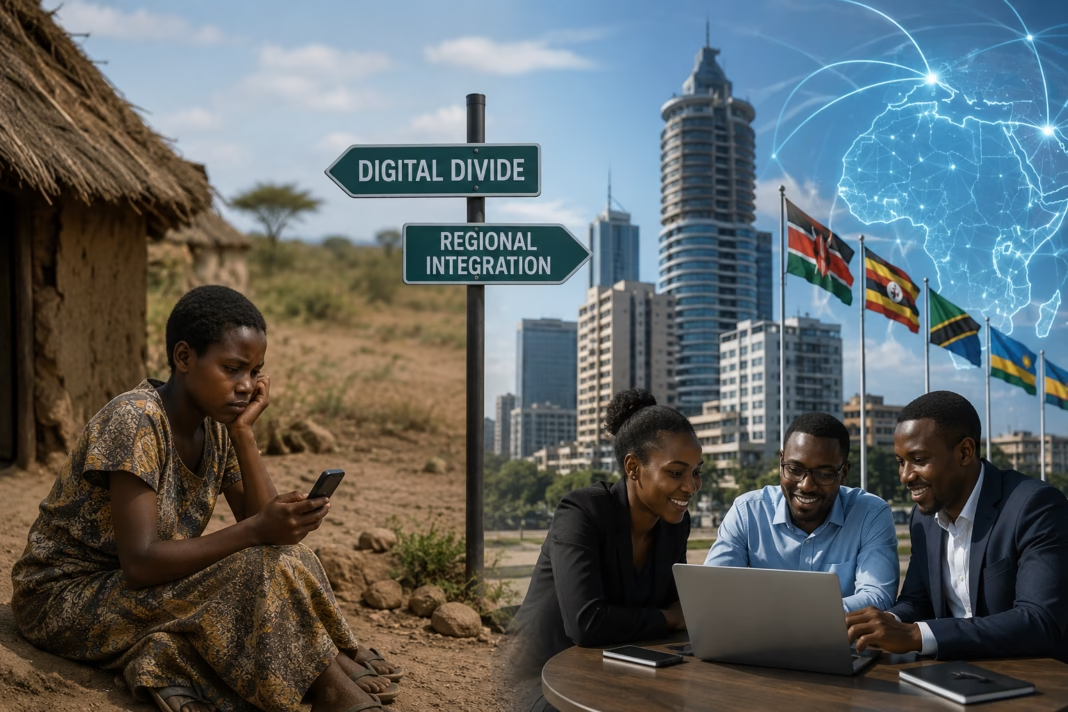

East African Community (EAC) and Intergovernmental Authority on Development (IGAD) say major gaps in internet access, digital awareness and technological inclusion continue to threaten efforts to build a connected regional digital economy, despite rapid growth in mobile money, e-commerce and online public services.
The concerns were raised during a joint media training workshop organized by the East African Community and Intergovernmental Authority on Development on the Eastern Africa Regional Digital Integration Project (EARDIP) in Nairobi.
Officials warned that millions of people across Eastern Africa particularly in rural and underserved communities remain excluded from the benefits of digital transformation due to limited connectivity, low digital literacy and inadequate awareness of emerging digital opportunities.
“Many citizens across our region remain insufficiently informed about these infrastructure initiatives and the opportunities they create,” IGAD Director for Economic Cooperation and Regional Integration Dr. Mohyeldeen Eltohami Taha said during the workshop.
Taha said digital transformation efforts must move beyond government institutions and urban centers to reach ordinary citizens across the region.
“Digital transformation is no longer a distant aspiration. It is the present,” he said. “This is where the media becomes politically important to assure that our people on the ground are aware about these initiatives.”
According to Rose Mosero a Data Protection and Cybersecurity Advisor, cross-border data flows already support critical regional systems including mobile money, banking, customs services, e-commerce, health systems and education platforms across Eastern Africa. Officials said trusted governance frameworks are increasingly essential to support digital trade, interoperability and public confidence in regional digital systems. “Trusted governance is what turns regional digital integration from a technical ambition into an operational public system,” said Mosero.
Rose Mosero a Data Protection and Cybersecurity Advisor said that significant disparities in digital governance readiness across the region. Kenya and Rwanda were classified as “advanced and operational” in data protection implementation, while Uganda and Tanzania were listed as “established and maturing.” Ethiopia, Djibouti and Sudan were categorised as “transitional or emerging,” while Somalia, South Sudan, Burundi and the Democratic Republic of Congo were identified as having “nascent” data protection systems.
The Eastern Africa Regional Digital Integration Project aims to strengthen regional broadband connectivity, cybersecurity systems, digital trade and cross-border digital services across Eastern Africa. According to official project information from the EAC, the initiative is intended to support the creation of a more integrated regional digital market.
EAC Deputy Secretary General for Customs, Trade and Monetary Affairs Annette Ssemuwemba said digital technologies were already reshaping how East Africans communicate, trade and access services.
“From mobile money to e-commerce platforms, from digital government services to online learning, digital tools are opening new opportunities for businesses, young innovators and citizens,” Ssemuwemba said.
However, she acknowledged that unequal access to digital infrastructure and services remains a major challenge across the region.
“At the same time, the media plays a crucial role in promoting inclusion by covering stories from rural communities, women-led businesses, youth innovators and underserved populations,” she said. “You help ensure that digital transformation benefits everyone and not just a few.”
According to the International Telecommunication Union, internet penetration across Africa remains among the lowest globally, with rural communities disproportionately affected by limited broadband infrastructure and high connectivity costs.
Regional officials said improving cross-border digital infrastructure could help lower internet costs, expand online services and increase economic participation across Eastern Africa.
The EAC says EARDIP also seeks to improve cybersecurity readiness, harmonize digital regulations and support digital skills development across member states.
Officials repeatedly emphasized that infrastructure alone would not guarantee success unless citizens trust and understand digital systems.
“The success of digital transformation does not depend on infrastructure and policies alone,” Ssemuwemba said. “It will also depend on awareness, on trust, and understanding among citizens.”
The workshop brought together journalists and communication professionals from across the region to strengthen reporting on digital transformation, cybersecurity, online trade and regional integration.
Taha described journalists as “the bridge between policy and the people,” arguing that public understanding would determine whether regional digital initiatives achieve meaningful impact.
“As digital platforms continue to grow, the risk of misinformation and disinformation also increases,” Ssemuwemba added. “Accurate reporting, fact-checking and ethical storytelling are essential.”
Regional leaders increasingly view digital inclusion as central to broader African integration goals under the African Union digital transformation strategy and the African Continental Free Trade Area framework.