

Burundi’s prolonged fuel shortages are set to deepen as a surge in global energy prices triggered by the Middle East conflict adds fresh strain to an already fragile supply system, analysts and international agencies warn.
The landlocked East African nation has been grappling with intermittent fuel scarcity for months, with long queues at filling stations and disruptions to transport and business activity. The latest global shock—driven by attacks on energy infrastructure and shipping disruptions—now threatens to push prices even higher and worsen supply constraints.
Energy prices are projected to jump 24% in 2026, their highest level since 2022, according to the latest Commodity Markets Outlook by the World Bank Group.
“The war is hitting the global economy in cumulative waves: first through higher energy prices, then higher food prices, and finally, higher inflation,” said Indermit Gill. “The poorest people…will be hit the hardest.”
Burundi’s dependence on imported petroleum products leaves it highly exposed to global price swings. With supply already constrained domestically, any sustained increase in international oil prices is likely to translate into longer shortages and rising black-market costs.
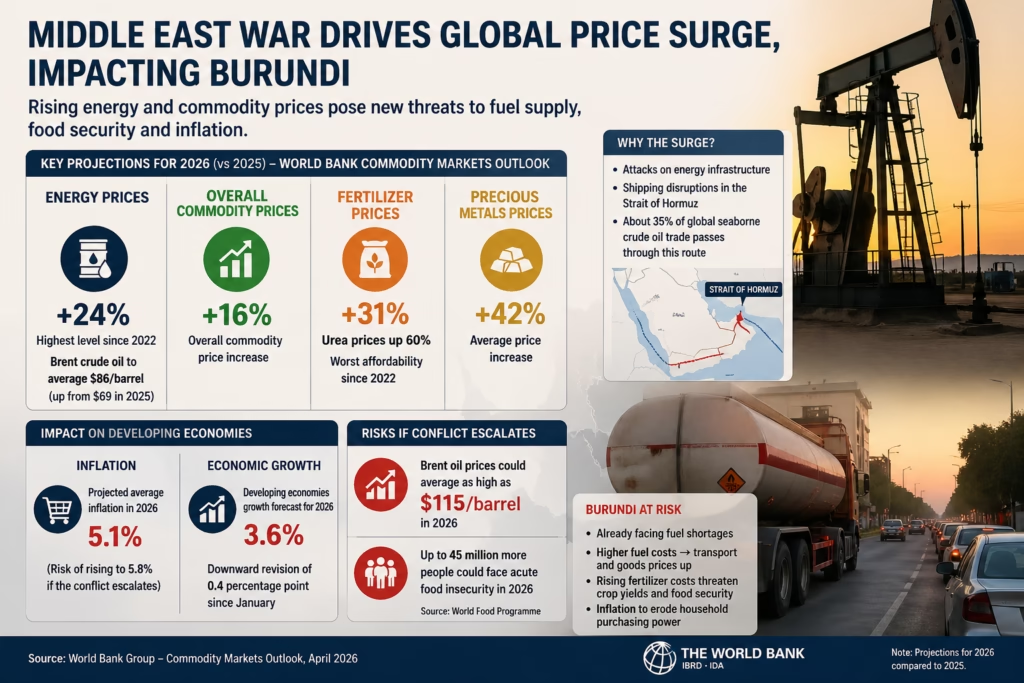
Brent crude is forecast to average $86 per barrel in 2026, up sharply from $69 last year, reflecting supply disruptions linked to the conflict.
Economists say the timing of the shock could not be worse.
“Countries already experiencing supply bottlenecks, like Burundi, will feel a double impact—scarcity and higher import costs,” said a regional energy analyst based in East Africa.
Food prices at risk as fertilizer costs surge
The crisis is also expected to hit agriculture, the backbone of Burundi’s economy. Fertilizer prices are projected to rise 31% this year, with urea prices jumping about 60%, according to the World Bank.
Higher input costs could reduce crop yields and drive up food prices in coming seasons, worsening household vulnerability.
The World Food Programme has warned that prolonged disruptions could push tens of millions more people globally into acute food insecurity.
Rising fuel and food costs are expected to feed into broader inflation across developing economies, projected at 5.1% in 2026, with risks of climbing higher if the conflict intensifies.
For Burundian households, where spending on food and transport accounts for a large share of income, the impact could be immediate.
The crisis also comes as governments face shrinking fiscal space after years of global shocks.
“The succession of shocks over the decade has sharply reduced the fiscal space available,” said Ayhan Kose, urging targeted support for vulnerable populations rather than broad subsidies.
The outlook remains uncertain. In a worst-case scenario, oil prices could rise as high as $115 per barrel, further intensifying inflation and economic strain.
For Burundi, already contending with fuel shortages, the global energy shock underscores the country’s vulnerability to external disruptions—particularly in critical sectors such as energy and food.