
Human rights organisations are calling on the African Union to take urgent action as Tanzania faces what Amnesty International describes as a “deepening human rights crisis,” marked by violent crackdowns on dissent, internet shutdowns, and the disqualification of opposition candidates ahead of the country’s recent elections.
According to Amnesty International, Tanzanian authorities under President Samia Suluhu Hassan have “deliberately silenced dissent” by targeting journalists, civil society organisations, opposition members, and human rights defenders. The group said in a report published in late October that the government’s actions form part of a “coordinated campaign to suppress political opposition and restrict civic space.”
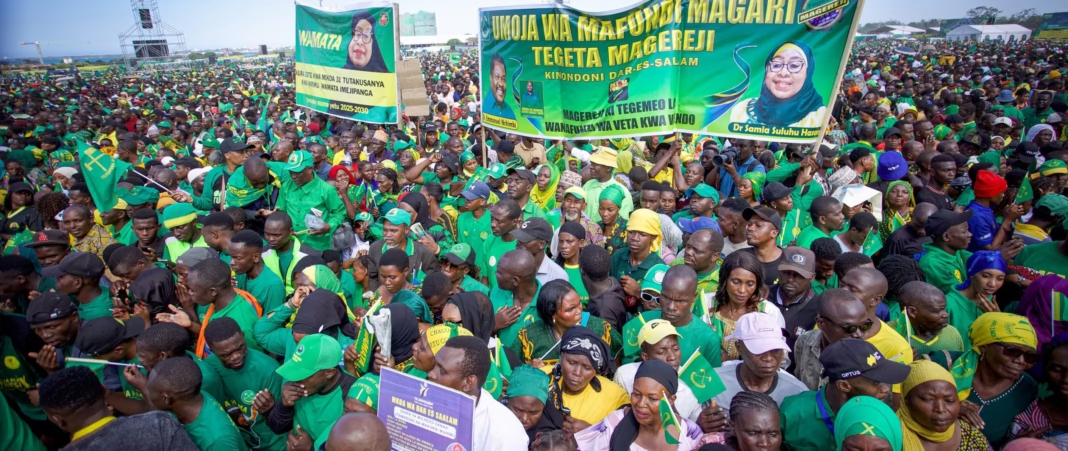
The October 29 general election, in which Hassan sought a second term, was marred by controversy after the two main opposition candidates were barred from contesting. Following the announcement, protests erupted across major cities, and authorities reportedly responded with tear gas, live ammunition, and mass arrests.
“Amnesty International is particularly alarmed by reports that amidst the blackouts, security forces have used excessive force to suppress and disperse ongoing post-election protests, resulting in the deaths and injuries of protesters,” said Vongai Chikwanda, Amnesty’s deputy regional director for East and Southern Africa.
The organization also documented a six-day nationwide internet shutdown during and after the vote, which it said was intended to “muffle criticism and conceal human rights violations from the public eye.”
Independent observers have raised similar concerns. The African Union Election Observation Mission stated that the vote “did not comply with AU principles and international standards for democratic elections,” according to a November 5 Reuters report.
The Guardian reported that opposition groups claim as many as 700 people were killed during election-related violence, though the government has not confirmed the figure. Tanzanian officials have defended their response, arguing that security forces acted “to maintain peace and order.”
Amnesty International and other advocacy groups have called on the African Union Commission Chairperson, Mahmoud Ali Youssouf, and the African Commission on Human and Peoples’ Rights to initiate investigations into alleged abuses, including unlawful killings, enforced disappearances, and arbitrary detentions.
“Without an accountable government, justice for these violations remains out of reach,” Amnesty said in a statement. “They will persist unless regional and international actors take decisive action.”
The rights group urged Tanzanian authorities to lift restrictions on media and digital access, release those detained for political reasons, and allow independent investigations into security force conduct.
Tanzania’s government has not publicly responded to the latest allegations. President Hassan, who came to power in 2021 following the death of President John Magufuli, has been praised internationally for some economic reforms but faces growing criticism over the country’s democratic backsliding.
As pressure mounts, human rights advocates say the response of regional institutions will be a test of Africa’s willingness to confront repression within its own ranks.
“Right now, we must make a choice: either allow repression to erode fundamental rights and freedoms in Tanzania or resist it by standing in solidarity with the people,” Amnesty said.