
South Africa is seeking reimbursement from Malawi, Nigeria and Ethiopia for the costs of repatriating their citizens as the country grapples with a surge in deportations and voluntary returns following renewed anti-immigrant protests.
The Department of Home Affairs told Parliament this week that it has spent about R292.77 million (nearly $18 million) on the repatriation and deportation operation, which officials said was not included in the department’s budget.
Home Affairs Director-General Tommy Makhode told Parliament’s Portfolio Committee on Home Affairs on Tuesday that the department had written to the Malawian government and the Nigerian and Ethiopian embassies through the Department of International Relations and Cooperation, requesting reimbursement.
“We have also written to the government of Malawi and, of course, the embassies of Nigeria and Ethiopia requesting a reimbursement of this cost through the department of DIRCO,” Makhode told lawmakers. South Africa is awaiting responses from the three governments.
The expenditure covers transportation, temporary facilities and additional staffing linked to the large-scale movement of foreign nationals out of the country.
According to figures presented to Parliament, about R203.5 million was spent on buses used to transport foreign nationals, while the Department of Public Works and Infrastructure spent about R48 million establishing and operating a temporary repatriation centre in Musina, near the Zimbabwe border. Additional costs included overtime and other operational expenses.
Makhode described the expenditure as an “unfunded mandate,” saying Home Affairs had not budgeted for the scale of the operation.
“Repatriations are not provided for in terms of our legislative frameworks,” he said, according to parliamentary reporting.
More than 80,000 processed
South African authorities say 82,875 foreign nationals had been processed through the country’s repatriation and deportation system by Aug. 6.
The Border Management Authority separately reported that 89,936 people had passed through South Africa’s ports of entry as part of the repatriation process by Aug. 7. The figures are not directly comparable because the two agencies are counting people at different stages of the process.
Malawians have made up the largest group among those repatriated, followed by Zimbabweans and Mozambicans, according to figures presented to Parliament.
The operation accelerated after South Africa experienced renewed protests against undocumented migration. Groups campaigning against illegal immigration have blamed foreign nationals for unemployment, crime and pressure on public services, while several African governments have raised concerns about the treatment and safety of their citizens in South Africa.
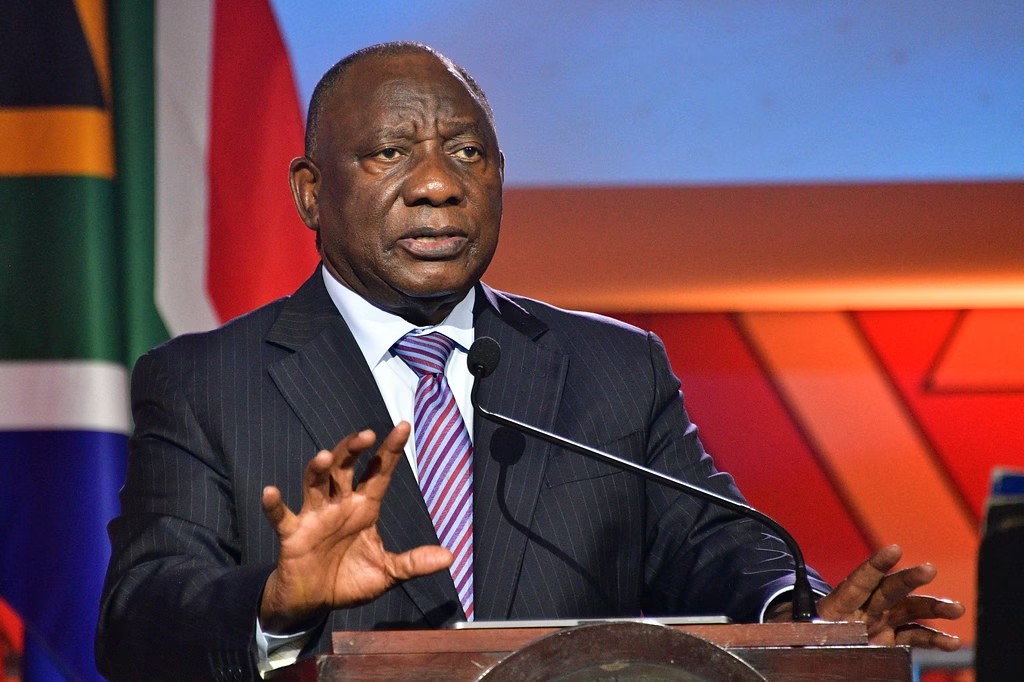
South African President Cyril Ramaphosa announced a five-point approach to migration management in June, including stronger border controls, intensified identification and deportation of undocumented migrants and changes to the immigration enforcement system.
The government has also expanded the use of dedicated immigration courts as part of the crackdown.
Reimbursement request raises diplomatic questions
The request for reimbursement adds a new financial dimension to an already sensitive migration dispute between South Africa and other African countries.
It also raises questions about whether the governments whose nationals were returned will agree to pay costs incurred by South African authorities.
Nigeria, for example, had separately organized and funded an evacuation of citizens who wanted to leave South Africa because of xenophobic attacks. Nigeria’s Foreign Ministry said in June that the federal government had fully funded the evacuation exercise and that affected Nigerians would be repatriated at no cost to them.
The Nigerian government subsequently brought the first group of returnees home on an Air Peace flight, with 258 Nigerians arriving in Lagos on June 11.
That distinction is important because South Africa’s current reimbursement request covers costs incurred by its own authorities in transporting and processing foreign nationals, while some countries also independently arranged and paid for the return of their citizens.
The South African government has not indicated that the three countries have agreed to reimburse the costs, and officials said they were still awaiting responses.
The financial pressure is significant for Home Affairs. The R292.77 million already spent is more than five times the department’s R57 million allocation for deportations through the Lindela Repatriation Centre for the 2026-27 financial year, according to figures presented to Parliament.
The department has therefore asked the South African government for additional funding while simultaneously seeking reimbursement from the affected African governments.
The dispute comes at a particularly sensitive moment for regional relations, with migration, xenophobia and the movement of African workers across borders increasingly becoming political issues.
South Africa has also faced criticism from other African governments over the treatment of their citizens. Ghana recently sought to have the situation involving African migrants in South Africa discussed at an African Union meeting, although the proposal was not placed on the agenda.
For now, Pretoria’s reimbursement request remains just that a request. Whether Malawi, Nigeria and Ethiopia accept responsibility for the costs could become another point of contention in an already strained debate over migration and the treatment of African nationals in South Africa.