
WASHINGTON — The U.S. Treasury Department on Wednesday announced sanctions on an armed group and several companies accused of fueling violence in eastern Democratic Republic of the Congo through the illicit trade of critical minerals.
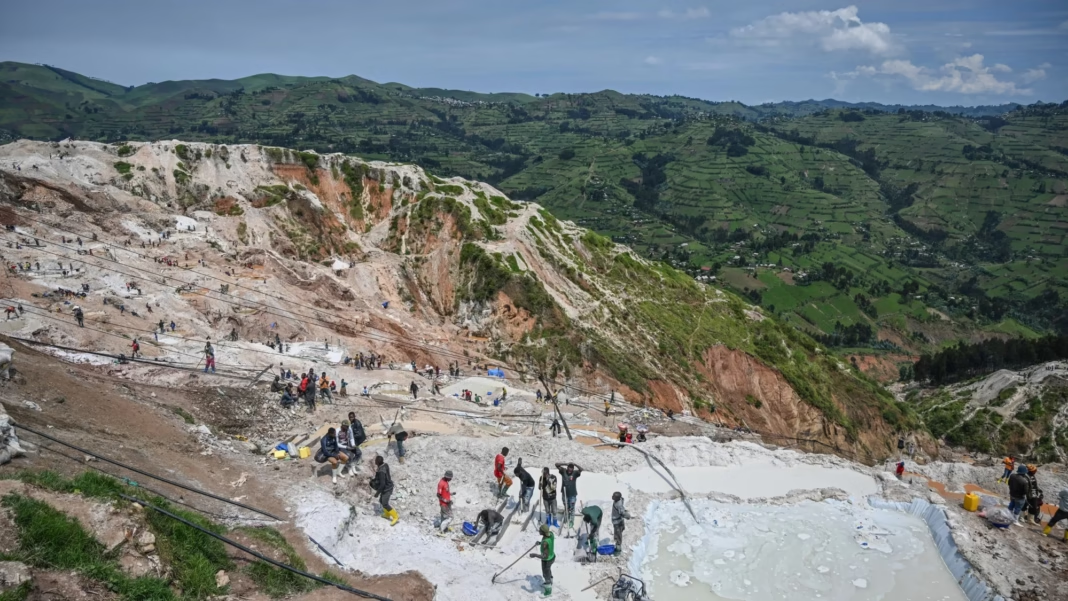
The Office of Foreign Assets Control (OFAC) said the measures target the Coalition des Patriotes Résistants Congolais–Force de Frappe (PARECO-FF), a militia linked to human rights abuses and illegal mining in Rubaya, a mineral-rich area in eastern Congo. The sanctions also apply to a Congolese mining cooperative and two Hong Kong-based export companies accused of buying conflict-linked minerals.
“The conflict minerals trade is exacting a deadly toll on Congolese civilians, fueling corruption, and preventing law-abiding businesses from investing in the DRC,” said John K. Hurley, Treasury’s under secretary for terrorism and financial intelligence. “The Treasury Department will not hesitate to take action against groups that deny the United States and our allies access to the critical minerals vital for our national defense.”
Eastern Congo has endured years of instability, with thousands killed and millions displaced. The U.S. says the crisis has been worsened by the Rwanda-backed M23 rebel group, which has expanded its territorial control and clashed with Congolese-aligned militias.
According to OFAC, PARECO-FF emerged in 2022 in response to M23’s resurgence. The group has controlled mining sites in Rubaya, imposed illegal taxes, engaged in smuggling, and used forced labor. It is accused of executing civilians and collaborating opportunistically with other armed groups to maintain power.
The sanctions also name the Cooperative des Artisanaux Miniers du Congo (CDMC), which allegedly sourced minerals from PARECO-FF-controlled areas and sold them to Hong Kong-based East Rise Corporation Limited and Star Dragon Corporation Limited.
Treasury officials say minerals from eastern Congo are often smuggled through Rwanda before being shipped to major processing hubs, such as China. These supply chains, they say, provide vital funding to armed groups while depriving Congo’s government of tax revenue.
Under the sanctions, any property of the designated individuals or entities in the United States, or under the control of U.S. persons, is frozen. Americans are generally prohibited from doing business with them, and foreign companies risk penalties for certain transactions.
The U.S. has framed the action as part of its broader push for stability in the Great Lakes region, citing its role in facilitating a DRC–Rwanda peace agreement signed on June 27, 2025. Washington says it supports regional economic integration and transparent mineral supply chains that enable “responsible and legal investment” in the sector.
While sanctions aim to cut off financial flows to armed groups, OFAC emphasized that their ultimate goal is to encourage changes in behavior. Those designated can petition for removal from the U.S. sanctions list.