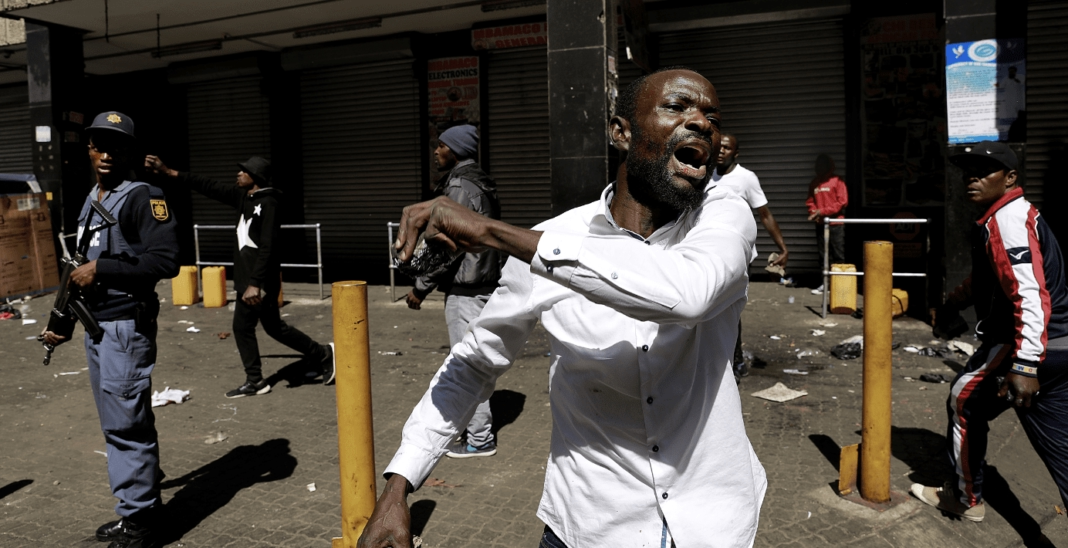

As anti-immigrant violence spread across parts of South Africa in recent weeks, foreign nationals reported being stopped on streets, asked to produce identity documents, threatened by vigilante groups and, in some cases, forced to flee their homes and businesses.
By the time President Cyril Ramaphosa delivered his strongest public intervention on June 7, Mozambique said five of its citizens had been killed in unrest linked to anti-immigrant attacks, Ghana had begun repatriating nationals, and Nigeria reported that more than 1,000 citizens had registered to return home.
The question confronting South Africa is no longer whether the government condemned xenophobia. It did.
The more difficult question is why the state appeared unable to prevent intimidation, violence and displacement before the situation escalated into a regional diplomatic crisis.
A Crisis Years in the Making
The latest unrest did not emerge overnight.
South Africa has experienced repeated waves of anti-foreigner violence over nearly two decades, including major outbreaks in 2008, 2015 and 2019. Each episode has followed a familiar pattern: rising economic frustration, growing public anger over migration, localized attacks on foreign nationals, government condemnation and promises of stronger enforcement.
Yet the underlying conditions remain largely unchanged.
With unemployment above 30%, persistent inequality and growing pressure on public services, migrants have increasingly become targets for frustrations rooted in broader economic and governance challenges.
The Rise of Vigilante Mobilization
One of the most striking features of the latest unrest was the visibility of vigilante-style actions.
Groups and activists campaigning against illegal immigration conducted street-level operations, including identity checks and inspections of businesses suspected of employing undocumented migrants.
While participants described their actions as community activism, rights groups warned that such activities blurred the line between lawful protest and intimidation.
Ramaphosa eventually addressed the issue directly, stating that only government authorities have the legal power to enforce immigration laws and warning against vigilante actions.
But that intervention came after weeks of growing tensions and reports of attacks that had already attracted international attention.
Warnings Came Before the Crisis Escalated
Critics argue the warning signs were visible long before the crisis triggered diplomatic fallout across the region.
On May 20, Human Rights Watch said vigilantes had carried out violent attacks against African and Asian foreign nationals “with little or insufficient apparent response from the police and other authorities.” The rights group called on South African authorities to take stronger action to protect migrants and hold perpetrators accountable.
The warning followed concerns raised by the African Commission on Human and Peoples’ Rights, which condemned xenophobic attacks and vigilante conduct targeting nationals of other African countries in South Africa.
While Ramaphosa publicly condemned xenophobia before his June 7 national address, critics say the central issue is whether authorities acted quickly enough to stop intimidation and violence on the ground.
For many observers, the crisis exposed a gap between official condemnations and the state’s ability to protect vulnerable communities before violence escalated.
The Politics of Immigration
Part of the challenge lies in the politics surrounding migration itself.
Immigration has become one of South Africa’s most politically sensitive issues, intersecting with public concerns over crime, unemployment and service delivery.
That has created a difficult balancing act for the government. On one hand, leaders must condemn xenophobia and uphold constitutional protections. On the other, they face pressure from voters who believe undocumented migration contributes to social and economic problems.
Analysts say that tension often results in mixed messaging: rejecting violence while simultaneously emphasizing tougher immigration enforcement.
The Diplomatic Cost
What began as a domestic security issue has evolved into a foreign policy challenge.
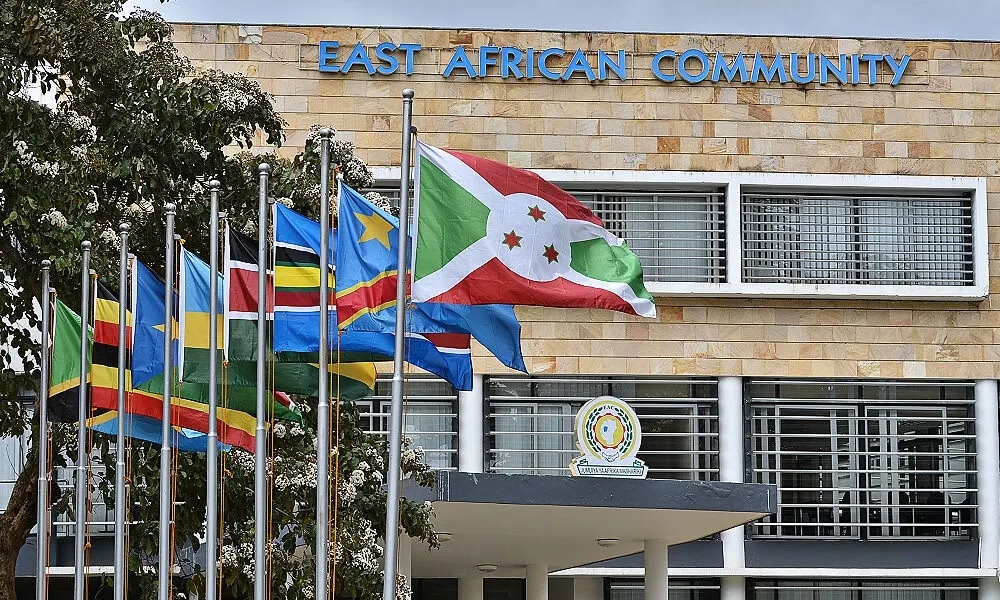
Mozambique says five of its citizens were killed during unrest linked to anti-immigrant attacks. Ghana repatriated nearly 300 nationals and reported that hundreds more had registered to leave. Nigeria says more than 1,000 citizens sought voluntary repatriation.
The crisis prompted concern from governments across Africa and forced Pretoria into damage-control mode.
Ramaphosa has since announced plans to dispatch envoys to several countries to reassure partners that South Africa remains committed to protecting foreign nationals and maintaining regional cooperation.
For a country that has long sought to position itself as a continental leader, images of African migrants fleeing violence have carried significant reputational costs.
Beyond Condemnation
The latest unrest has revived a recurring criticism of South Africa’s approach to xenophobia.
Successive governments have condemned attacks on foreign nationals after violence erupts. The more difficult task has been preventing such violence from occurring in the first place.
The events of recent weeks suggest South Africa continues to struggle with that challenge.
For many observers, the central issue is not whether Ramaphosa opposed xenophobia. His public statements leave little doubt that he did.
The question is whether South Africa’s institutions acted quickly and decisively enough to protect foreign nationals before intimidation, displacement and violence escalated into a regional crisis.
The answer may determine whether the country can avoid repeating a cycle that has resurfaced repeatedly for nearly two decades.