
NAIROBI, Kenya— Extreme poverty is rising rapidly in countries plagued by conflict and political instability, with the vast majority of the world’s poorest now living in such fragile environments, the World Bank warned Thursday in a sweeping new report.
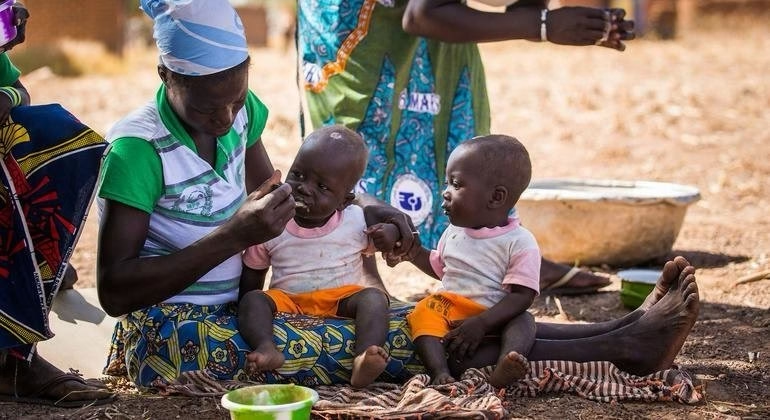
According to the assessment—the first comprehensive analysis of conflict-affected economies in the aftermath of COVID-19—more than 421 million people are living on less than $3 a day in 39 countries facing conflict or instability, many of them in Africa. That number is expected to rise to 435 million by 2030, accounting for nearly 60% of the world’s extreme poor.
“For the last three years, the world’s attention has been on the conflicts in Ukraine and the Middle East,” said Indermit Gill, Chief Economist of the World Bank Group. “Yet more than 70% of people suffering from conflict and instability are Africans. Untreated, these conditions become chronic. Misery on this scale is inevitably contagious.”
The report paints a stark picture of stalled development and deepening hardship. Since 2020, fragile economies have seen their per capita GDP shrink by an average of 1.8% annually, while other developing countries have grown by 2.9%. Hunger, joblessness, poor healthcare, and collapsing education systems are compounding the crisis.
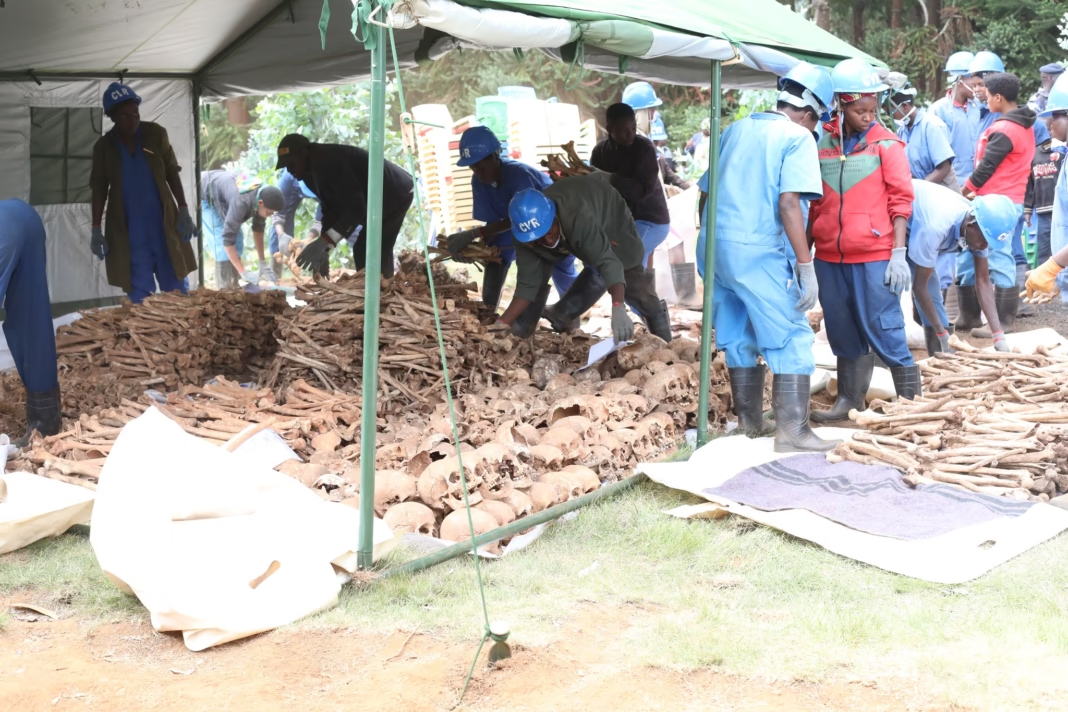
The data is particularly alarming for East Africa, where countries like South Sudan, the Democratic Republic of Congo, and Somalia continue to grapple with insecurity. In many of these nations, basic development gains have been reversed. Infant mortality is more than twice the rate in more stable economies, and average life expectancy is seven years lower.
“These are not short-term crises,” said M. Ayhan Kose, the World Bank’s Deputy Chief Economist. “Economic stagnation—rather than growth—has been the norm. But with stronger international support and focused national policy, we have seen that recovery is possible.”
The Bank’s analysis highlights that 21 of the 39 fragile economies are in active conflict. The effects are long-lasting. In countries experiencing high-intensity conflict, GDP per capita typically drops by 20% over five years. On average, governments in these regions have struggled to create enough jobs for their rapidly growing populations. Of 270 million working-age people, barely half are employed.
The report also urges greater investment in early warning systems and conflict prevention. It argues that addressing the root causes of fragility—weak institutions, poor governance, and lack of basic services—is more effective and less costly than responding after violence breaks out.
Despite the grim outlook, the World Bank sees potential in these regions. Many are resource-rich, with vast reserves of minerals essential for green energy technologies. The Democratic Republic of Congo, Zimbabwe, and Mozambique are singled out as key players in the global transition to clean energy.
“Natural resources represent a crucial opportunity,” the report states. “If managed well, they can help power economies out of fragility.”
In addition, a youthful and expanding population could become an economic asset. In many developed countries, the working-age population is shrinking. In fragile economies, it’s expected to grow steadily until at least 2055. By then, nearly two-thirds of people in these countries will be of working age.
“Demographics can work in our favor,” said Kose. “But only if we invest in education, healthcare, infrastructure, and jobs. That’s what will turn a population boom into a demographic dividend.”
The World Bank’s call is clear: the global community must shift its focus toward the forgotten crises in fragile states—especially in Africa—where the fight against poverty cannot be won without addressing the roots of instability.
“Ending extreme poverty is still possible,” Gill said. “But not without tackling conflict and fragility head-on.”