
Rwanda has publicly acknowledged for the first time that it supports and coordinates with the AFC/M23 rebel movement in eastern Democratic Republic of Congo, describing the relationship as a defensive and temporary measure aimed at countering what it calls “an ongoing genocidal threat linked to the 1994 Rwanda genocide.”
In a statement released by its embassy in Washington, Rwanda said it “does engage in security coordination with AFC/M23,” an admission that comes after years of international allegations including by the United Nations that Kigali has backed the rebel group, claims Rwanda had previously denied.
“I state this clearly to build trust through transparency,” the statement said, adding that the insurgency that followed the 1994 genocide against the Tutsi “has not been defeated it has been sustained, protected, and at times actively supported by successive Congolese governments.”
Rwanda described AFC/M23 as “an independent Congolese group with its own legitimate grievances against Kinshasa,” citing alleged killings, rape, discrimination against Congolese Tutsi communities and what it said were broken commitments under peace agreements dating back more than two decades.
The statement said Rwanda and M23 share a common interest in protecting Tutsi populations in eastern Congo from the Forces Démocratiques de Libération du Rwanda (FDLR) and allied militias.
While acknowledging coordination with the rebel group, Rwanda said it does not seek to influence Congo’s political future.
“Rwanda does not seek to determine political outcomes within DRC, nor does it endorse armed movements as a substitute for inclusive governance,” the statement said. It added that its actions are “narrowly focused on protecting the people of Rwanda by preventing cross-border genocidal threats.”
The statement tied Rwanda’s support for M23 to the Washington Accords, which outline a Concept of Operations, or CONOPS, establishing benchmarks for de-escalation. Rwanda said its security coordination with M23 is “time-bound, conditional, and threat-based,” and pledged a “phased, simultaneous, and independently verified drawdown” as Congo fulfills obligations including the neutralization and repatriation of FDLR fighters and the dismantling of FDLR command structures within the Congolese armed forces.
“This must be understood clearly,” the statement said, alleging that Congolese authorities have for years incorporated FDLR elements into military operations and, more recently, sought to redirect them against Rwanda. It said FDLR fighters have operated alongside Congolese army units, received weapons and logistical support, and used Congolese territory as a base for attacks.
The United Nations has long documented the presence of the FDLR in eastern Congo and its origins among perpetrators of the 1994 genocide who fled Rwanda. UN expert panels have repeatedly accused Rwanda of supporting M23, while also urging Congo to dismantle armed groups and end collaboration with militias.
More than 20 UN Security Council resolutions since 2009 have called for the disarmament of the FDLR and regional cooperation to stabilize eastern Congo, where fighting has displaced millions.
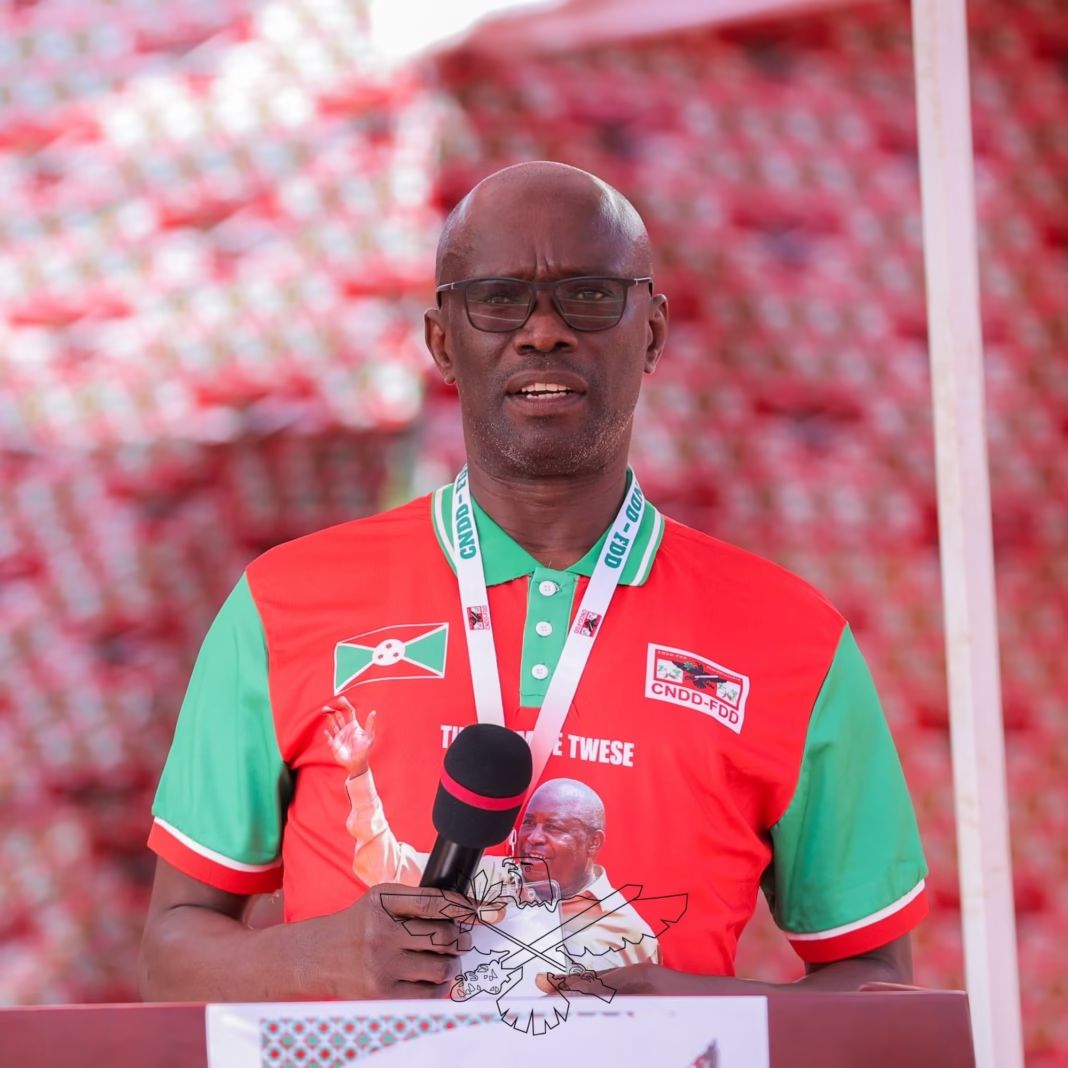
Burundi’s foreign affairs minister, Edouard Bizimana on his X account said that “now that historical truth has just been restored by those same individuals who had been twisting its neck through endless denials, let justice be done for the millions of innocent victims of this murderous venture.”