
Rwanda’s media regulator has issued sweeping directives ahead of the annual commemoration of the Rwandan Genocide, in a move critics say amounts to increased censorship of the press during one of the country’s most closely watched periods.
In a communiqué released April 5, the Rwanda Media Commission set out detailed instructions governing how journalists and media outlets must report during Kwibuka, the 100-day remembrance period marking the 1994 genocide.
The directives mandate the use of specific terminology including the phrase “Genocide against the Tutsi in 1994” and warn against any reporting that could be seen as distorting historical facts, promoting divisionism or undermining national unity.
“The media must avoid any content that misleads the public or contradicts the established history of the genocide,” the commission said, adding that journalists should “adhere to professionalism and responsibility during this sensitive period.”
The guidelines go beyond editorial framing, extending to programming and commercial activity. Media outlets are urged to limit entertainment content and advertising, while prioritizing programming aligned with remembrance and unity themes.
Critics say the level of control outlined in the communiqué risks narrowing the space for independent journalism.
“When authorities prescribe not just ethical boundaries but also specific wording and angles, it effectively constrains editorial freedom,” said a Rwandan based media analyst who requested anonymity for safety reasons. “This creates an environment where journalists are likely to self-censor to avoid repercussions.”
The directives also caution against publishing graphic images or testimonies that could be considered traumatising, and call for heightened sensitivity in covering survivors’ stories measures the commission says are necessary to protect dignity and prevent harm.
However, press freedom advocates argue that such rules, while framed as safeguards, can be used to control the narrative.
According to Reporters Without Borders, Rwanda remains in the lower ranks of its World Press Freedom Index, reflecting what it describes as a restrictive environment for independent media and limited tolerance for critical reporting.
“Journalists often face significant pressure to align with official narratives,” the organization notes, pointing to legal and regulatory constraints that can foster self-censorship.
Rwandan authorities have long defended tight media oversight, citing the role of extremist radio broadcasts and publications in inciting violence during the 1994 genocide. Officials argue that firm regulation is essential to prevent denial, hate speech and the resurgence of divisive ideology.
The Rwanda Media Commission reiterated that position, saying the new measures are intended to “ensure responsible and ethical reporting” during Kwibuka, which begins annually on April 7.
Still, for many observers, the directives highlight the tension between safeguarding historical memory and preserving press freedom.
“Commemoration is vital, but so is independent journalism,” the analyst said. “The challenge is ensuring one does not come at the expense of the other.”
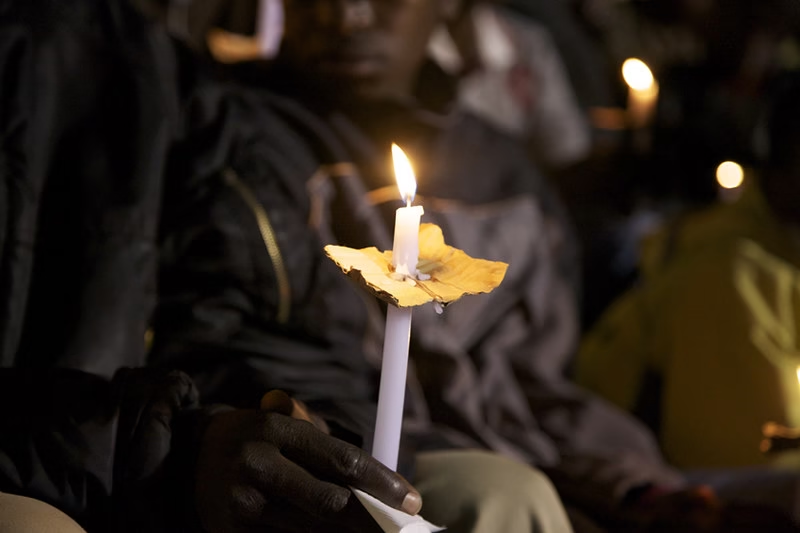
Kwibuka commemorations run for 100 days across Rwanda and in the diaspora, with media coverage playing a central role in shaping public reflection on the genocide and its legacy.