
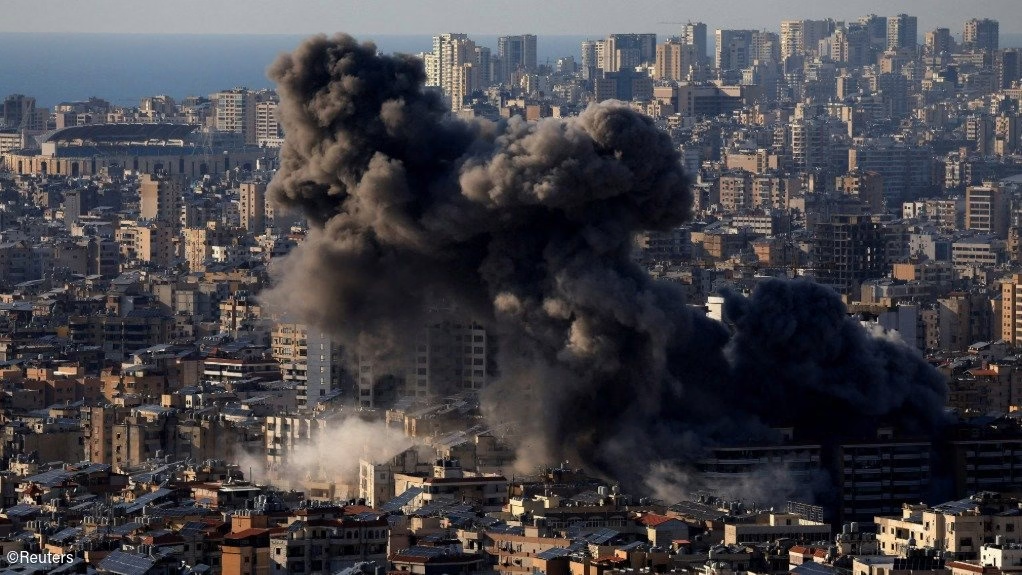

African economies are facing renewed cost-of-living pressures as the war in the Middle East threatens to drive up inflation and disrupt food and energy supplies, finance ministers and the International Monetary Fund warned Wednesday.
In a joint statement following a meeting of the African Consultative Group, Seedy Keita, chairman of the African Caucus, and Kristalina Georgieva said the conflict is adding fresh strain to economies that had only recently begun to stabilise.
“The discussions took place against the backdrop of the war in the Middle East, which will weigh on growth prospects worldwide, even if the recently announced ceasefire holds,” the statement said.
Officials warned that a prolonged conflict or delays in restoring production and transport could deepen the impact, with spillovers already threatening to push up prices and strain household budgets across the continent.
“The outlook remains uncertain,” the statement said, citing risks of “the return of inflation, food shortages, as well as other social tensions.”
The warning comes as African economies are already expected to lose momentum. Growth across the continent is projected to slow to 4.2% in 2026, down from 4.5% in 2025, reflecting both global headwinds and domestic constraints.
Despite what the statement described as “hard-won stabilization gains” in 2025, policymakers said rising import costs — particularly for fuel and food — could quickly erode progress and intensify cost-of-living pressures, especially in low-income and fragile countries.
In response, finance ministers and central bank governors stressed the need to keep inflation under control while shielding the most vulnerable.
“Near-term priorities should include keeping inflation expectations anchored and protecting the most vulnerable through targeted, time-bound support,” the statement said.
Officials also called for careful fiscal management, urging governments to balance discipline with flexibility. Oil-exporting countries were advised to save temporary revenue gains, while oil importers were urged to protect critical social and development spending even as they face tighter budgets.
At the same time, leaders emphasized longer-term measures to reduce vulnerability to external shocks, including diversifying economies, strengthening regional trade and investing in energy and digital infrastructure.
“They further noted that countries should speed up reforms to drive growth and diversification,” the statement said, adding that stronger economic foundations would help countries better withstand future crises.
The group also highlighted rising debt pressures as a compounding risk, noting that high borrowing costs and limited access to affordable financing are restricting governments’ ability to respond to shocks such as inflation spikes.
The IMF reaffirmed its commitment to supporting African countries through policy advice, financing and technical assistance.
“The Fund will continue to work closely with African countries to support sound policies, mobilize financing, strengthen resilience, and advance the region’s development objectives in an increasingly complex global environment,” the statement said.
The African Consultative Group, formed in 2007, brings together finance ministers and central bank governors from a subset of African countries and IMF leadership to strengthen policy dialogue at the Fund’s Spring Meetings.