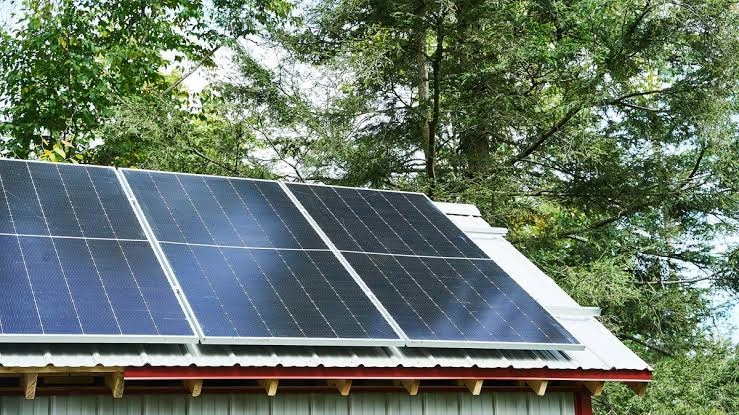

A new US$2 million China-funded initiative aimed at expanding access to reliable electricity in Burundi’s education sector is expected to benefit about 9,300 people through the installation of solar power systems in 10 schools.
The programme, known as “Solar for Learning and Skills,” was officially launched on Monday during a ceremony chaired by Education and Scientific Research Minister Dr François Havyarimana. Also attending were China’s Ambassador to Burundi, Zhu Kewei, and UNICEF Representative to Burundi, France Bégin.
According to UNICEF Burundi, the project is financed by the Government of China and is expected to reach approximately 9,300 beneficiaries in Burundi.
The initiative builds on an agreement signed earlier this year between UNICEF and the China International Development Cooperation Agency (CIDCA), under which China committed US$2 million to support children’s education in Burundi through renewable energy. UNICEF said the project will provide solar power to 10 schools, helping improve learning conditions and support skills development.
“Official launch of ‘Solar for Learning and Skills’! Chaired by Dr François Havyarimana minister of Education, with Ms Zhu Kewei, China ambassador to Burundi and France Bégin the representative of UNICEF, US$2M from China to reach 9,300 beneficiaries in Burundi,” UNICEF Burundi said in a post on X following the launch.
While officials marked the project’s official rollout, additional details—including the names and locations of the schools selected, the implementation schedule and how beneficiaries will be reached—have not yet been made public.
The project comes as Burundi continues efforts to improve access to quality education while expanding the use of digital learning tools. In many parts of the country, particularly rural areas, unreliable or limited access to electricity has constrained the use of computers, internet connectivity and science laboratories in schools.
International organisations including UNICEF and UNESCO have identified reliable electricity as an important foundation for improving digital learning, particularly in low-income countries where schools often lack consistent access to power.
The initiative also reflects growing cooperation between Burundi and China in development sectors including education, health and infrastructure. In announcing the broader agreement earlier this year, UNICEF said the solar education project is designed to improve learning opportunities for children while supporting skills development through sustainable energy solutions.
Authorities have not yet announced when installation work will begin or when the first schools are expected to become operational under the programme.
According to UNICEF, the “Solar for Learning and Skills” project forms part of a wider partnership with the Government of China to improve children’s access to education through clean energy. The agency says the investment will help provide reliable electricity in selected schools, creating better conditions for teaching and learning while contributing to more sustainable education infrastructure in Burundi.