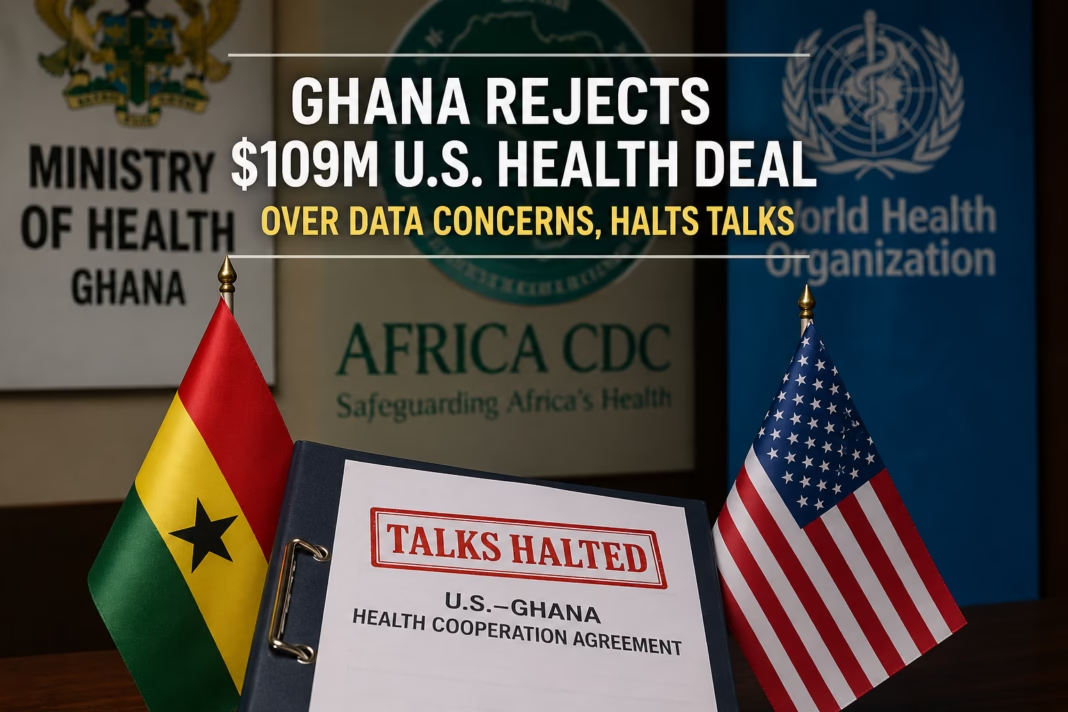

Ghana has rejected a proposed $109 million health cooperation agreement with the United States, halting negotiations over concerns tied to data-sharing requirements, according to sources familiar with the talks.
The deal, negotiated over several months, was expected to support programs targeting HIV/AIDS, malaria and broader public health systems. But talks collapsed after Accra objected to provisions that would grant external access to sensitive national health data.
“They were pretty normal dealings… then increasingly there was a lot more pressure, especially at the end,” a source familiar with the negotiations said.
A spokesperson for the U.S. Department of State said Washington remains open to continued engagement.
“We continue to look for ways to strengthen the bilateral partnership between our two countries,” the spokesperson said.
Ghana’s decision comes against the backdrop of a heavy and persistent disease burden across Africa, reinforcing governments’ sensitivity over health governance and data control.
According to the World Health Organization, Africa remains the epicenter of several global health challenges. The continent accounted for about 95% of global malaria cases and deaths in 2024, with an estimated 265 million cases and 579,000 deaths, most of them among children under five.
HIV also continues to weigh heavily on the region. WHO data shows 25.6 million people are living with HIV in Africa, with about 380,000 AIDS-related deaths recorded in 2022.
Meanwhile, the Africa Centres for Disease Control and Prevention says the continent carries a disproportionate share of the global disease burden, including around 70% of people living with HIV and 95% of malaria deaths worldwide.
The agency has also warned that Africa faces rising threats from emerging and re-emerging diseases, antimicrobial resistance and limited health financing — challenges that underscore the importance of strong, locally controlled health systems.
Within this context, the African Union and Africa CDC have increasingly pushed for “country ownership” of health programs, particularly after the COVID-19 pandemic exposed the continent’s dependence on external partners for vaccines, surveillance systems and emergency response capacity.
Analysts say Ghana’s decision reflects a broader continental recalibration, as governments seek to balance external funding with sovereignty over data and public health strategies.
The United States remains a major health partner across Africa, including through initiatives such as the President’s Emergency Plan for AIDS Relief (PEPFAR), which has supported HIV/AIDS programs for more than two decades.
However, Accra’s move signals that future partnerships may increasingly hinge on revised terms that align with both national priorities and emerging continental frameworks on data governance and health security.