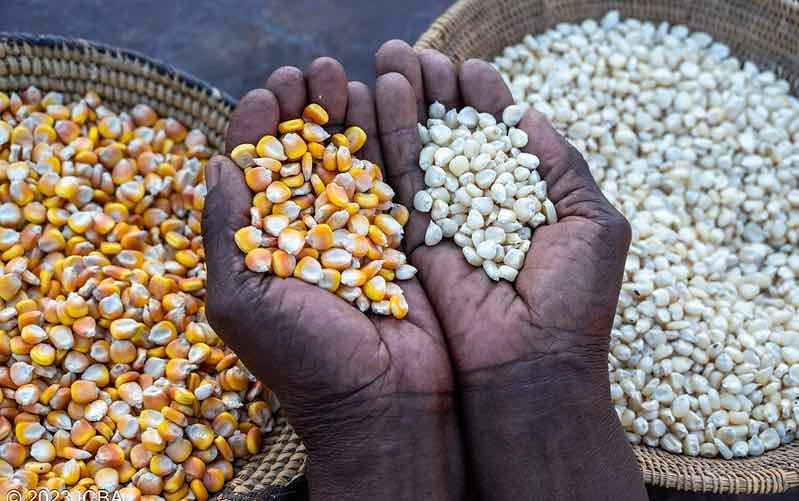

The Burundian government has fixed the minimum purchase price of maize at 1,700 Burundian francs per kilogram in a move aimed at protecting farmers from what authorities describe as exploitative buying practices during the harvest season.
In communiqués issued on May 12, the Ministry of Trade warned traders against purchasing maize below the official price, saying violators could face legal sanctions.
The measure comes as Burundi grapples with persistent food security pressures, inflation and climate-related disruptions affecting agricultural production.
Trade Minister Hassan Kibeya said the decision was intended to shield producers from “derisory prices” offered by some buyers during harvest collection campaigns.
Under the new arrangement, traders seeking to export maize outside Burundi will be required to obtain authorization through the National Agency for the Management of Food Security Stocks (ANAGESSA), which is expected to officially begin collecting maize on May 25 at the government-set price.
Authorities said maize sold through the program must meet specific quality standards, including proper drying, sorting and hygienic storage conditions.
The government also urged farmers to verify banking and mobile money account details before delivering their harvests, following complaints during previous collection campaigns involving incorrect account numbers and unregistered Lumicash accounts.
Administrative officials and security services have been instructed to enforce the new pricing directive nationwide.
The intervention highlights growing concerns over food market volatility in Burundi, where agriculture remains the backbone of the economy and employs the vast majority of the population.
According to the World Food Programme (WFP), more than 1.9 million people in Burundi are facing crisis levels of food insecurity, while rising inflation and currency depreciation continue to drive up the cost of essential food commodities. The UN agency says recurring climate shocks and weak agricultural systems are worsening pressure on rural households dependent on subsistence farming.
Data from the UN Food and Agriculture Organization (FAO) shows Burundi’s cereal production in 2025 fell below average following erratic rainfall during the country’s main agricultural season. FAO reported that maize prices remained above previous-year levels despite temporary declines linked to seasonal harvests.
The World Bank estimates that Burundi remains one of the world’s most agriculture-dependent economies, with food production highly vulnerable to climate variability, land pressure and limited infrastructure. World Bank data also shows cereal production has fluctuated significantly in recent years amid changing weather conditions and economic pressures.
While the government says the fixed maize price is necessary to protect farmers’ incomes and stabilize markets, economists have previously cautioned that price controls can also affect informal trade flows and cross-border supply if not carefully managed.
The latest measures come as authorities attempt to balance food affordability for consumers with income protection for producers at a time of broader regional concern over food prices and agricultural resilience.