
For many families across Burundi, the past year has brought a rare sense of relief after months of soaring prices that strained household budgets and pushed basic goods out of reach.
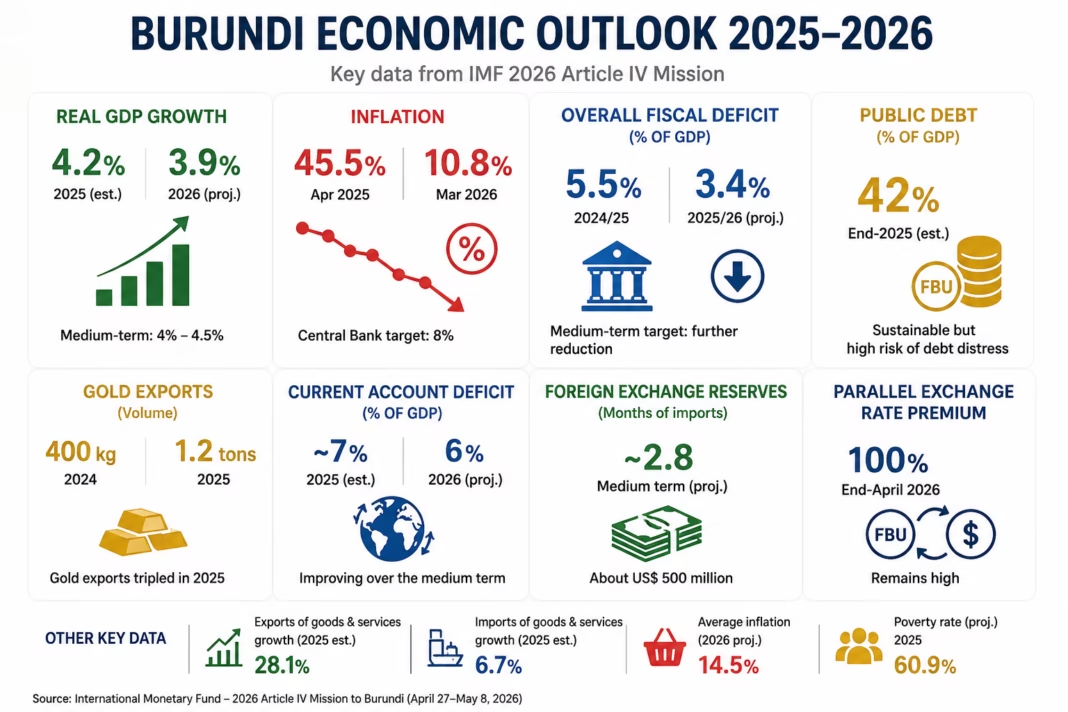
According to the latest assessment by the International Monetary Fund, inflation in Burundi has fallen sharply, dropping from about 45.5 percent in April 2025 to 10.8 percent in March 2026, following government measures aimed at stabilizing the economy.
The IMF says tighter fiscal discipline, reduced central bank financing and stronger export earnings from gold and coffee helped slow price increases and ease pressure on the local currency market.
For ordinary citizens, the shift has begun to affect daily life.
In markets across Gitega and Bujumbura, traders say prices of some imported and locally produced goods have stopped rising at the pace seen last year, when rapid inflation eroded purchasing power and left many households struggling to afford food, fuel and transport.
The IMF report noted that Burundi’s stabilization efforts have also helped reduce pressure on the foreign exchange market, long blamed for shortages of imported goods and recurring fuel supply problems.
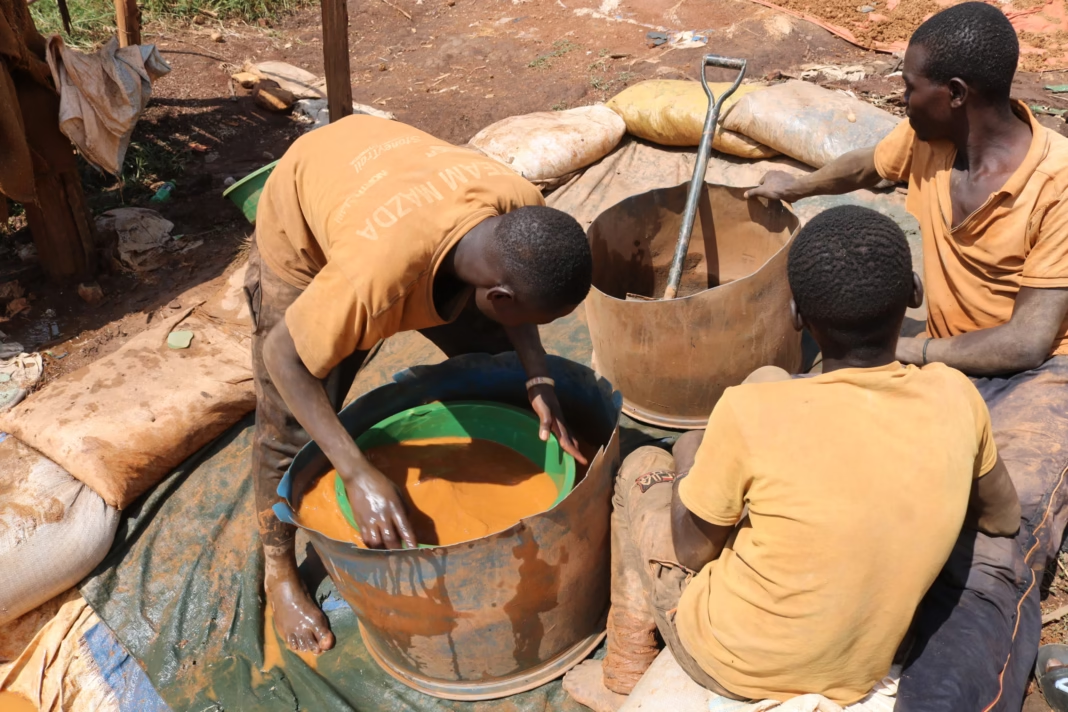
Higher international prices for gold and coffee Burundi’s main exports alongside increased gold production helped bring more foreign currency into the economy, according to the Fund.
Gold exports rose from around 400 kilograms in 2024 to about 1.2 tons in 2025, the IMF said.
Despite the improvements, many Burundians say daily economic pressures remain severe.
Food prices remain elevated compared to previous years, unemployment continues to affect many young people and fuel shortages still disrupt transportation and business activity in parts of the country.
The IMF warned that Burundi’s economic recovery remains fragile and could be threatened by global shocks, revenue shortfalls or delays in reforms.
The institution also cautioned that inflation could rise again later in 2026, even as overall conditions improve.
“Short-run risks are tilted to the downside and are both domestic and external,” the IMF said, citing global geopolitical tensions and domestic implementation challenges.
The Fund urged authorities to protect vulnerable households while continuing economic reforms.
It praised recent government efforts to improve targeting of fertilizer subsidies, saying support should continue reaching poorer farmers while reducing waste and leakages.
The IMF also emphasized the importance of maintaining spending on health, education and social protection programs during the reform process.
“Protecting and, where possible, increasing targeted social spending in priority areas like health and education remains critical to support the most vulnerable households,” the report said.
For farmers, the IMF believes reforms in the coffee sector could eventually increase incomes if international prices are better passed on to producers.
The Fund said efforts to improve export quality, digital traceability systems and agricultural techniques were already contributing to stronger coffee exports.
At the same time, the IMF encouraged Burundi to reform its foreign exchange system, arguing that a gradual move away from the country’s dual exchange rate could help reduce shortages, improve imports and attract more investment.
However, economists warn that such reforms can also carry short-term social costs if not carefully managed, especially in countries where many households already face high living expenses.
The IMF acknowledged those concerns and said any reform process should be gradual, orderly and supported by policies aimed at protecting vulnerable groups.
Burundi’s economy is projected to grow by about 3.9 percent in 2026, according to IMF estimates, supported by stronger exports and continued stabilization measures.
But for many citizens, the success of those reforms may ultimately be judged less by macroeconomic indicators than by whether everyday life becomes more affordable and stable in the months ahead.