
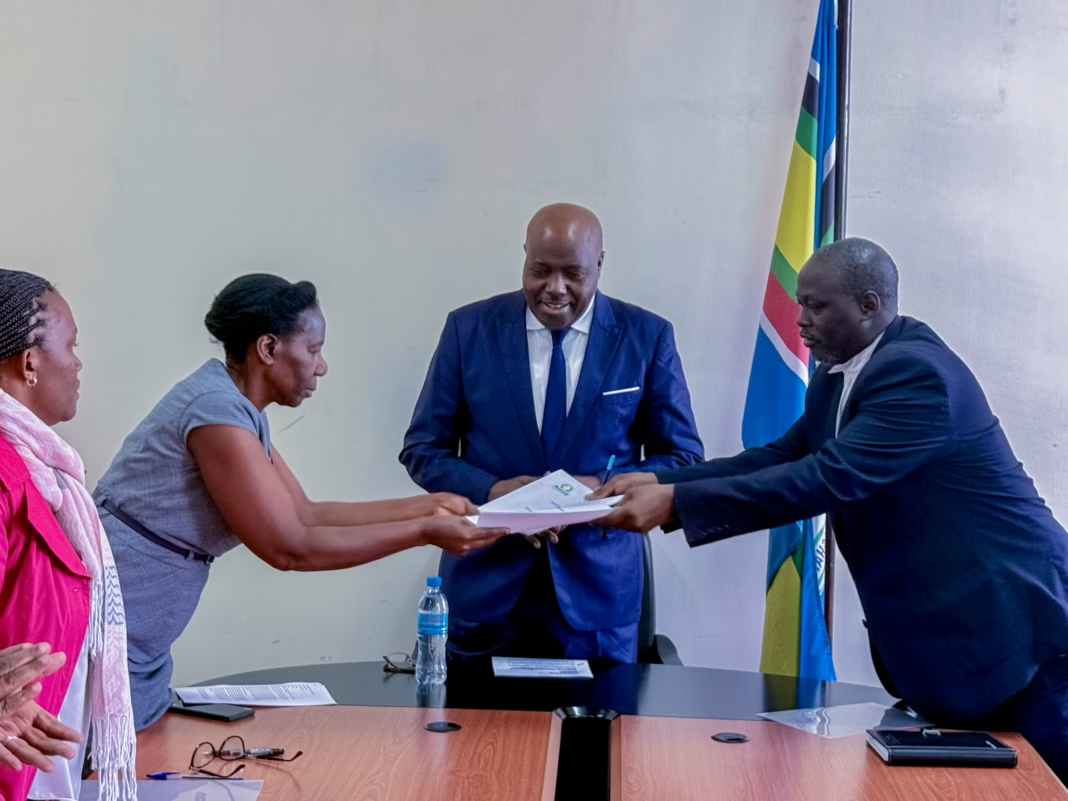

The East African Legislative Assembly (EALA) has entered into a strategic partnership with the Southern and Eastern Africa Trade Information and Negotiations Institute (SEATINI) to strengthen gender-responsive trade policies and improve legislative oversight, in a move aimed at ensuring regional integration delivers tangible benefits to women cross-border traders and other small-scale economic actors.
The Memorandum of Understanding (MoU), signed in Arusha last week, seeks to deepen collaboration between lawmakers and trade policy experts by providing research, technical expertise and policy support to shape legislation on trade, investment and regional economic integration. The agreement places particular emphasis on addressing long-standing barriers faced by women engaged in informal cross-border trade, who account for the majority of small-scale traders across the East African Community (EAC).
Speaking during the signing ceremony, EALA Speaker Joseph Ntakirutimana described the partnership as an important milestone in advancing the Community’s integration agenda through evidence-based policymaking.
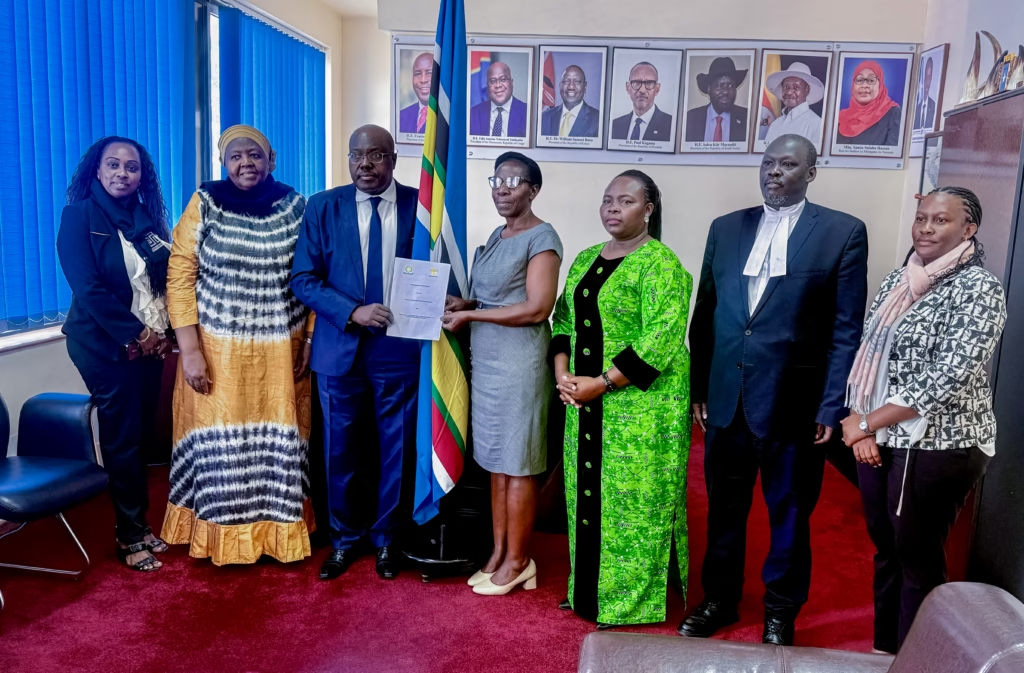
“This partnership marks an important step in strengthening collaboration to support the East African Community regional integration agenda through better trade, investment and evidence-based policymaking,” Ntakirutimana said.
“As an organ of the East African Community, EALA is committed to working with strategic partners that strengthen our legislative, oversight and representative functions.”
He said SEATINI’s expertise in trade and investment policy would strengthen the Assembly’s efforts to craft laws that improve the livelihoods of East Africans while reinforcing parliamentary oversight of regional integration.
“SEATINI’s expertise in trade and investment policy will complement the Assembly’s efforts to promote policies that improve the lives of the people of East Africa,” he said.
The Speaker also highlighted the growing collaboration between SEATINI and the EALA Women’s Caucus, saying the partnership would generate research, build institutional capacity and produce practical policy recommendations to address the challenges affecting women traders.
“This partnership will help address challenges affecting women engaged in cross-border trade while promoting gender-responsive trade and investment policies across the region,” he said.
“It will strengthen research capacity and generate practical policy solutions that advance inclusive and sustainable development within the East African Community.”
The agreement comes as regional policymakers increasingly acknowledge that while the EAC’s common market has expanded opportunities for trade, many women operating at border crossings continue to encounter obstacles that limit their participation in regional commerce.
Speaking on behalf of the EALA Women’s Caucus, Fatuma Ndangiza said the partnership would equip legislators with the technical knowledge needed to influence regional trade negotiations and ensure women’s interests are reflected in future trade agreements.
“We hope that through this partnership we shall be capacitated to understand trade negotiations and ensure that even as our partner states negotiate and sign treaties and agreements, the concerns and priorities of women are integrated, and the ordinary wananchi,” Ndangiza said.
She pointed to findings from an oversight mission undertaken by the Women’s Caucus to several border posts, including Namanga on the Kenya-Tanzania border, Gatuna between Rwanda and Uganda, and border crossings linking Burundi and the Democratic Republic of Congo.
The visits, she said, sought to assess whether women involved in informal cross-border trade were benefiting from regional integration and to identify the challenges they continue to face.
“We realised that although there has been significant increase in cross-border trade in the region, and women are the majority participating, they still face a number of challenges, including lack of information, cases of harassment and facilities that are not gender responsive,” she said.
Ndangiza said the findings had already been shared with several stakeholders, including SEATINI, and expressed hope that the new partnership would accelerate reforms aimed at removing non-tariff barriers and improving conditions for women traders.
“We believe strengthening women traders means ensuring that we remove the barriers that continue to limit their participation.”
For SEATINI, the partnership represents an opportunity to bridge the gap between regional trade policies and the everyday realities of East Africans whose livelihoods depend on cross-border commerce.
Executive Director Jane Nalunga said the organisation has spent more than three decades advocating for equitable trade, fiscal and investment policies that benefit ordinary citizens rather than only large commercial interests.
“Our mission has always been to promote equitable trade, fiscal and investment policies that contribute to sustained development and improve livelihoods across the East African Community,” Nalunga said.
She said the organisation’s focus extends beyond trade negotiations to ensuring regional integration works for women traders, youth entrepreneurs, agro-based micro, small and medium-sized enterprises, and other small-scale producers.
“Our work is about making the promise of East African regional integration a lived reality for all East Africans, especially women cross-border traders, young entrepreneurs, agro-based SMEs and other small-scale producers who form the backbone of our regional economy.”
Trade experts have long argued that women account for a substantial share of informal cross-border trade within the EAC, yet many continue to face limited access to market information, inadequate border infrastructure, inconsistent customs procedures and persistent non-tariff barriers that increase the cost of doing business. Strengthening gender-responsive trade policies has become a growing priority as the bloc seeks to deepen regional integration under the Common Market Protocol and boost intra-EAC trade.
The partnership also comes at a time when EALA has been seeking to reinforce its legislative and oversight role despite financial pressures facing regional institutions. Recent Assembly deliberations have underscored the importance of stronger evidence-based policymaking and partnerships that can improve implementation of the East African Community’s integration agenda.
While the MoU does not create new laws, officials said it establishes a framework through which SEATINI will provide research, technical analysis, policy dialogue and capacity building to support EALA committees and the Women’s Caucus in advancing more inclusive regional trade legislation.
For many women operating along East Africa’s busiest trade corridors, lawmakers hope those policy changes will ultimately translate into safer border crossings, fewer non-tariff barriers and greater opportunities to participate fully in the region’s expanding economy.