
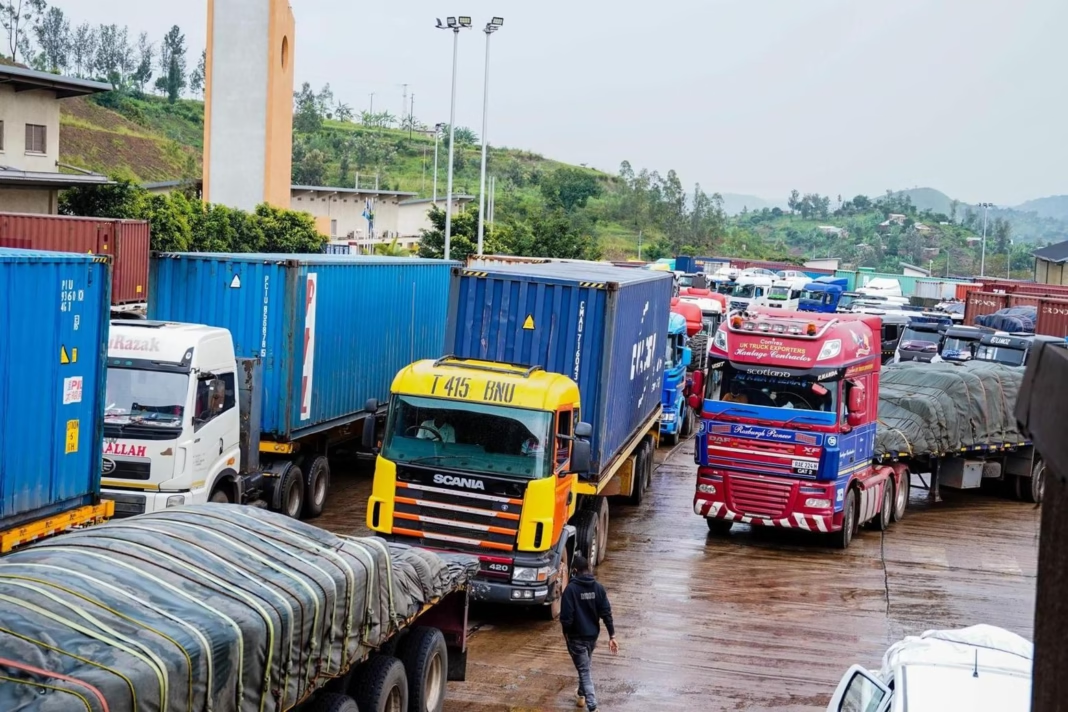

The East African Community’s total trade grew by 25.4% to $156.6 billion in 2025, according to the EAC Quarterly Statistics Bulletin. Yet trade among the bloc’s member states accounted for only 12.3% of total trade, a figure that regional business leaders say highlights persistent obstacles to economic integration.
The statistic has become a growing concern for policymakers and businesses as the EAC pursues an ambitious target of raising intra-regional trade to 40% by 2030. Despite a customs union, common market protocols and years of political commitments, businesses continue to face barriers that make trading across East African borders costly and unpredictable.
“The challenge is no longer tariffs,” said Ahmed Farah, executive director of the East African Business Council (EABC), which has repeatedly called for reforms to remove obstacles to cross-border commerce. Instead, businesses point to a growing list of non-tariff barriers ranging from inconsistent regulations and discriminatory taxes to customs delays and roadblocks.
According to the EAC Sectoral Council of Ministers, the number of reported non-tariff barriers surged from 10 in November 2024 to 48 by May 2025, affecting products including sugar, milk, cement, fish and timber products. The council blamed the increase on discriminatory laws and regulations enacted by member states.
Economic analysts say the persistence of such barriers reflects a deeper contradiction within the regional integration project. While governments publicly support free movement of goods and services, national interests often take precedence when domestic industries come under pressure.
Research by the London-based Overseas Development Institute found that non-tariff barriers continue to recur despite the elimination of most intra-EAC tariffs. Poor infrastructure, cumbersome customs procedures and inconsistent implementation of regional agreements continue to undermine trade facilitation efforts.
Border crossings remain a major challenge for traders. Businesses report facing multiple inspections, varying standards requirements and administrative charges that increase the cost of moving goods across the region. Industry groups say the delays disproportionately affect small and medium-sized enterprises that lack the resources to navigate complex procedures.
Infrastructure deficits also continue to limit regional commerce. Transport bottlenecks, inadequate rail networks and poor road connectivity raise logistics costs across East Africa. Similar challenges have been identified across the continent, where experts estimate that infrastructure gaps remain one of the biggest constraints on intra-African trade.
Another factor is the structure of East African economies themselves. Many countries continue to export similar primary commodities and rely heavily on markets outside the region, particularly Europe, Asia and the Middle East. Economists argue that deeper industrialization and the development of regional value chains will be necessary if member states are to trade more with each other.
Yet there are signs of progress. Intra-EAC trade has increased in absolute terms, rising from about $9.8 billion in 2021 to $14.3 billion in 2024 before reaching $19.3 billion in 2025. However, growth in trade with the rest of the world has been even faster, leaving the regional share largely unchanged.
Business leaders warn that unless governments tackle the underlying barriers, the bloc risks falling short of its 2030 target.
More than 200 non-tariff barriers have been identified and addressed over the past decade, but new ones continue to emerge, illustrating what many observers describe as the gap between regional commitments and national implementation.
For traders moving goods across East Africa’s borders, the promise of a seamless common market remains a work in progress.
As the EAC expands its membership and seeks deeper integration, the challenge facing the bloc is no longer signing agreements but ensuring that those agreements are enforced consistently across all partner states.