
Community clean-up campaigns have become a familiar sight across Burundi’s commercial capital, with residents, local officials and security personnel regularly gathering to clear litter, unblock drainage channels and tidy public spaces. But as authorities intensify sanitation enforcement, questions remain over whether periodic clean-up exercises alone can address Bujumbura’s growing waste management challenges.
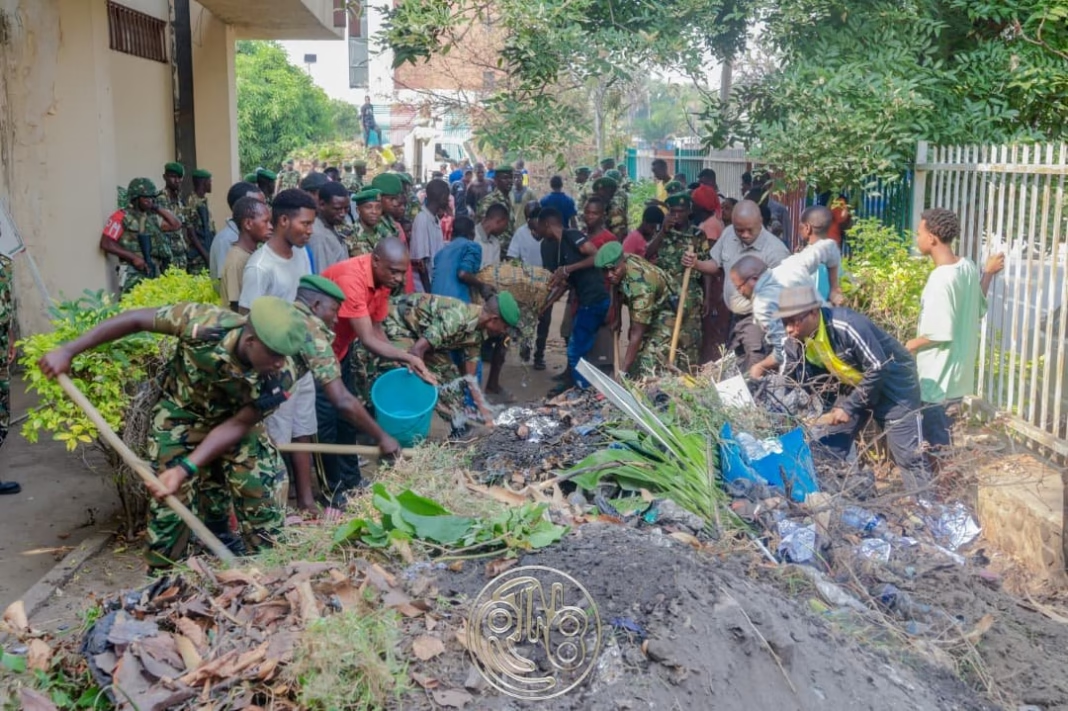
The latest campaign took place on Saturday in Mukaza Commune, where administrative officials, members of the security forces, communal workers and residents participated in community work around the Ministry of National Education and Scientific Research on Avenue du 18 Septembre.
Mukaza Administrator Aline Bigirimana used the exercise to urge residents to keep both their homes and workplaces clean, saying maintaining hygiene is a shared responsibility.
“We regularly remind citizens to keep their surroundings clean,” she said. “Where some fail to do so despite repeated awareness campaigns, communal services intervene.”
The operation went beyond routine cleaning.
Authorities said people detained for street vending and begging also took part in the sanitation work. Bigirimana said the initiative was intended to discourage idleness and encourage productive work, adding that the practice would continue.
The commune also imposed fines of 500,000 Burundian francs on several public-facing establishments found to be operating in unsanitary conditions, signaling a tougher approach to enforcing hygiene standards.
Community work has long been promoted by the Burundian government as a way of fostering civic responsibility while improving public infrastructure and sanitation. Across the country, residents regularly participate in communal work, particularly on Saturdays, cleaning roads, public buildings and drainage systems.
However, urban sanitation experts say periodic campaigns are only one part of a much broader waste management system.
Without reliable waste collection, sufficient disposal facilities, public education and consistent enforcement of environmental regulations, litter can quickly return to streets and public spaces after community work ends.
Rapid urban growth has also increased pressure on Bujumbura’s waste management services, particularly in densely populated neighborhoods where household waste disposal and drainage remain persistent concerns.
Blocked drainage channels have contributed to localized flooding during heavy rains, while unmanaged waste can create breeding grounds for mosquitoes and increase the risk of waterborne diseases.
Enforcement versus prevention
Mukaza’s decision to fine businesses operating in unhygienic conditions reflects a broader shift from awareness campaigns toward stricter enforcement.
Whether financial penalties improve compliance, however, may depend on regular inspections and transparent application of sanitation regulations.
Environmental specialists generally argue that sustainable urban cleanliness requires a combination of public participation, functioning municipal waste collection services, accessible disposal points and stronger environmental education.
For many residents, the success of community work is measured not by how much waste is collected during a single morning, but by how long neighborhoods remain clean afterward.
The latest operation underscores local authorities’ determination to improve sanitation in Burundi’s busiest urban center. Yet it also highlights the scale of the challenge.
As Bujumbura continues to expand, maintaining a cleaner city is likely to depend not only on monthly community work but also on sustained investment in waste collection, stronger urban planning, effective enforcement of sanitation standards and continued public participation.
For now, community clean-up campaigns remain an important civic tradition. Whether they can deliver lasting improvements will ultimately depend on what happens after the volunteers, officials and communal workers return home.