
DURBAN, South Africa — For more than a decade, Burundian asylum seeker “Ndayizeye” built a life in South Africa. Like many migrants from the Great Lakes region, he worked, ran businesses and supported his family from the income he earned in Durban’s communities.
But after the rise of the anti-foreigner “March and March” campaign, he says that life changed overnight.
“We were living well in the local areas. Burundians had businesses including salons, garages, shops, panel-beating places and some were Uber drivers,” Ndayizeye told Burundi Times, speaking from the Durban Refugee Reception Centre where he has been staying for about three months.
“For us everything stopped. We left our jobs because we feared what could happen.”
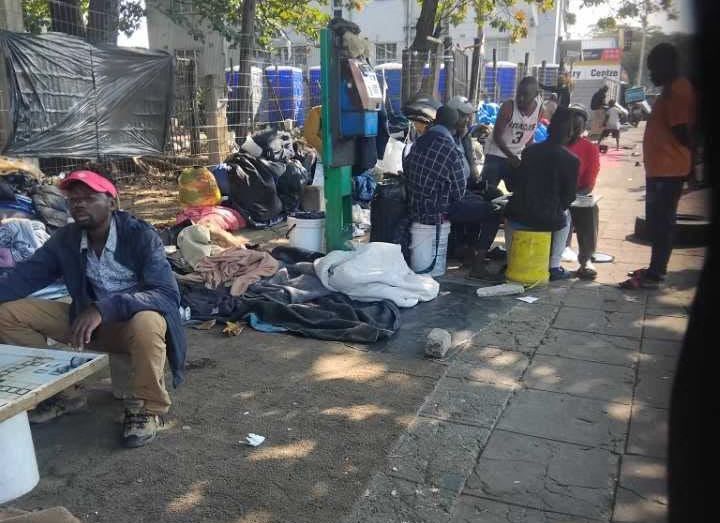
Ndayizeye, a pseudonym used by Burundi Times to protect the asylum seeker’s identity because of security concerns, is among dozens of foreign nationals who say they fled their communities in KwaZulu-Natal after anti-foreigner demonstrations escalated, forcing them to seek shelter at government facilities in Durban.
South African authorities confirmed that hundreds of foreign nationals gathered at the Diakonia Centre in Durban before being moved to the Home Affairs refugee reception facility for verification. Officials said the process was designed to determine the immigration status of those seeking assistance.
From businesses to displacement
Before the crisis, Ndayizeye said many Burundians had become part of Durban’s informal and small-business economy.
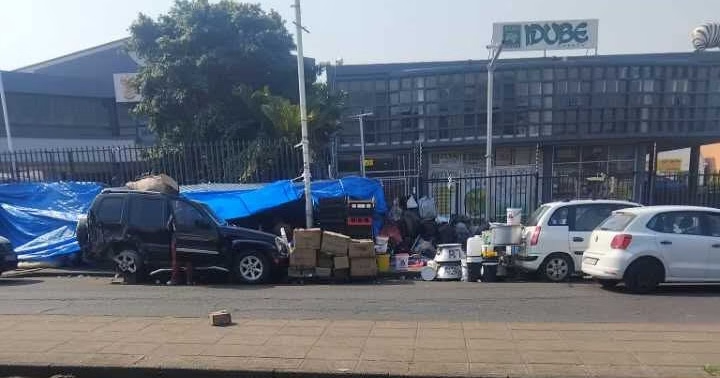
“People had salons, garages, shops and panel-beating places. Some were driving Uber. They were working and surviving,” he said. The disruption, he said, forced many to abandon businesses they had spent years building.
“People lost everything because they had to leave immediately. You cannot continue working when you are afraid for your life.”
The experience mirrors concerns raised by rights groups and international agencies that xenophobic pressure in South Africa often affects migrants regardless of whether they hold legal documents.
Verification finds many with legal status
Ndayizeye said many people initially feared that authorities would treat them as undocumented migrants.
However, he said verification at the Home Affairs office showed that many Burundians and other foreign nationals had valid immigration documents. “When we arrived at Home Affairs, they verified our status. All of us were legally here as refugees,” he said.
South African authorities have not publicly confirmed the legal status of every person involved, but officials said the verification operation was specifically launched to determine who was legally documented and who required further immigration action.
The eThekwini Municipality said approximately 457 foreign nationals were verified during the process, with only two people found without proper documentation, according to a statement from the city.
According to the South African Human Rights Commission and official inquiries, xenophobic violence has repeatedly erupted in South Africa over the past two decades. The country’s deadliest outbreak in 2008 killed 62 people, injured more than 670 and displaced over 100,000 others.
Further waves of anti-foreigner violence in 2015 and 2019 claimed at least seven and 12 lives respectively. During the latest anti-immigrant unrest in 2026, at least four people were reported killed in incidents linked to the protests, while thousands of migrants were displaced or sought protection at government facilities as authorities investigated the violence.
Not all Burundians affected equally
Another Burundian living in South Africa Ngendakumana Jean Patrick, said the impact of the recent anti-foreigner campaign has not been uniform across the country.
Speaking from Johannesburg, where he has lived for almost 26 years, he said many Burundians have integrated into their local communities and continue to live without major incidents. “I personally live in Johannesburg and we don’t have issues. All my friends in the community don’t have issues. It’s probably happening more in the townships,” he told Burundi Times.
Ngendakumana said he has witnessed cases of looting and extortion targeting small businesses but believes Burundians are generally not the primary targets. “They are not really looking for Burundians. It’s more a campaign targeting Nigerians, Zimbabweans and Mozambicans,” he said, adding that some business owners have long paid informal “protection fees” to local groups.
However, he acknowledged that Burundians in Durban have been hit much harder. “I have a cousin in Durban. They told me they are no longer working. Some cannot pay rent anymore, and surviving has become difficult.” He also suggested that the challenges facing some Burundians stem from both security concerns and immigration issues.
“There are some Burundians currently at Home Affairs not because they never had documents, but because some of their permits expired,” he said. While calling for South African authorities to address outstanding asylum cases, he also urged the Burundian government to assist those wishing to return home voluntarily by facilitating temporary travel documents.
The asylum backlog problem
For Burundians like Ndayizeye, the current crisis has exposed a deeper problem: years of uncertainty inside South Africa’s asylum system. Some Burundians, he said, have lived in South Africa for more than 10 or 20 years while waiting for final decisions on refugee applications.
For more than 10 years, we have been asylum seekers without being granted refugee status. Some had their work permits revoked, and now they are struggling to return to their jobs,” he said. “
UNHCR has previously highlighted documentation challenges affecting refugees and asylum seekers in South Africa and says it supports efforts to address asylum backlogs and protection concerns. Ndayizeye said Burundian asylum seekers believe they need assistance from both South African authorities and international organizations.
“We have problems because we need administration assistance. The embassy is not helping us,” he said. According to Ndayizeye, some asylum seekers were told that consular assistance was limited to Burundians holding passports rather than asylum seekers.
Burundi Times contacted South Africa’s Department of Home Affairs, UNHCR South Africa and the Embassy of Burundi in Pretoria for comment before publication. None had responded by the time this article was published.
Fear of transfer to Lindela
After months at the Home Affairs facility, Ndayizeye said residents fear being transferred to the Lindela Repatriation Centre, a facility used by South African authorities for immigration detention and deportation processes.
“They told us we will be taken to Lindela. Lindela is a deportation facility. They said they will find us shelter for the time being,” he said.
The Department of Home Affairs has not publicly confirmed that all those currently at the centre will be transferred to Lindela.
Ndayizeye also believes changing perceptions about Burundi have complicated asylum claims. “When the Burundian president visited South Africa, he said there is no war in Burundi. Because of that, people seeking asylum face challenges,” he said.
The statement reflects the concerns of some asylum seekers, but Burundi Times could not independently verify that this was the reason for any individual asylum decision.
South Africa hosts refugees and asylum seekers from across Africa, including Burundi and other Great Lakes countries. UNHCR has warned that migrants and refugees continue to face challenges linked to xenophobia, documentation and access to services.
For Ndayizeye, the immediate concern is survival. “We have been here three months. Eating is a problem. Some organizations are helping us, but the government is not helping much.” As he waits for a decision on what happens next, he says many Burundians who once considered South Africa home are now uncertain about their future.
According to UNHCR, South Africa hosts one of Africa’s largest urban refugee populations, including thousands of Burundians who fled political instability and insecurity over the past two decades. UNHCR estimates that about 9,900 Burundian refugees and asylum seekers were living in South Africa, many of whom have spent years awaiting decisions on their asylum applications while living and working in cities such as Johannesburg, Durban and Cape Town.