
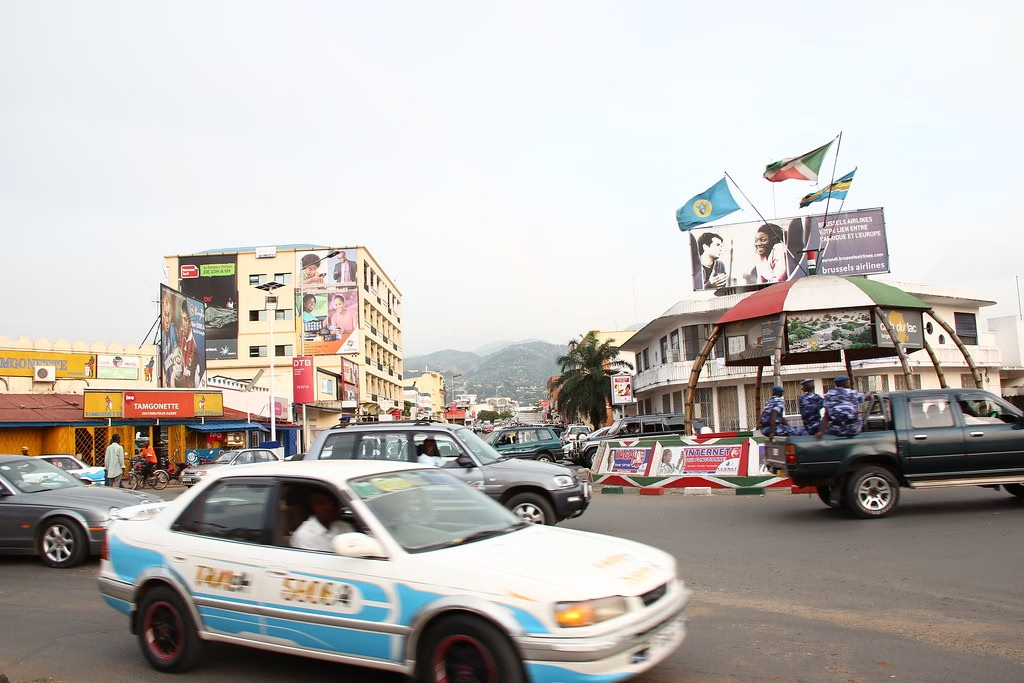

Burundi’s rapidly growing urban population is increasing pressure on the country to create jobs, improve infrastructure and expand economic opportunities, as a new World Bank report warns that Africa’s urbanisation could fail to deliver its economic potential without better planning and investment.
The report, Sub-Saharan Africa’s Urban Awakening: Catalyzing Economic Growth and Job Creation, released on October 29, projects that the region will add 748 million urban residents between 2025 and 2050, bringing its urban population to approximately 1.7 billion.
It says the expansion presents an opportunity to generate millions of jobs, particularly for young people, but warns that governments must address infrastructure shortages, weak urban planning and limited access to financing to translate population growth into economic gains.
Burundi is among the countries facing this challenge. Data from the 2024 General Population, Housing, Agriculture and Livestock Census show that approximately 3.08 million people live in urban areas, representing 24.5% of the country’s population of 12.33 million.
The census identifies Bujumbura as the country’s most urbanised province, with 52.8% of its population living in urban areas. The province accounts for approximately 1.75 million urban residents.
Meanwhile, World Bank data show that Burundi’s urban population grew by an estimated 5.8% in 2025, highlighting the increasing importance of urban development in the country’s economic and social planning.
The challenge is whether the expansion of towns and cities can generate enough productive employment to absorb the growing workforce.
According to the World Bank, around 15 million young people enter labour markets across Sub-Saharan Africa every year. The region needs to create approximately the same number of jobs annually just to keep pace with its expanding workforce.
“Sub-Saharan Africa’s urban transition can transform the region’s jobs market,” said Paschal Donohoe, the World Bank Group’s managing director and chief knowledge officer.
He said investment in infrastructure, land, connectivity and financing could help cities attract private capital, improve productivity and create formal employment opportunities.
For Burundi, the issue extends beyond the expansion of Bujumbura. Secondary urban centres, including Gitega, Ngozi and Rumonge, also face the task of developing the infrastructure and economic activities needed to attract businesses and generate employment.
A World Bank assessment of urbanisation in Burundi has previously identified inadequate urban services, inefficient land markets, limited investment resources and weak local government capacity as constraints on the country’s urban development.
The assessment also highlighted the importance of secondary cities in commercialising agricultural production, noting that agribusiness activities and related value-addition jobs are concentrated in several urban and peri-urban areas, including Bujumbura, Gitega, Kayanza, Rutana and Rumonge.
Agriculture remains central to Burundi’s economy and employment structure, making stronger connections between rural producers, urban markets and agricultural processing businesses particularly important.
The latest World Bank report argues that cities can generate more productive employment when businesses are able to locate close to workers, transport networks and markets.
It recommends that governments prioritise infrastructure, public transport and affordable housing in locations with strong economic potential. It also calls for better preparation of urban peripheries, including establishing road networks and reserving land for essential services before settlements expand.
For smaller towns, the report recommends targeted investment in locations with strong economic and geographic advantages, particularly those situated along transport corridors and near other economic opportunities.
Financing and urban planning
The report also identifies local government financing as an important factor in determining whether African cities can manage rapid population growth.
It recommends modernising property tax systems through affordable technology to improve revenue collection, strengthen municipal creditworthiness and attract private investment.
The World Bank argues that stronger urban governance, predictable financing and greater accountability are essential to improving infrastructure and creating an environment in which businesses can expand.
Mark Roberts, the World Bank’s senior urban economist and a co-author of the report, said Africa’s urban transformation would depend on whether cities had the institutions and resources needed to manage growth effectively.
“Stronger urban governance, more predictable financing, and greater accountability are essential to turn rapid urbanization into better infrastructure, more investment, and ultimately more and better jobs,” he said.
With nearly three-quarters of the population still living in rural areas, strengthening links between urban centres and surrounding agricultural communities could also help broaden the benefits of urban economic growth.
The World Bank says decisions taken now on infrastructure, land management, transport and local government financing will shape the region’s urban economies for generations.