
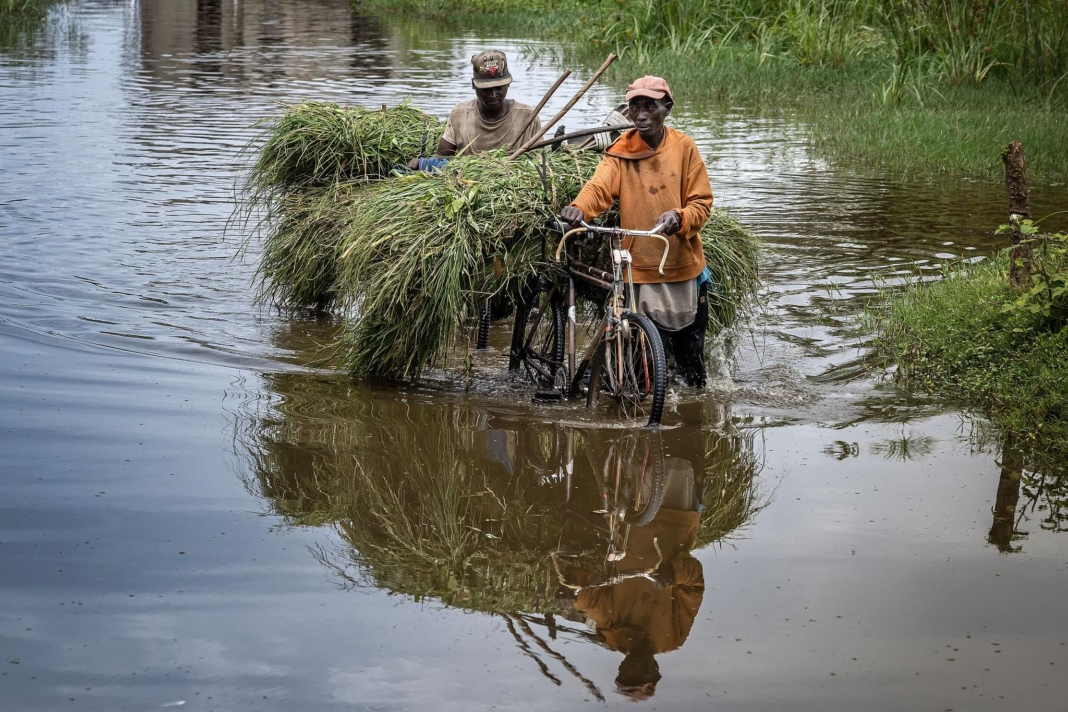

Burundi’s agricultural production faces further pressure from strengthening El Niño conditions, with excessive rainfall, flooding and fertilizer shortages threatening harvests and prolonging food-security challenges into 2027.
The warning comes as the East African Community (EAC) steps up regional preparations for an El Niño event expected to bring above-average rainfall across parts of East Africa through December, with possible effects extending into February 2027.
In its September 2026 food-security update, the Famine Early Warning Systems Network (FEWS NET) projected below-average agricultural production in Burundi’s 2026 Season A, citing fertilizer shortages, delayed rainfall and reduced planting areas.
The agency also warned that above-average rainfall expected between October and December could cause localized flooding, landslides, soil erosion and waterlogging, resulting in partial crop losses.
Crops particularly vulnerable to excessive moisture include beans and sweet potatoes, which are important food sources for Burundian households.
The agricultural risks come as food prices remain significantly above historical averages. FEWS NET reported that, as of August 2026, prices of beans and sweet potatoes were approximately 50% above their five-year averages, while cassava and maize prices were slightly more than 10% higher.
Bean prices had also increased by approximately 10% between August 2025 and August 2026, reflecting reduced supplies following poor harvests in the 2026 Season A and B.
The combination of weak harvests, high production costs and expensive transport could further constrain household access to food, particularly in areas dependent on markets for supplies.
FEWS NET warned that road damage caused by heavy rainfall, particularly around Bujumbura and the Imbo Plains, could disrupt transportation and market access, increasing the cost of moving food between producing areas and urban markets.
The agency also expects food-security conditions in the Northern Lowlands livelihood zone to deteriorate from Stressed (IPC Phase 2) to Crisis (IPC Phase 3) during the October 2026-January 2027 lean season.
The assessment identified depleted household food stocks, low agricultural wages, elevated food prices and limited cross-border income opportunities as contributing factors.
El Niño preparedness
The warnings coincide with the EAC’s adoption of a regional El Niño Emergency Preparedness and Response Plan on Nov. 6.
The regional plan identifies the western highlands of Burundi, Rwanda and eastern Democratic Republic of Congo among priority areas requiring attention.
The IGAD Climate Prediction and Applications Centre (ICPAC) told the regional meeting that El Niño was established and expected to strengthen, potentially reaching very strong intensity. A positive Indian Ocean Dipole could amplify its effects.
Calistus Wachana of ICPAC said there was a near 100% probability that the phenomenon would persist through February 2027.
“The question for our region is no longer whether El Niño will come, but how ready we are when the rains peak,” Wachana said.
The EAC also warned that the consequences could extend beyond the rainy season, with drought, hot dry spells and cross-border pastoral movements potentially following periods of heavy rainfall. The event could also influence the March-May 2027 long rains.
Burundi has already begun preparing its national response. In October, the government convened a four-day strategic meeting in Ngozi to develop and cost a national operational plan for preparedness, anticipation, response and recovery from the effects of El Niño in 2026-2027.
According to the Ministry of Interior, Community Development and Public Security, the country’s 2026-2028 national multi-hazard contingency plan identifies flooding as its leading disaster risk.
The ministry cited the 2023-2024 El Niño episode, which affected more than 290,000 people, displaced more than 47,000 and destroyed over 3,900 homes and 220 classrooms, alongside damage to health, road and energy infrastructure.
At the regional level, the EAC plan identifies agriculture, food security and livelihoods as one of its five priority areas. It calls on member states to strengthen agricultural, water and livestock strategies and harvest excess rainwater through dams for domestic consumption, irrigation and livestock.
The EAC Secretariat was directed to develop an implementation plan by Nov. 30 and urgently mobilize resources for the regional response.