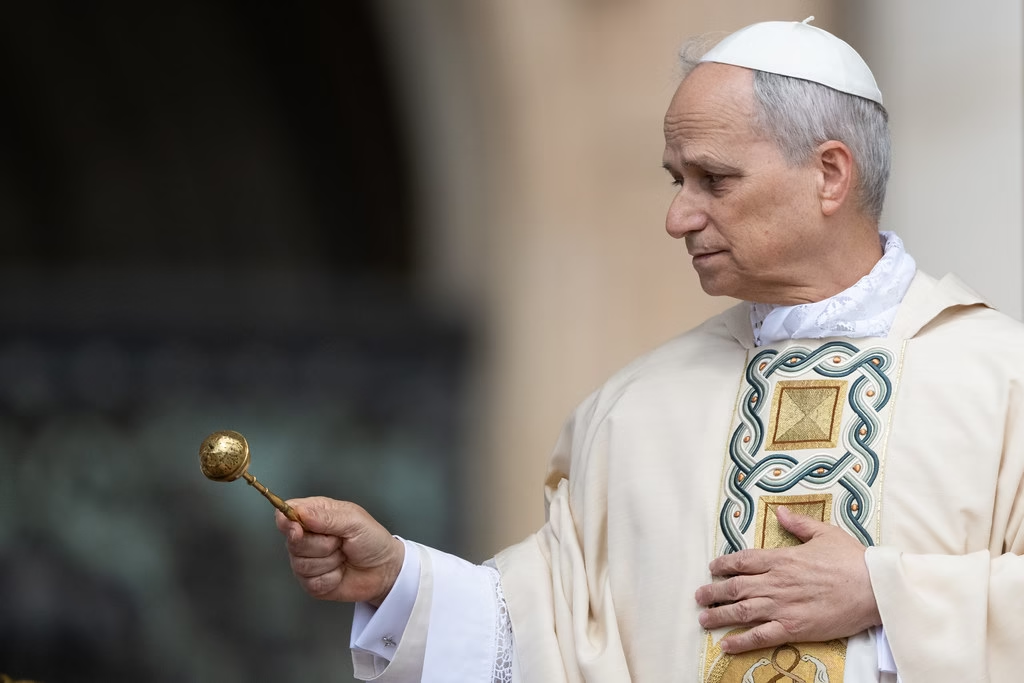

Pope Leo XIV issued a forceful condemnation of ongoing global conflicts, urging world leaders to end what he described as the “madness of war” and reject the use of religion to justify violence.
Speaking during a special prayer vigil at St. Peter’s Basilica on April 11, the pope warned that war is driven by a “delusion of omnipotence” and called for an immediate shift toward dialogue and diplomacy.
“God does not bless any conflict,” the pontiff said in earlier remarks, insisting that military action cannot bring lasting peace and that violence only deepens human suffering.
His comments come amid escalating tensions linked to the ongoing conflict involving the United States, Israel and Iran, as well as fragile diplomatic efforts to reach a ceasefire.
Without naming specific countries, the pope criticized the growing trend of invoking religious language to justify warfare, saying such rhetoric contradicts core Christian teachings. He stressed that true strength lies not in military power but in “serving life” and promoting coexistence.
The Chicago-born pontiff also highlighted the humanitarian toll of war, referencing letters from children affected by conflict and warning against the normalization of violence. He urged leaders to “return to the negotiating table” and pursue peace through dialogue rather than rearmament.
The Vatican’s stance reflects a broader, consistent message from the pope in recent weeks. He has repeatedly called for ceasefires, warned of a “spiral of violence,” and emphasised that “violence can never lead to justice, stability or peace.”
The latest remarks mark one of his strongest interventions yet on global conflicts, positioning the Vatican as a vocal moral voice against war at a time of rising geopolitical tensions.
Since the outbreak of the current Middle East conflict earlier this year, the pope has increasingly sharpened his tone, condemning threats against civilians and describing war as “absurd and inhuman.” His appeals echo longstanding Catholic teaching that prioritises peace, human dignity and international law over military solutions.