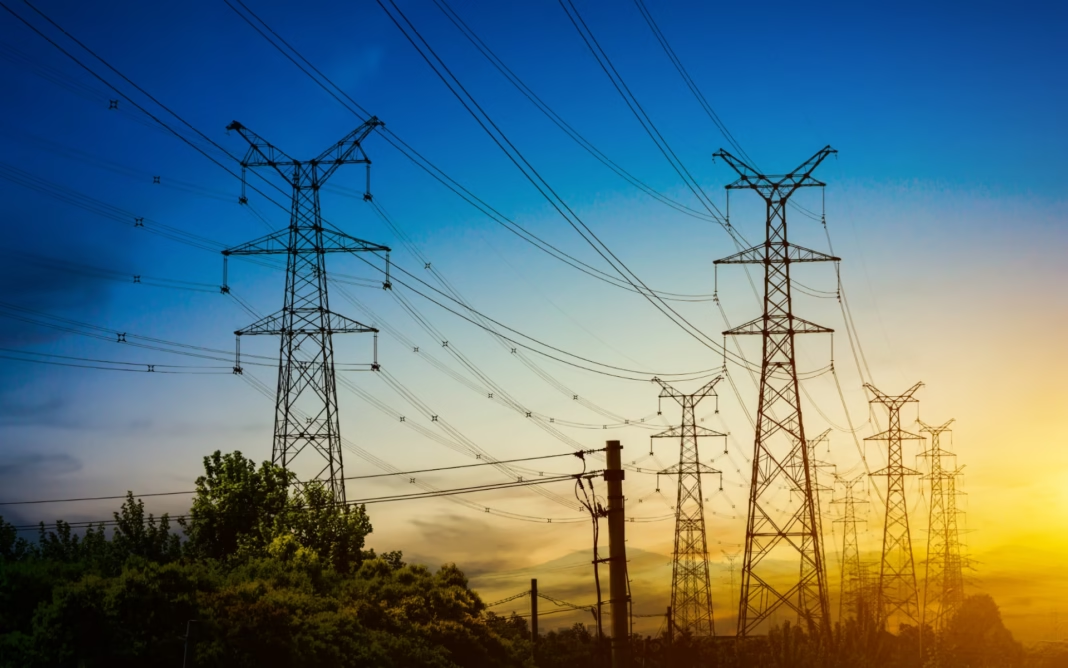

Burundi is among 17 African countries that committed Wednesday to concrete reforms aimed at boosting electricity access under Mission 300, a global initiative led by the World Bank Group and the African Development Bank Group that seeks to connect 300 million Africans to power by 2030.
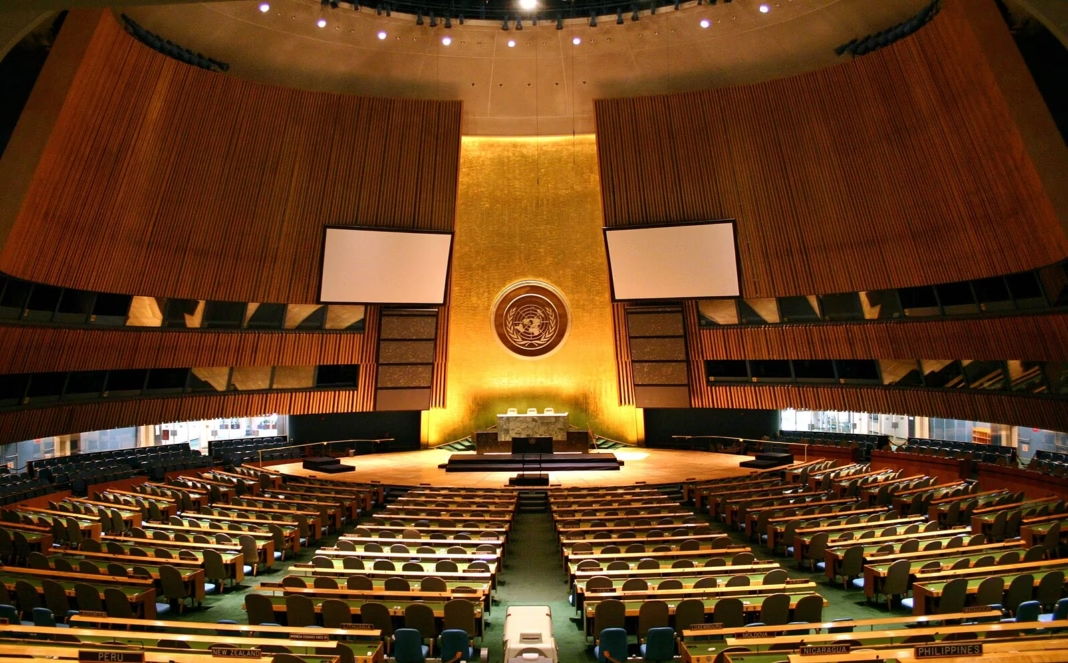
The announcement was made in New York during the Bloomberg Philanthropies Global Forum, where governments endorsed National Energy Compacts—policy and investment blueprints designed to guide public spending, attract private investment and accelerate energy access.
Other participating countries include Benin, Botswana, Cameroon, Comoros, Republic of the Congo, Ethiopia, Gambia, Ghana, Guinea, Kenya, Lesotho, Mozambique, Namibia, São Tomé and Principe, Sierra Leone and Togo.
“Electricity is the bedrock of jobs, opportunity, and economic growth,” said World Bank Group President Ajay Banga. “That’s why Mission 300 is more than a target—it is forging enduring reforms that slash costs, strengthen utilities, and draw in private investment.”
Since its launch, Mission 300 has already connected 30 million people to electricity, with more than 100 million additional connections underway.
For Burundi, where only about 12 percent of the population had access to electricity in 2020, according to the World Bank, the initiative is seen as a chance to accelerate long-delayed energy expansion projects. Foreign Minister Edouard Bizimana, who represented the country at the forum, said Bujumbura has set “ambitious targets for access to electricity and clean cooking to improve the economic and social development of its population.” He emphasized that private sector participation will be “crucial to achieving these goals.”
African Development Bank President Sidi Ould Tah said affordable and reliable power is “the fastest multiplier” for small and medium-sized enterprises, agro-processing, and industrial growth across the continent.
The Energy Compacts, tailored to each nation’s context, focus on three tracks: infrastructure development, financing, and policy reforms. Earlier this year, 12 other African countries—including Nigeria, Senegal and Tanzania—endorsed similar compacts, pledging more than 400 policy actions to strengthen utilities, reduce risks for investors and remove barriers to energy expansion.
Partners backing Mission 300 include the Rockefeller Foundation, the Global Energy Alliance for People and Planet, Sustainable Energy for All, and the World Bank’s Energy Sector Management Assistance Program.
Burundi’s electrification levels are among the lowest in the region. In neighboring Democratic Republic of Congo, only about 20 percent of the population had access to electricity in 2020, according to World Bank data. Tanzania, by comparison, has made faster progress, with about 40 percent of its population connected to power. Kenya leads the region, with more than 75 percent of households connected. Rwanda, meanwhile, has reached around 54 percent electricity access, reflecting sustained investment in its grid and off-grid systems.
Beyond reform, Burundi has significant hydroelectric potential that remains largely untapped. Projects such as the Ruzizi hydroelectric dam on the border with the Democratic Republic of Congo and Rwanda could increase generation capacity and foster regional energy trade. Smaller rivers across Burundi also offer scope for micro- and mini-hydropower plants, which experts say could provide reliable energy to rural communities if paired with private investment and donor support.
Analysts say that aligning with Mission 300 could help Burundi attract donor funding and private capital to expand renewable projects, upgrade its grid, and reduce costly reliance on small diesel-powered stations.
If fully implemented, the reforms could help Bujumbura meet its electrification goals, create jobs and attract investment in key sectors such as agribusiness and digital services.
📊 Factbox: Electricity Access in East Africa (World Bank, 2020 data)
- Burundi — 12%
- Democratic Republic of Congo — 20%
- Tanzania — 40%
- Kenya — 75%+
- Uganda — 42%
- Rwanda — 54%
- South Sudan — 7%