
Political parties and electoral stakeholders in Burundi are calling for broader political dialogue and greater inclusion ahead of the country’s 2027 presidential election, as President Évariste Ndayishimiye convened consultations aimed at easing tensions and promoting confidence in the electoral process.
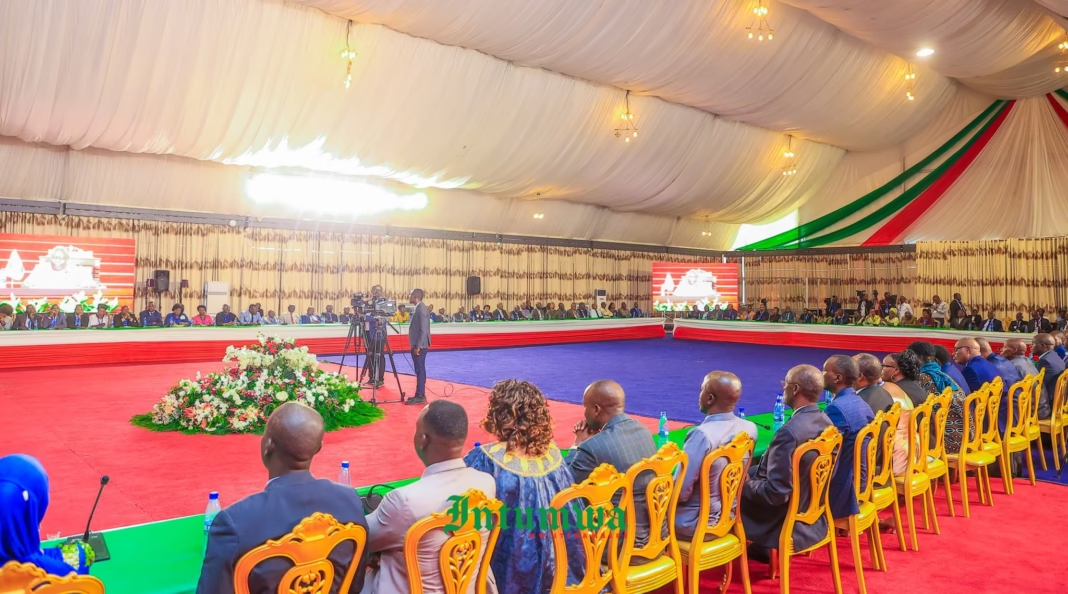
The meeting, held Friday at the Kiriri presidential palace in Bujumbura, brought together political party leaders, representatives of the Independent National Electoral Commission (CENI), civil society organizations, religious denominations and senior state officials under the theme: “Let us unite on the same path to jointly prepare transparent and peaceful elections.”
The consultations followed calls by some political actors for the establishment of a more inclusive dialogue framework before the start of the 2027 electoral process.
In his address, Ndayishimiye urged political leaders to uphold democratic principles and avoid rhetoric that could undermine national cohesion.
“Power comes from the people,” the president said, stressing that elected officials must serve citizens regardless of political affiliation.
He added that “every citizen must freely exercise their right to vote, without intimidation or pressure,” while emphasizing that institutions responsible for elections must ensure a credible and transparent process.
The president also warned against attempts to destabilize the country during the electoral period.
“Anyone who attempts to disrupt the elections will face severe sanctions,” Ndayishimiye said, describing electoral violence or disorder as a threat to Burundi’s stability and peace-building efforts.
Seeking to frame the elections as a test of political responsibility, the president told participants that “if someone wants to lead the country, they must follow democratic channels.”
He further called on political actors to preserve the country’s image and social stability ahead of the vote.
“The image of the country depends largely on the behavior of political actors,” he said.
Among officials attending the meeting were National Assembly Speaker Gélase Ndabirabe, Prime Minister Gervais Ndirakobuca, Senate President Gamaliel Nkurunziza, Justice Minister Aimée Laurentine Kanyana and CENI President Prosper Ntahorwamiye.
The consultations come as Burundi seeks to avoid a repeat of past election-related unrest, particularly the 2015 political crisis triggered by former President Pierre Nkurunziza’s controversial decision to seek a third term. The unrest led to violence, political repression and international criticism.
Since taking office in 2020, Ndayishimiye has repeatedly presented political dialogue as part of efforts to stabilize the country and improve governance, though opposition figures and rights organizations continue to raise concerns over political freedoms and civic space ahead of future elections.