
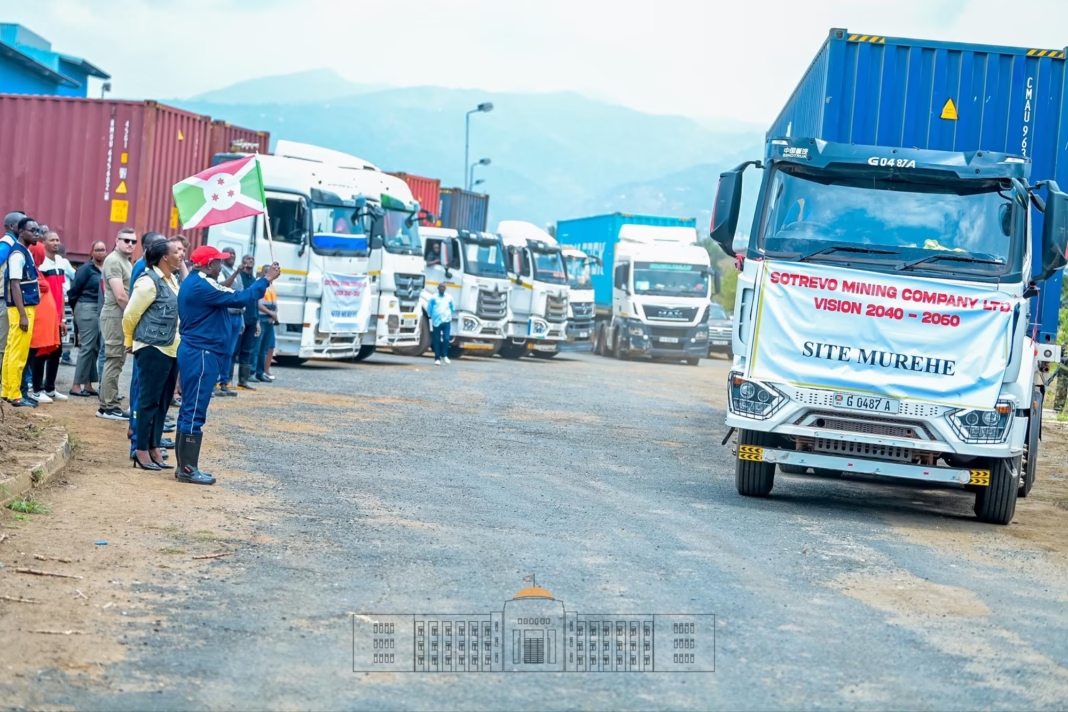

Burundi’s government on Oct. 27, 2025, carried out the country’s second official export of 175 tons of 3T minerals cassiterite, coltan, and wolframite sourced from Murehe and Tanganyika mining sites, operated by SOTREVO and Tanganyika Minerals, according to a statement from the State House.
While addressing the press, Burundi president Evariste Ndayishimiye emphasized the government’s intention to ensure that the state, as the owner of the subsoil, benefits from mineral exploitation. “The rightful ownership belongs to the population,” he said.
President. Ndayishimiye also addressed illegal mining, stating that fraudsters and unlicensed operators would face a “zero-tolerance” policy. He encouraged citizens to report hidden mineral stocks or illicit activities, noting that those who provide information could receive rewards.
Burundi’s mining sector has historically faced challenges including informal mining, smuggling, and limited regulatory oversight. The government has in recent years sought to formalize operations through legal reforms, including the revised Mining Code (Law No. 1/19) enacted in August 2023.
The code requires mining companies to be registered in Burundi and grants the state a stake in mining projects.
3T minerals—tin, tantalum, and tungsten are widely used in electronics and industrial applications, making them economically significant. Analysts say transparent and well-regulated exports could increase state revenues, although monitoring compliance and addressing illegal activities remain ongoing challenges.
Observers note that Burundi’s approach mirrors efforts in other regional producers to strengthen control over mineral resources and formalize supply chains, particularly amid international concerns over conflict minerals and responsible sourcing.
As the country continues to develop its mining sector, the effectiveness of these regulatory measures and their impact on the broader economy will be closely watched by both domestic and international stakeholders.


