
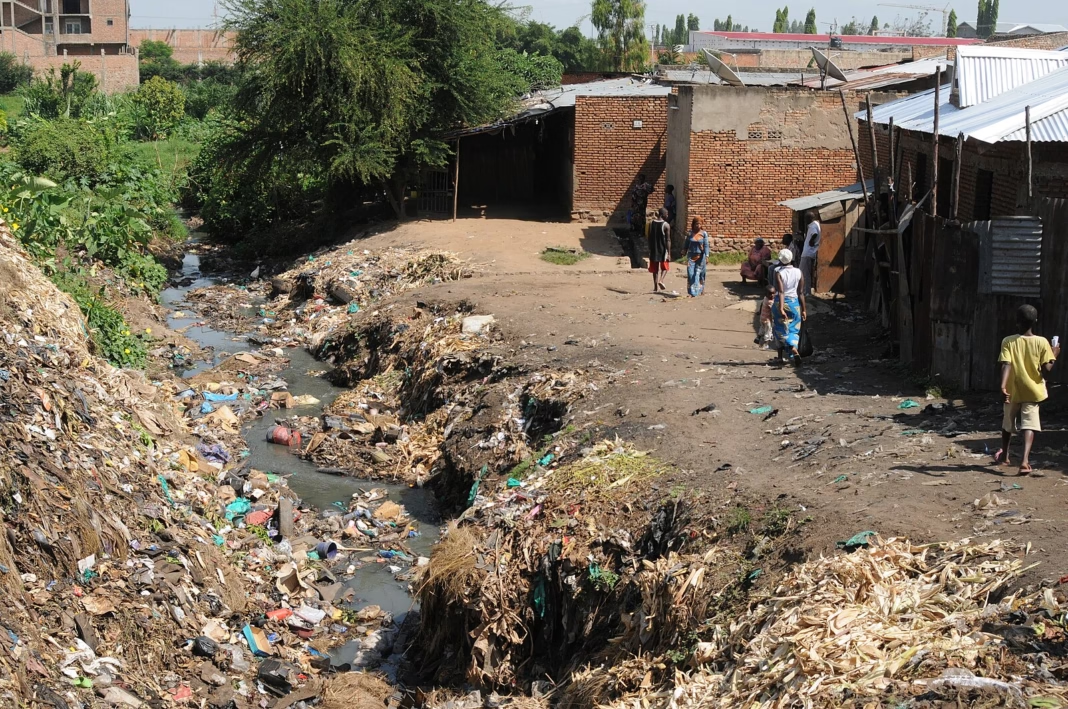

Industrial and commercial establishments in Burundi could face fines of up to 500,000 Burundi francs (around US $150) for dumping wastewater and other pollutants into rivers, lakes, or wetlands, under a new sanitation ordinance enacted this month.
The law prohibits factories, workshops, and business premises from releasing untreated waste or oil residues into natural ecosystems. Violators may be subject to immediate penalties, with funds collected through the Burundi Revenue Authority to promote transparency and compliance.
Environmental experts say the measure is part of the government’s effort to curb pollution and protect water resources critical to both urban and rural populations. Burundi’s major lakes and rivers, including Lake Tanganyika, have faced increasing contamination from industrial runoff and household waste.
The United Nations Environment Programme (UNEP) has repeatedly warned that industrial waste and urban sewage remain among the leading threats to freshwater systems in East Africa. In its 2024 Regional Environmental Outlook, UNEP urged countries to strengthen enforcement and monitoring mechanisms to safeguard ecosystems that support livelihoods and biodiversity.
The Burundian ordinance introduces specific fines for polluters and requires businesses to ensure their surroundings are clean and sanitary. The regulation also forbids individuals from discarding animal carcasses, construction debris, or oils into water bodies or public spaces.
Some experts, however, question whether the fines will be effective against large-scale industrial polluters. The maximum penalty of 500,000 BIF (approximately US $150) is considered low relative to the environmental and public health damage caused by untreated wastewater.
“The law is progressive on paper, but for major industrial polluters, the fine is symbolic rather than a true deterrent,” said a Bujumbura-based environmental consultant who requested his name not to be revealed.
World Bank guidance on environmental compliance emphasises that pollution prevention measures should be technically and financially feasible, while UNEP guidelines note that fines should be sufficient in relation to the scale of harm and supported by strong enforcement capacity. “Without proper monitoring and meaningful penalties, these regulations may have limited impact,” said the environmental Consultant.
In Burundi, where more than 80 percent of the population relies on natural water sources, balancing industrial growth with environmental sustainability remains a challenge. Authorities say the new fines are part of a broader campaign to make cities cleaner and protect natural resources for future generations.


