

Burundi, Lyca Mobile discuss partnership to expand nationwide connectivity

Burundi president Evariste Ndayishimiye met Friday with a delegation from Lyca Mobile led by founder Allirajah Subaskaran at Ntare Rushatsi Palace to discuss a strategic partnership aimed at expanding telecommunications access and supporting the country’s long-term development goals.
The delegation thanked the president for promulgating a decree authorizing the company to establish operations in...
Burundi monetary authorities stand pat on rates, focus on financial reforms

The Burundi Central Bank (BRB) said the economy of Burundi showed signs of resilience in late 2025 despite persistent inflationary pressures and external sector challenges, as policymakers opted to loosen monetary policy while advancing financial-sector reforms.
In its Monetary Policy Committee report for the fourth quarter of 2025, the bank said "real gross domestic...
Leaders urge action on investment barriers to unlock EAC growth
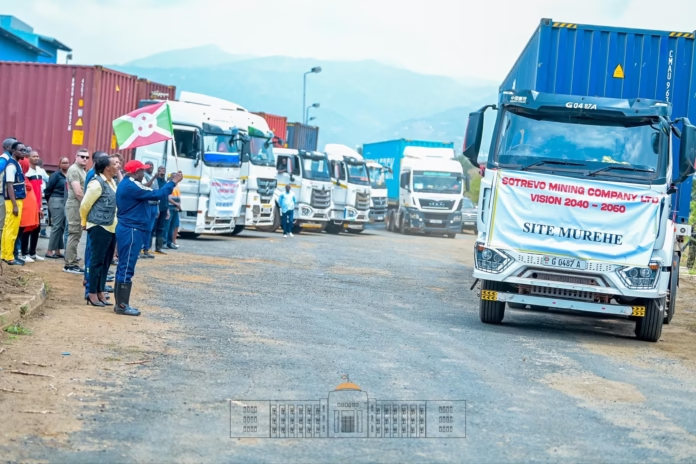
Regional leaders and private-sector executives called for faster implementation of trade and investment reforms across East Africa at the East African Business and Investment Summit & Expo 2026, where participants emphasized that policy commitments must translate into measurable economic gains.
The two-day forum in Nairobi convened more than 450 delegates and was organized by...
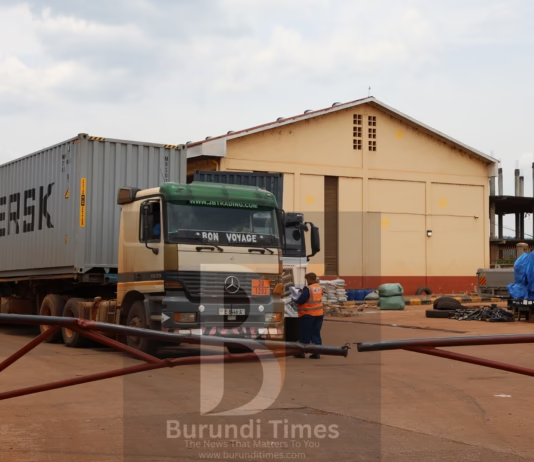
Cross-Border lifeline restored as Gatumba–Kavimvira crossing reopens
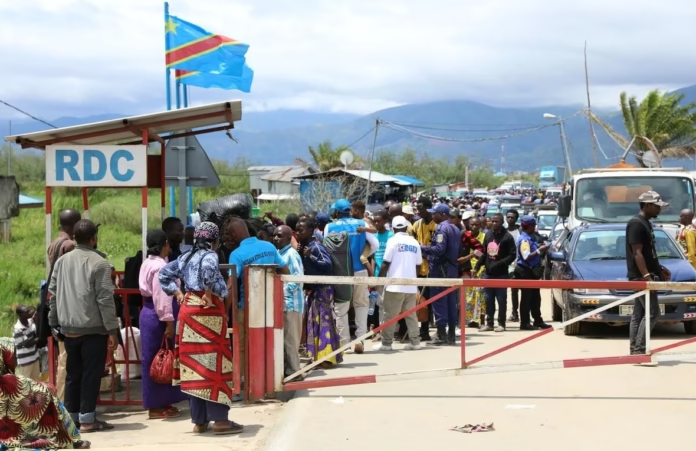
Burundi and the Democratic Republic of Congo (DRC) reopened the Gatumba–Kavimvira border crossing on Monday, restoring a key commercial corridor between Bujumbura and Uvira after nearly two months of closure triggered by fighting in eastern Congo.
The frontier had been shut since Dec. 10, 2025, when Burundi closed crossings after M23 rebels advanced into...
EAC confronts decade-long stagnation in intra-regional trade
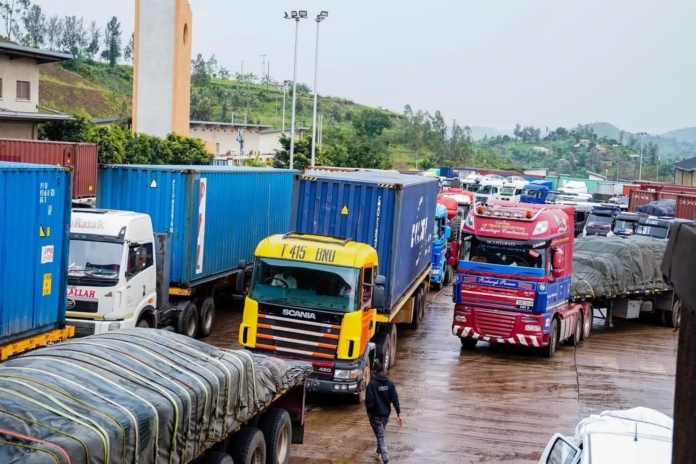
Senior officials from the East African Community met Thursday to address a persistent challenge facing the bloc, trade among member states has remained stuck at about 15% of total commerce for more than a decade well below estimates that it could reach 30% to 50%.
The issue dominated the opening of a two-day policy...
Burundi modernizes financial crime defense as Central Bank issues new AML/CFT rules

The Bank of the Republic of Burundi (BRB) has issued a new regulatory framework strengthening the country’s fight against money laundering and terrorist financing, representative government and financial sector officials said Friday.
The regulation, issued on January 30, 2026, implements Law which amended Burundi’s principal anti‑money laundering and counter‑financing of terrorism (AML/CFT) law. BRB officials said...
Burundi poised to gain from regional carbon markets as ASCENT Climate Forum opens in Nairobi

Officials from nine African countries, including Burundi, convened Feb. 10–12 in Nairobi for the ASCENT Carbon Days 2026 forum, a regional meeting focused on expanding clean-energy access and helping countries tap carbon markets to finance development.
The event, organized by the Common Market for Eastern and Southern Africa and the World Bank, brought together...
SOPEBU expands digital monitoring of public transport vehicles in Burundi

Burundi’s petroleum supply agency, SOPEBU, met Monday with owners of 114 public transport vehicles after data showed possible irregularities in fuel usage.
SOPEBU Director General Samuel Ndayisenga said the vehicles had completed fewer than 10 rotations, based on information collected through digital monitoring systems.
“These 114 vehicles completed fewer than ten...
African billionaire Aliko Dangote visits Burundi
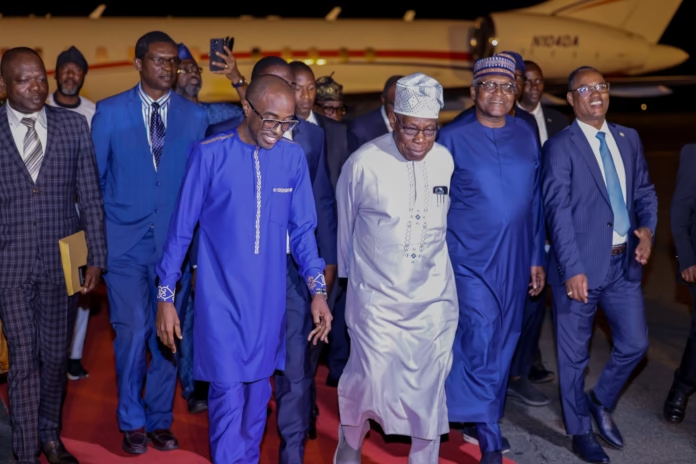
African business magnate Aliko Dangote visited Burundi this Saturday as part of a high-level Nigerian and African economic delegation, in a trip Burundian officials say is aimed at strengthening investment ties and accelerating the country’s industrial ambitions.
Dangote, chairman and chief executive officer of the Dangote Group and widely regarded as Africa’s richest man,...
Burundi upgrades Payment System to international ISO 20022 Standard

The Burundi Central Bank (BRB) announced Thursday that it has successfully upgraded its Automated Transfer System (ATS) to the international ISO 20022 standard, a major step in modernizing the country’s financial infrastructure. Starting Friday, Feb. 6, banks and the Régie Nationale des Postes will resume interbank operations using the new system.
Edouard Normand Bigendako, Governor...