
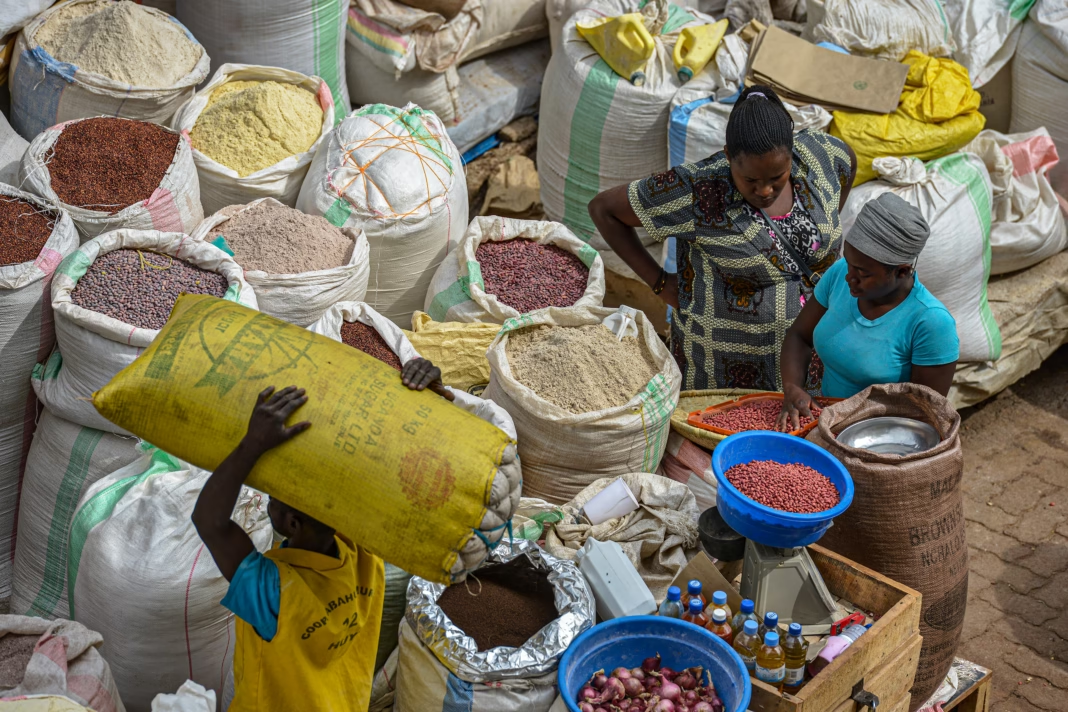

NAIROBI, Kenya — Youth and women traders across East Africa are urging governments in the region to remove non-tariff barriers (NTBs) that hinder their participation in agri-food trade, citing high costs, duplicative certification processes, and inconsistent standards as major obstacles.
Speaking at the opening of the East Africa Cross-Border Trader Associations Forum on Non-Tariff Barriers in Nairobi on Thursday, stakeholders emphasized the urgent need for reforms to facilitate inclusive regional trade.
The forum, organized by the East African Business Council (EABC) in partnership with the Alliance for a Green Revolution in Africa (AGRA), brought together policymakers, border authorities, and youth and women cross-border traders from across the East African Community (EAC).
AGRA’s Head of Markets and Trade, Nega Wubeneh, said youth in the agri-food sector frequently face challenges such as sanitary and phytosanitary (SPS) regulations, food safety standards, import levies, road user charges, and complex certificate of origin requirements.
“These barriers prevent small-scale agri-food traders from scaling their businesses and contributing more meaningfully to regional food systems,” Wubeneh said. “We are committed to supporting solutions such as mutual recognition agreements, a regional food balance sheet, trade scorecards, and accessible market information systems.”
Representing the acting executive director of the EABC, Frank Dafa, Manager for Trade in Goods, said micro, small, and medium-sized enterprises (MSMEs)—primarily driven by women and youth—account for around 70% of the EAC’s gross domestic product and provide livelihoods for 88% of its population. He noted that while the EAC Simplified Trade Regime (STR) has helped ease trade for consignments below $2,000, many traders still struggle with regulatory requirements.
“Costly and duplicative certification procedures continue to limit market access, especially for women and youth,” Dafa said. “There is a clear need to simplify and reduce the cost of SPS and technical barrier to trade (TBT) certifications.”
Dafa also welcomed a recent move by the Kenyan government to eliminate a 25% excise tax on eggs, onions, and potatoes under the 2025 Finance Bill, a policy expected to boost intra-EAC trade and benefit small-scale producers and traders.
During the event, Rwandan youth trader Sakina Usengimana said many young entrepreneurs are discouraged from engaging in cross-border trade due to inconsistent documentation, duplicated standards, and limited financial support.
“Youth are central to East Africa’s trade future,” Usengimana said. “But trade information must be simplified, and financing needs to be tailored to help youth-led businesses grow.”
Representing Kenya’s State Department for EAC Affairs, Violet Chebet Mastamet said regional policy organs are actively working to address these challenges. Measures underway include the review of the EAC NTBs Elimination Act (2017), implementation of gender-responsive trade policies, and ongoing infrastructure improvements at One Stop Border Posts.
The forum also featured a panel discussion on trade facilitation and border agency collaboration. Participants highlighted the need for whistleblower protections in cases of sexual harassment and corruption, user-friendly digital trade tools, the removal of unjustified trade bans, and broader adoption of national identity cards as valid travel documents within the EAC.
Panelists included women and youth traders from Kenya, Rwanda, Uganda, Burundi, and Tanzania, as well as representatives from regional regulatory agencies such as Kenya Plant Health Inspectorate Service (KEPHIS) and the Kenya Revenue Authority.
The two-day forum is expected to produce an advocacy roadmap for NTB elimination and establish a dedicated Cross-Border Traders Working Group to strengthen coordination and amplify the voices of women and youth traders.