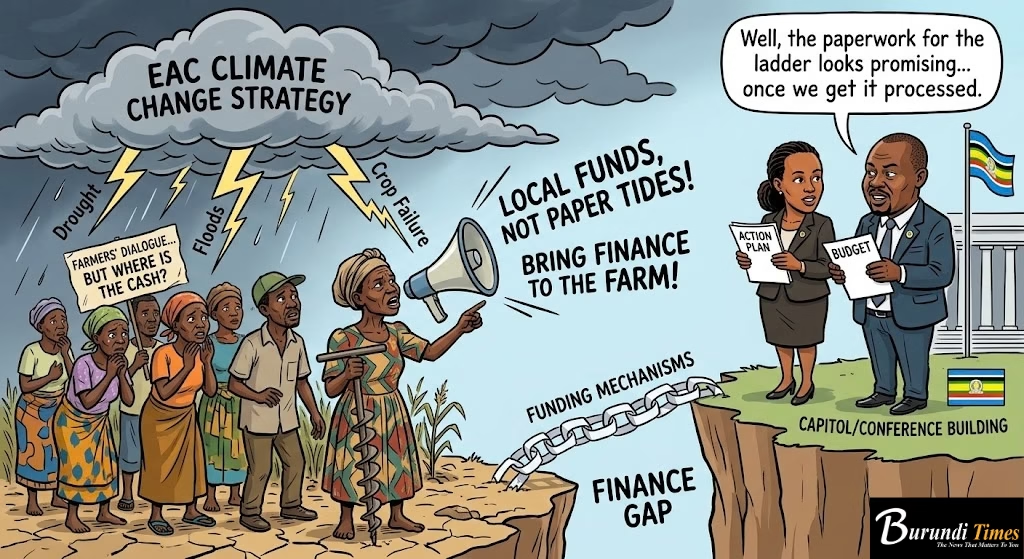

Smallholder farmers and civil society organisations across East Africa are calling for the new EAC Climate Change Strategy and Action Plan 2026–2036 to put climate finance within farmers’ reach, give farmers a stronger voice in decision-making, and turn regional climate commitments into practical action at farm and community level.
The demands emerged during the EAC Farmers’ Regional Dialogue on Climate Change 2026, convened virtually by the Eastern and Southern Africa Small-Scale Farmers Forum (ESAFF).
Ms. Anastasia Namululi, a senior official from Uganda’s Department of Climate Change and Carbon Trade, said there is a need to create regional project pipelines and finance windows that reach local governments, cooperatives, women and youth a sentiment echoed by many contributors.
Participants called for the Strategy to be translated into practical programmes, investments and services that communities can access, backed by clear responsibilities, budgets and mechanisms for monitoring implementation.
The dialogue brought together more than 300 East Africans, including farmer leaders, civil society representatives, government officials, regional institutions, researchers, academics and development partners, to provide input into the proposed EAC Climate Change Strategy and Action Plan 2026–2036.
Presenting the proposed regional strategy, Mr. Dismas Mwikila of the EAC Secretariat outlined lessons from the previous EAC climate strategy, priorities under the proposed framework, opportunities for farmers, and the process towards finalisation.
Ms. Faith Ngige of PACJA highlighted the gap between international climate-finance commitments and the resources actually reaching farmers, pointing to the need for financing models accessible through farmer organisations, cooperatives, SACCOs and other local institutions.
Presenting the farmers’ and CSOs’ position on the proposed Strategy, Mr. Hakim Baliraine welcomed the development of the new regional framework and its recognition of the growing vulnerability of agriculture and food systems to climate change. He particularly welcomed its focus on agroecology, sustainable land management, climate-resilient agriculture, climate finance, early-warning systems, indigenous knowledge, and the participation of women and youth.
However, he stressed that the Strategy should go further to ensure smallholder farmers are not merely treated as beneficiaries of climate action, but recognised as rights-holders, knowledge holders, innovators and active partners in climate decision-making and implementation.
Baliraine said farmers and CSOs are calling for the Strategy to:
- Align with regional and continental agricultural frameworks, including the CAADP Kampala Declaration and the EAC Regional Agri-food Systems Investment Plan
- Strengthen meaningful farmer participation at all levels
- Put agroecology and locally led adaptation at the centre of agricultural resilience
- Ensure climate finance reaches farmers and communities through accessible mechanisms
- Increase domestic financing for adaptation and Loss and Damage
- Boost investment in early warning and preparedness
- Translate climate information into practical services that reach farmers at the last mile
The position also calls for stronger safeguards for farmers’ land and community rights in carbon markets and nature-based solutions, support for farmer-managed seed systems, responsible use of digital technologies and AI, and farmer-led mechanisms to track climate budgets and implementation. Farmers and CSOs further proposed an Annual EAC Farmers’ Climate Dialogue to institutionalise their engagement with the EAC and Partner States.
Responding to the interventions, Mwikila assured participants that the recommendations from the dialogue had been captured and would feed into the formal drafting process.
“The recommendations have been captured and will be submitted to the technical consultants and the drafting team for consideration and incorporation of the farmers’ inputs and recommendations into the Strategy,” he said.
The commitment provides an important bridge between the farmers’ regional dialogue and the ongoing technical development of the Strategy.
The meeting was attended by government representatives responsible for climate change and environment from all eight EAC Partner States, giving farmers and CSOs an opportunity to engage directly with policymakers on their priorities for the Strategy.
The East Africa Regional Validation Meeting to finalise the draft EAC Climate Change Strategy is scheduled to be held in Machakos, Kenya, at the end of September 2026.