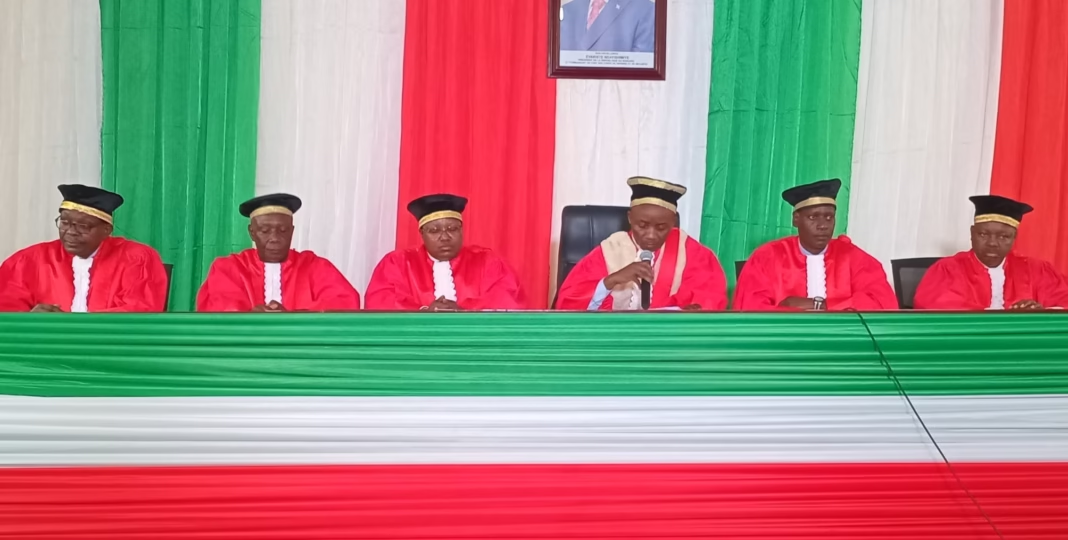

BUJUMBURA, Burundi — Burundi’s Constitutional Court on Friday formally validated the results of the June 5 legislative elections, confirming that the ruling CNDD-FDD party secured all 100 directly elected seats in the National Assembly.
The Independent National Electoral Commission (CENI) reported that the CNDD‑FDD received approximately 96.5 percent of the vote—about 5.85 million ballots cast—while no other party surpassed the 2% threshold required for representation. The court’s decision, issued ahead of its June 20 deadline, completes the formal process of validating the outcome.
Opposition Appeals Rejected
The court also ruled that appeals filed by several opposition parties, including the suspended CNL, UPRONA and Burundi Bwa Bose coalition, were “unfounded,” citing a lack of credible evidence to support allegations of fraud or irregularities.
As a result, the new parliament will comprise 108 members from CNDD‑FDD, including those from the party list and proportional representation system, along with three co-opted Batwa community representatives, in accordance with Burundi’s constitutional quotas.
Calm Election Day but Criticism Lingers
Nearly six million Burundians voted across more than 14,000 polling stations, with observers from civil society and regional organizations describing a generally peaceful voting day. The African Union, the International Conference on the Great Lakes Region, and a team from Russia all noted the calm conduct of the election.
Still, rights groups and church monitors highlighted serious concerns. The Catholic Church reported “numerous irregularities,” while Human Rights Watch cited widespread intimidation, restricted freedoms, and the expulsion of opposition observers.
Opposition figures alleged ballot stuffing, forced voting, and confiscation of voter cards, though none of these claims were substantiated in court.
Political Landscape
This vote was the first legislative test since President Évariste Ndayishimiye took office in 2020. The CNDD‑FDD has remained in power since 2005. Agathon Rwasa who is regarded as the main opposition leader in Burundi remains barred from contesting.
With court validation complete, CNDD‑FDD’s dominance in the National Assembly is now official. Upcoming elections include senatorial polls on July 23, communal elections on August 25, and a presidential vote scheduled for 2027.