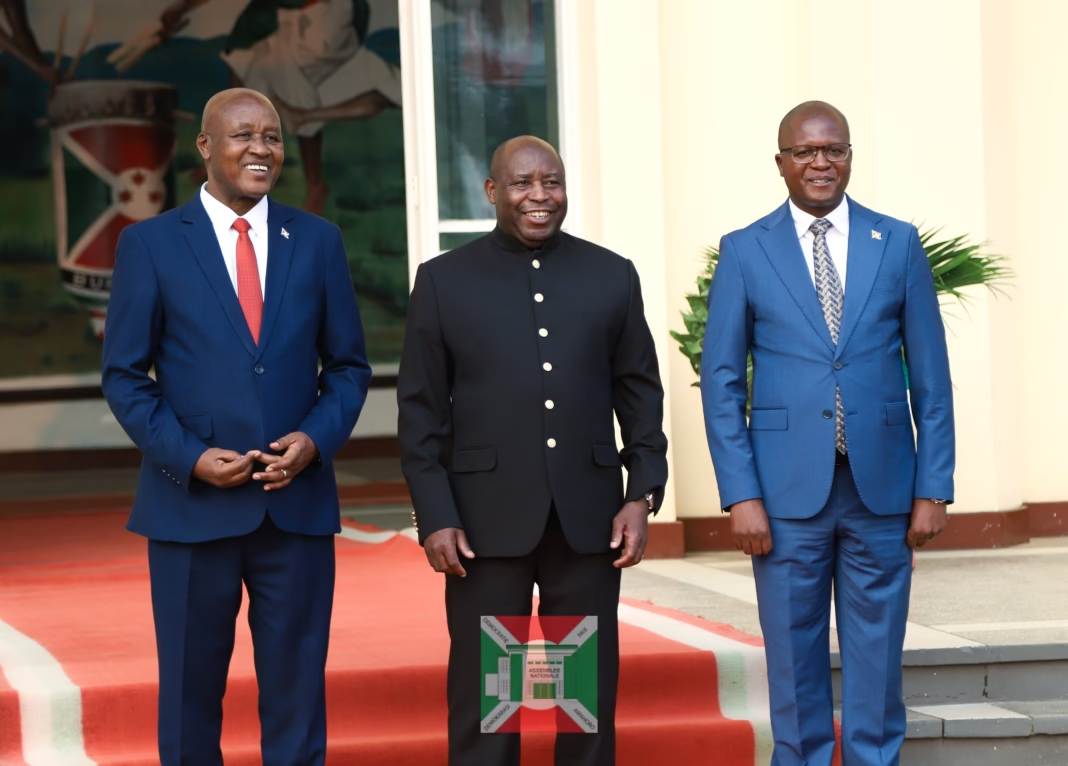

WASHINGTON / NAIROBI (Aug. 1, 2025) — Rwanda and the Democratic Republic of the Congo (DRC) have taken a critical step toward implementing their June peace agreement, holding the inaugural Joint Oversight Committee meeting in Washington, D.C., on July 31. The United States, along with the African Union and the State of Qatar, observed the session, which marked the formal launch of the accord signed on June 27.
According to a statement released by the U.S. Department of State, the Joint Oversight Committee—comprising representatives from both the DRC and Rwanda—is tasked with monitoring implementation, resolving disputes, and addressing violations of the agreement. The parties adopted terms of reference, named their committee chairpersons, and discussed mechanisms for future meetings.
Observers from the United States, Qatar, the Republic of Togo, and the African Union Commission also participated in the proceedings, signaling broad international support. The statement emphasized that both Rwanda and the DRC “expressed their appreciation for the invaluable contributions and joint efforts” of these partners.
Meanwhile, in Nairobi, Kenyan President William Ruto underscored the regional commitment to lasting peace in eastern DRC. In a statement posted on X (formerly Twitter), Ruto said the East African Community (EAC) and the Southern African Development Community (SADC) remain fully engaged in efforts to end the conflict and prevent further humanitarian crises.
“Our resolve to end war, loss of life and ensure comprehensive humanitarian assistance in the DRC made a leap forward,” Ruto said, highlighting the appointment of five facilitators by the two regional blocs.
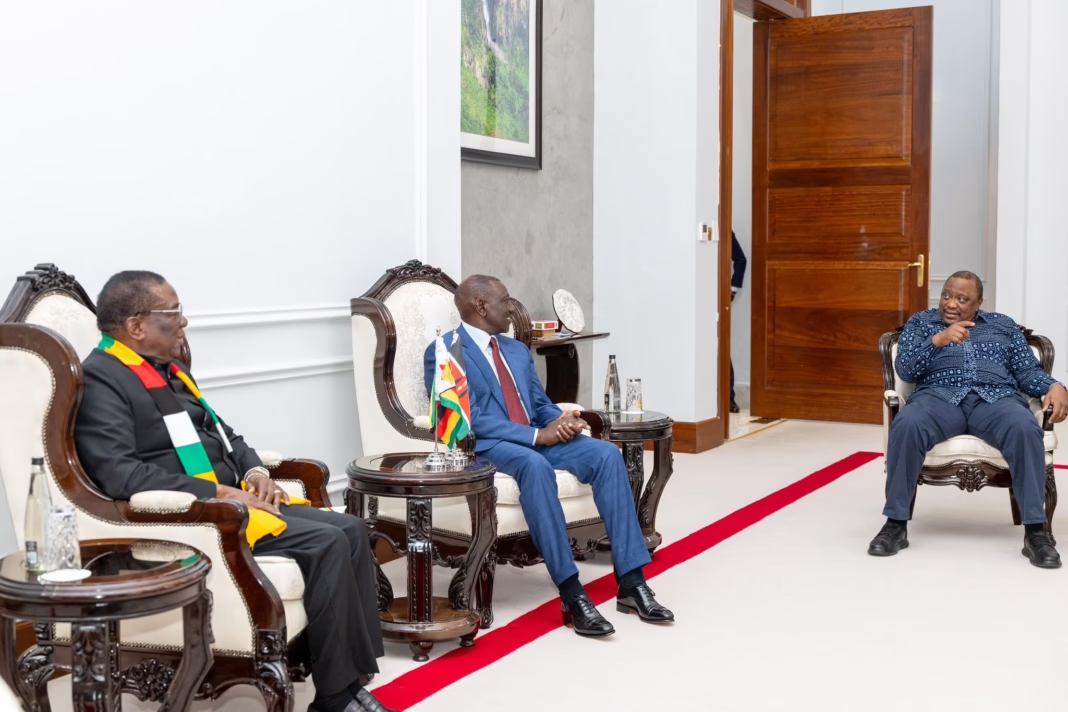
President Ruto co-chaired a high-level meeting of the facilitators at Kenya’s State House, alongside Zimbabwean President Emmerson Mnangagwa. The meeting aimed to assess progress and chart a path for sustained peace. Among the attendees were African Union Commission Chairperson Mahamoud Ali Youssouf and former heads of state, including Uhuru Kenyatta (Kenya), Catherine Samba-Panza (Central African Republic), Sahle-Work Zewde (Ethiopia), and Mokgweetsi Masisi (Botswana). Former Nigerian President Olusegun Obasanjo joined virtually.
The twin developments—the formalization of the Washington-brokered peace mechanism and the Nairobi-based regional initiative—reflect a growing convergence among international and African actors to stabilize the volatile eastern DRC.
While challenges remain, the synchronized diplomatic momentum appears to signal renewed political will to end one of the continent’s longest-running conflicts.