

BUJUMBURA, Burundi (Burundi Times) — A high-level regional aviation workshop opened this week in Bujumbura, focusing on the implementation of the Flexible Use of Airspace (FUA) concept—an initiative aimed at modernizing airspace management, cutting airline operating costs, and unlocking intra-African trade.
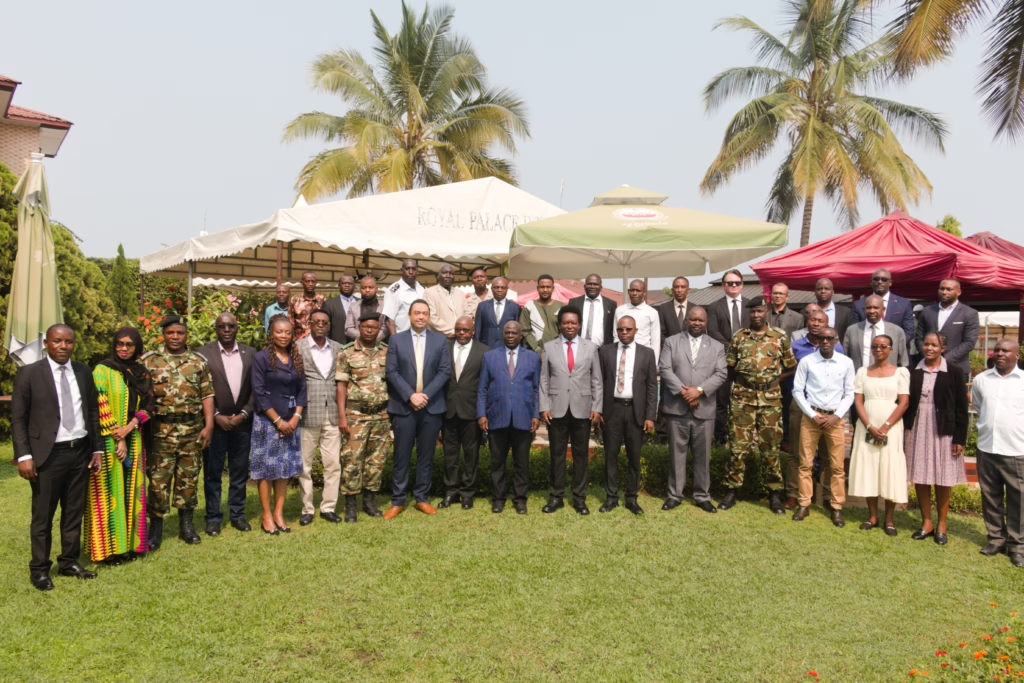
Organized under the European Union-funded Support to Air Transport Sector Development (SATSD) programme, the workshop gathered aviation experts, military and civil aviation authorities, and regional blocs from COMESA, EAC, IGAD, IOC, and SADC.
“The Flexible Use of Airspace presents a significant opportunity to reduce flight times and fuel consumption, improve route efficiency, and enhance safety,” said Zacharia Kingori, senior transport economist at the COMESA Secretariat. “It’s a game-changer in how Africa can manage its skies more sustainably and more profitably.”
The SATSD programme, backed by an €8 million EU grant, is being implemented by COMESA across 29 member states. One of its core objectives is to operationalize the Single African Air Transport Market (SAATM), in line with the African Union’s Agenda 2063.
Despite its strategic importance, Africa’s air transport sector continues to face major obstacles, including high operational costs, limited infrastructure, fragmented airspace, and underutilization of cargo flights.
“Air transport must no longer be seen as just a tourism driver—it should be viewed as a catalyst for trade, industrialization, and economic resilience,” Kingori added.
Burundi, which is hosting the workshop at Melchior Ndadaye International Airport, is positioning itself as an emerging player in regional airspace modernization. According to the country’s Director General of Civil Aviation Joël Nkurabagaya, Burundi is currently upgrading its runway and apron, building a new control tower, and restructuring its airspace to eliminate uncontrolled zones.
“We are committed to ensuring a more efficient, safer sky,” said Nkurabagaya, who represented the Ministry of Trade, Transport, Industry and Tourism. “The implementation of FUA will reduce delays, cut fuel use, and enhance coordination between civil and military users. This will benefit all of us.”
He also called on regional and international partners to support Burundi in implementing ongoing modernization efforts.
The workshop will also focus on validating regional frameworks for cross-border airspace coordination, civil–military cooperation, and monitoring systems to ensure sustainability of the reforms.
“As the continent advances toward interoperable and seamless airspaces, this workshop marks an important step in our collective journey,” Kingori said. “A connected Africa begins in the skies.”
Africa’s airlines face some of the highest operating costs in the world, driving up airfares and limiting access to air travel across the continent, according to data from the International Air Transport Association (IATA).
African carriers pay up to 35 percent more for fuel than airlines in other regions due to supply constraints and high taxation, while operating costs overall are estimated to be 30 to 40 percent above the global average.
Intra-African airfares are typically 30 to 50 percent higher per kilometer flown compared with routes in Asia. Taxes, fees, and charges can account for as much as a quarter of the total ticket price, further discouraging travel and trade.
Air traffic management inefficiencies also take a toll. The continent’s fragmented airspace forces airlines to fly longer routes and burn more fuel, costing an estimated $300 million annually according to IATA.
The African regional bloc event in Bujumbura is expected to produce model policy frameworks and cooperation agreements that will guide the continent’s transition to flexible, efficient airspace usage.