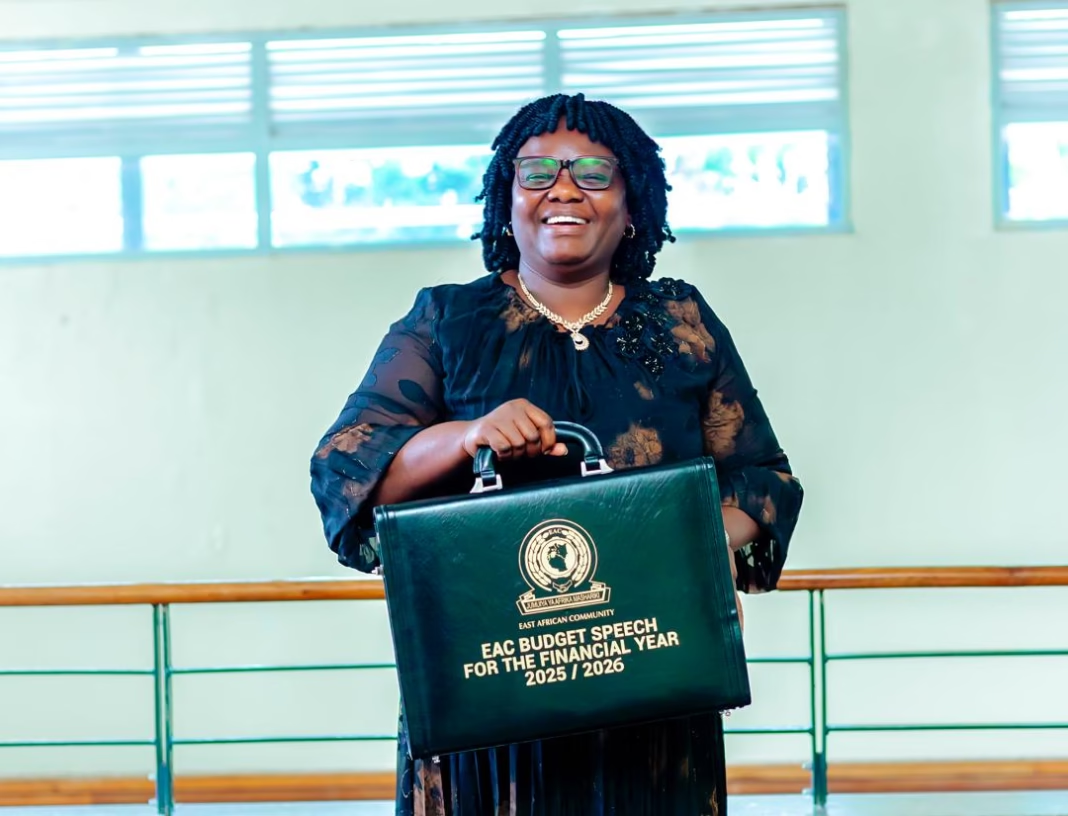

The East African Community (EAC) has approved a total budget of $109,338,151 for the 2025/2026 financial year, with a strong emphasis on regional integration, infrastructure development, and strengthening institutional capacity. The budget was passed despite persistent challenges in funding, including delayed contributions from Partner States and reliance on Development Partners.
The budget, themed “Inclusive Economic Transformation through Domestic Resource Mobilisation and Resilient Strategic Investment for Job Creation and Improved Livelihoods”, aims to drive growth through seven priority areas, with the bulk of the funding—$62.9 million—allocated toward strengthening the capacity and visibility of EAC organs and institutions.
Funding Breakdown and Strategic Allocations
Out of the total budget:
- 62% (USD 67.8 million) will come from Partner States and internal revenues.
- 38% (USD 41.6 million) is expected from Development Partners.
Key priority areas and allocations include:
- Regional integration and Common Market commitments: USD 17.9 million
- Monetary Union implementation: USD 9.4 million
- Strategic infrastructure and digitalisation: USD 6.9 million
- Peace, security and emergency response: USD 5 million
- Advancing the Customs Union: USD 7.3 million
Despite the modest infrastructure budget, the EAC aims to improve transport, ICT and cross-border systems. However, experts and observers have questioned the adequacy of $6.9 million to fund climate-resilient and strategic regional infrastructure across eight Partner States.
Budget Compared to Previous Years
The 2025/2026 budget represents a slight decrease from the previous financial year. In 2024/2025, EALA approved a budget of $112,984,442, marking a 3.2% reduction this year. The trend reflects ongoing fiscal constraints, particularly as contributions from Partner States continue to fall short or delay.
According to internal documents reviewed by Burundi Times, some Partner States have consistently failed to remit their annual dues, creating operational strains for EALA and other EAC institutions.
Concerns Over EALA Funding
The East African Legislative Assembly (EALA) has been allocated $20.5 million, up slightly from previous years, but concerns persist about its functionality and independence.
An EALA official, speaking on condition of anonymity, said: “We cannot carry out effective oversight when the assembly is starved of resources. This has been a recurring problem for the past five years.”
Previous reporting by Burundi Times highlighted that delays in Partner State contributions have hindered committee work and regional outreach programs. In some years, EALA has faced logistical constraints in conducting legislative business, including delayed sittings and limited field missions.
Institutional Budget Allocations
The budget allocations to EAC institutions are as follows:
- EAC Secretariat: USD 55.2 million
- EACJ (Court of Justice): USD 5.1 million
- IUCEA (Inter-University Council): USD 10.8 million
- LVBC (Lake Victoria Basin Commission): USD 7.6 million
- EASTECO (Science and Tech Commission): USD 2.2 million
- EAHRC (Health Research Commission): USD 2.4 million
- EAKC (Kiswahili Commission): USD 1.6 million
- EAC Competition Authority: USD 1.5 million
- LVFO (Fisheries Organisation): USD 2.4 million
Development Partners Fill the Gap
To mitigate the funding gap, the EAC secured $75.4 million from Development Partners during the 2024/25 cycle, including $41.4 million in direct support. This dependency continues into the 2025/26 budget cycle, despite ongoing calls for greater domestic resource mobilisation.
“Development partners have stepped in again, but this isn’t sustainable,” said a regional economist based in Arusha. “The EAC must find ways to improve compliance among Partner States.”
Looking Ahead
The EAC maintains its focus on long-term goals outlined in its Vision 2050 and Sixth Development Strategy (2021–2026), including deeper integration under the Customs Union, Common Market, and eventual Political Federation.
The adoption of policies such as mutual recognition of academic qualifications and a new regional migration policy signal continued steps toward a more cohesive East Africa. However, experts warn that political will and consistent financial backing are critical.
As the Community celebrates 25 years of integration, this year’s budget stands as both a commitment and a test of the region’s resilience and unity.