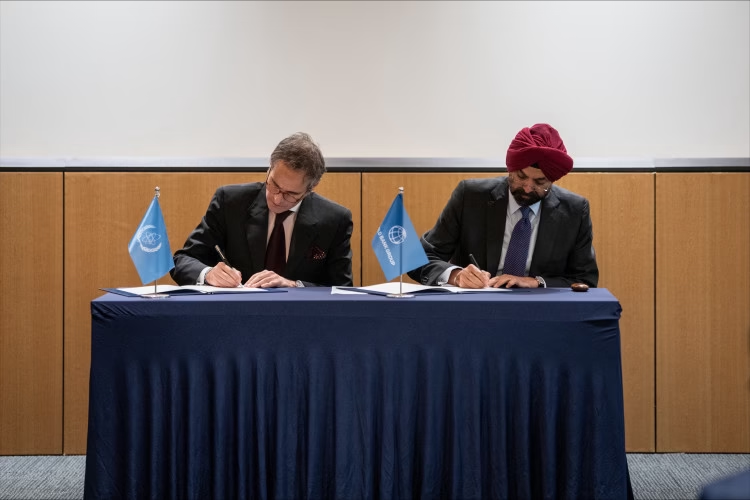

Paris, June 26, 2025 — The World Bank Group and the International Atomic Energy Agency (IAEA) formalized a new partnership on Thursday aimed at promoting the safe, secure, and responsible use of nuclear energy in developing countries. The agreement, signed by World Bank Group President Ajay Banga and IAEA Director General Rafael Mariano Grossi, represents the World Bank’s first major step toward reengaging with nuclear power after decades of limited involvement.
The collaboration reflects a shift in the World Bank’s broader electrification strategy, which now emphasizes accessibility, affordability, reliability, and responsible emissions management. With electricity demand in developing nations expected to more than double by 2035, the partnership seeks to provide flexible energy solutions tailored to countries’ unique development goals and climate commitments.
“Nuclear energy delivers continuous baseload power critical to sustaining jobs and economic growth across sectors such as infrastructure, healthcare, agriculture, and manufacturing,” said Ajay Banga. “As demand surges globally, nuclear power will be an essential part of the energy mix for building modern, resilient economies.”
The memorandum of understanding outlines three main areas for cooperation: expanding the World Bank’s expertise in nuclear safety, security, and technology; supporting the extension of existing nuclear power plants’ operational life spans; and accelerating the development of small modular reactors (SMRs). SMRs, with their flexible deployment and lower upfront costs, hold promise for wider adoption in emerging economies.
Currently, 31 countries operate nuclear power plants that generate about 9% of global electricity and nearly 25% of all low-carbon power. Over 30 additional countries, mostly developing nations, are considering nuclear energy and collaborating with the IAEA to establish the necessary infrastructure for safe and sustainable deployment.
“This agreement marks a milestone in global energy collaboration,” said IAEA Director General Grossi. “It paves the way for other development banks and investors to consider nuclear energy as a vital tool for energy security and sustainable development.”
The partnership also signals a renewed global interest in nuclear power as countries seek reliable, low-carbon energy sources to meet growing demands and combat climate change.