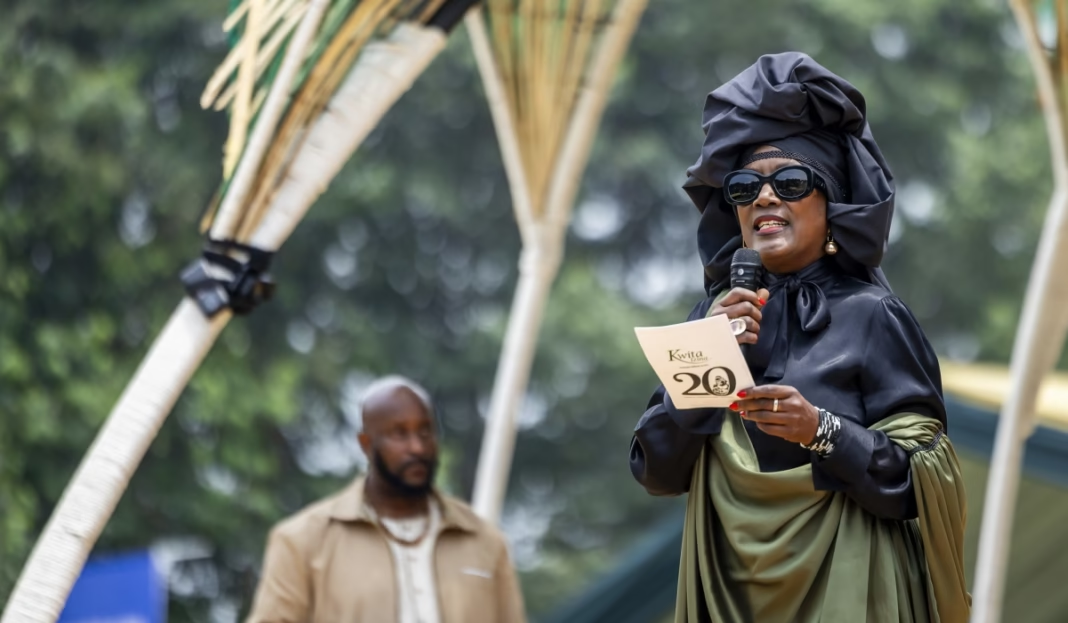

Khadja Nin has long been known as Burundi’s most recognizable musical export, a voice that carried Kirundi melodies into global arenas. But when she stood at Rwanda’s Kwita Izina ceremony earlier this month and declared she had “chosen Rwanda as [her] forever home,” her words did not land as a personal remark alone. They were immediately interpreted through the prism of strained Burundi–Rwanda relations, sparking debate about identity, politics and legacy.
For Kigali, Khadja Nin’s embrace is more than cultural prestige. Rwanda has carefully invested in global image building from hosting high-profile conservation events to positioning itself as a hub for conferences and celebrities. Having a Burundian icon publicly prefer Rwanda plays neatly into this soft power strategy. It signals, both to Rwandans and to the international community, that the country can attract talent, safety, and belonging even from neighbors who are otherwise wary or openly hostile. In diplomatic terms, her words can be amplified to showcase Rwanda as a haven of stability against Burundi.
Over the past two decades, several Burundian figures have sought refuge, careers or second homes in Rwanda. Each high-profile case underscores a sensitive reality, that for some Burundians, Kigali offers opportunities or security they feel their homeland cannot. The symbolism cuts deeply, because in a region where politics and personal life are always intertwined, choosing Rwanda is not read as neutral.
Why raise such a comparison at all especially during Kwita Izina, an event dedicated to conservation, not politics? Here lies the heart of the controversy. Some argue she was simply swept up in the celebratory mood, expressing gratitude for Rwandan hospitality. Others suspect more calculation that she knew the symbolism of her words, that her statement was encouraged in a setting where Rwanda stood to gain a diplomatic headline. In a region where messaging is meticulously managed, no sentence is entirely innocent.
Khadja Nin’s words reflect less about the heart of Burundi than about the optics Rwanda seeks to project.
Kigali has poured resources into sports and cultural events from sponsoring European football clubs to staging high-profile conservation galas as part of a strategy to polish its international image. This effort, often described as “sportswashing,” is meant to project stability and modernity, even as human rights groups accuse President Paul Kagame’s government of suppressing dissent, tolerating no opposition, and destabilizing its neighbours.
Placed in this context, Khadja Nin’s declaration becomes more than a personal statement. It becomes a timely gain for Rwanda. An internationally admired Burundian artist standing on Kigali’s stage and praising the country as her chosen home. For a government often criticized abroad, such endorsements help redirect attention toward a carefully crafted narrative of safety, openness and hospitality.
In the end, Khadja Nin’s declaration reveals more about the region than about the artist herself. It illustrates how fragile identity can become when politics poisons neighbourly relations, and how personal choices are instantly politicized.
For Burundians, the task is not to vilify a singer but to ask why beloved voices find themselves praising another flag. For Rwanda, it is a soft victory in the ongoing battle for image and influence.
Leaders in Gitega might dismiss Khadja Nin’s words as sentimental or irrelevant, yet they carry weight. Rather than dwell on Khadja Nin’s choice, the country must focus on creating the conditions that make its citizens and artists want to remain proud ambassadors of their homeland.
Editor’s Note: The writer of this opinion is a Burundian academic. We are not disclosing their name because of professional considerations, but the editors have verified their identity and qualifications.