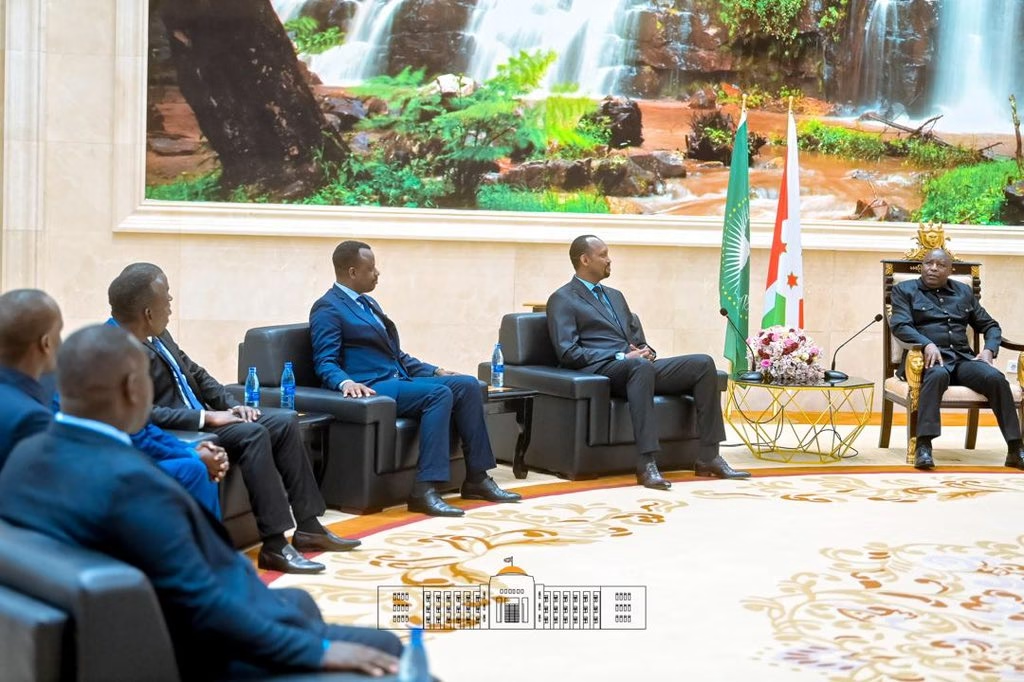

Évariste Ndayishimiye on Tuesday received a delegation from the Banyamurenge community, whose representatives praised Burundi’s involvement in security efforts in eastern Democratic Republic of Congo while rejecting allegations of planned atrocities against their group.
The delegation, representing “Banyamurenge Global Advocacy,” said it met the Burundian leader on March 17 to express gratitude for Burundi’s support to the government of the Democratic Republic of the Congo in efforts to restore stability in the conflict-hit east.
“We came to thank the Burundian government for its role in supporting peace and security in eastern DRC,” said Charles Nteze, head of the organization, in remarks following the meeting.
Nteze dismissed what he described as rumors alleging that Burundi was planning atrocities targeting the Banyamurenge community, a Congolese Tutsi group originating from South Kivu.
“These allegations would more likely come from those who harbor such intentions,” Nteze said. “Burundi’s actions have instead helped prevent such outcomes.”
He added that the Banyamurenge “hold no hostility toward the Burundian government,” attributing relative stability affecting their community to “joint efforts by Burundian and Congolese authorities.”
Nteze also said the challenges facing the Banyamurenge should not be attributed to or handled by Rwanda, stressing that the community is capable of advocating for its own interests.
“We believe the Banyamurenge can defend their own interests,” he said.
The delegation further called for continued cooperation between Burundi and Congolese authorities to ensure “lasting peace and security” in the region.
Regional context
Eastern DRC has experienced decades of instability fueled by armed groups, ethnic tensions and competition over natural resources. The resurgence of the March 23 Movement since late 2021 has intensified fighting, particularly in North Kivu province, displacing hundreds of thousands of civilians, according to the United Nations.
Kinshasa has repeatedly accused Rwanda of backing the M23. The conflict has drawn in neighboring countries, including Burundi, which has deployed troops in eastern Congo under bilateral arrangements with the Congolese government to combat armed groups.
Regional initiatives led by the East African Community and the African Union have sought to de-escalate tensions, though sporadic fighting continues, complicating humanitarian and diplomatic efforts.
The Banyamurenge, primarily based in South Kivu, have long been entangled in local and regional dynamics of identity, land and security, often finding themselves at the center of broader geopolitical tensions in the Great Lakes region.