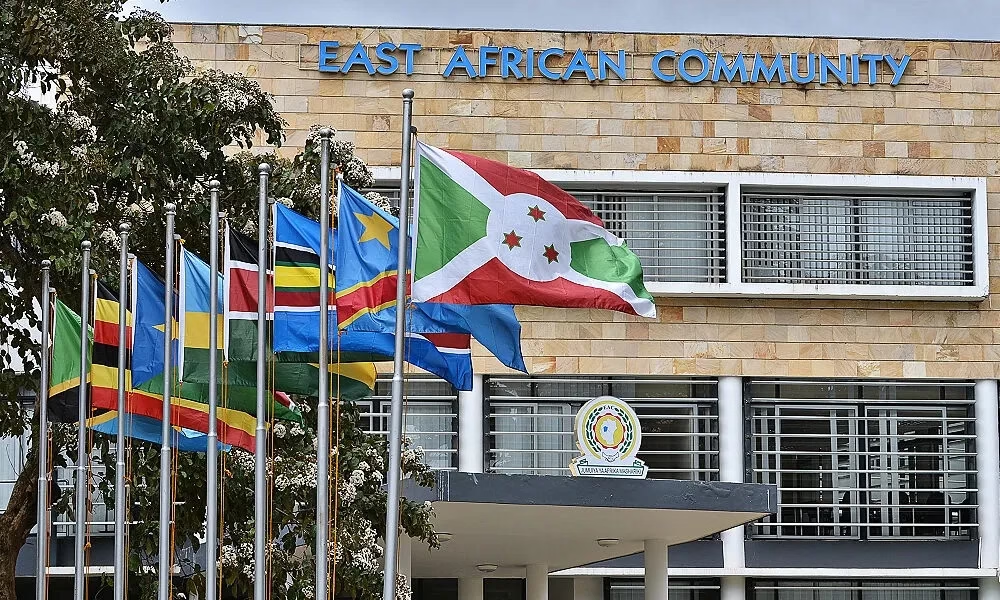

The East African Community (EAC) is considering introducing sanctions and compensation measures aimed at curbing illegal trade barriers that continue to hinder cross-border commerce within the regional bloc, according to decisions adopted at a ministerial meeting in Arusha.
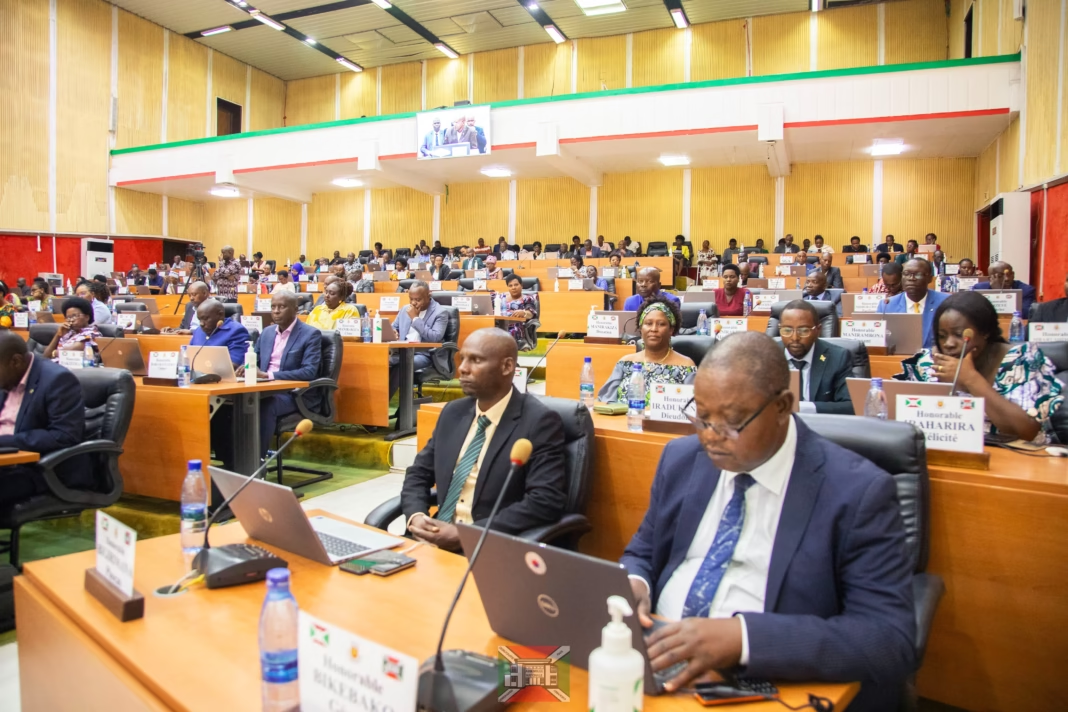
The proposal emerged from the 48th Meeting of the Sectoral Council on Trade, Industry, Finance and Investment (SCTIFI), where ministers responsible for trade, finance, industry and EAC affairs reviewed efforts to strengthen regional trade and accelerate economic integration.
The ministers considered proposals to strengthen the legal framework governing the elimination of Non-Tariff Barriers (NTBs), including mechanisms that could impose penalties on Partner States found to be maintaining unauthorized trade restrictions. The proposals also seek to establish compensation measures for traders who suffer losses due to illegal taxes, roadblocks, import restrictions or other barriers that violate regional agreements.
“The Sectoral Council considered proposals aimed at strengthening the legal framework governing the elimination of NTBs, including mechanisms for imposing sanctions and providing compensation in cases where traders incur losses due to illegal taxes or unauthorized trade restrictions,” the EAC said in a statement issued after the meeting.
The proposals will undergo further technical and legal review before being submitted through the Community’s institutional processes for possible adoption.
The move reflects growing concern within the bloc over the persistence of non-tariff barriers, which have long been identified as one of the biggest obstacles to the free movement of goods under the EAC Customs Union and Common Market frameworks.
Although Partner States have committed to eliminating such barriers, businesses across the region have frequently reported challenges ranging from lengthy border procedures and additional fees to import bans and administrative requirements that increase the cost of trade.
Opening the meeting, EAC Secretary-General Amb. Stephen Mbundi said the region must strengthen internal trade as global economic uncertainties continue to affect supply chains and international commerce.
“To cushion the region against these shocks,” Mbundi said, the EAC should pursue “a stronger internal market, a reduced cost of doing business, and faster implementation of regional integration commitments, including the resolution of all outstanding Non-Tariff Barriers.”
The council also reviewed progress in customs and trade facilitation reforms. Ministers welcomed the completion of Time Release Studies for the Northern and Central transport corridors, which assess the time required for cargo clearance and identify areas for improving customs procedures.
According to the EAC, the studies found that increased cooperation among customs authorities, border agencies and private-sector actors had improved the efficiency of regional supply chains, although additional operational reforms remain necessary.
The council further adopted a structured framework for monitoring implementation of the EAC Customs Union Protocol, creating a mechanism to assess compliance by Partner States with their regional obligations. Ministers also approved adjustments to facilitate South Sudan’s participation in regional customs data-sharing arrangements.
The discussions come as the EAC seeks to deepen regional integration amid growing geopolitical tensions, disruptions to maritime trade routes and rising protectionist policies in some parts of the world.
The EAC currently comprises Burundi, the Democratic Republic of Congo, Kenya, Rwanda, Somalia, South Sudan, Tanzania and Uganda, representing a market of more than 300 million people.
Regional economists have repeatedly argued that eliminating non-tariff barriers could significantly boost intra-EAC trade, which remains below its potential despite decades of integration efforts.
The ministers emphasized that effective implementation of council decisions and continued cooperation among Partner States would be critical to achieving a more competitive and integrated East African economy.