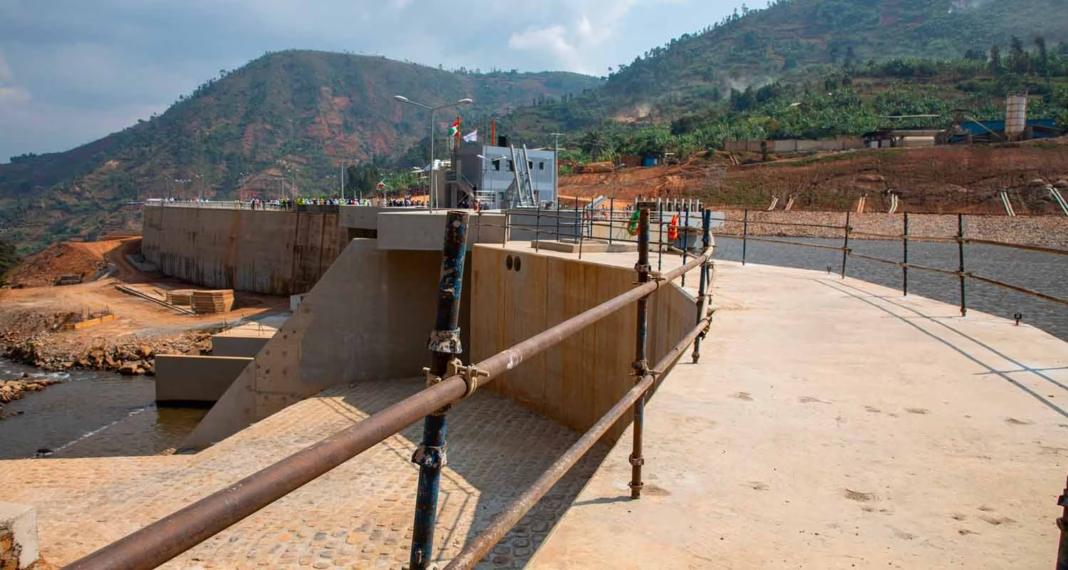

Burundi on Tuesday commissioned the Mulembwe hydropower plant, the second major facility completed under the Jiji-Mulembwe energy project, in a move government officials say is intended to expand electricity supply and support industrial growth in one of Africa’s least electrified countries.
Prime Minister Nestor Ntahontuye inaugurated the plant in Burunga Province, describing electricity as a critical requirement for the government’s plans to develop industry, mining and transport infrastructure.
The Mulembwe facility forms part of the Jiji-Mulembwe Hydropower Project, a donor-backed investment designed to increase Burundi’s domestic power generation and reduce reliance on costly thermal electricity. The project was financed by a consortium including the World Bank, the African Development Bank, the European Union, the European Investment Bank and the Burundian government. According to the World Bank, the overall project cost was estimated at about $270 million.
The hydropower scheme consists of two run-of-river plants on the Jiji and Mulembwe rivers with a combined installed capacity of 48 megawatts. The African Development Bank has previously described the project as one of Burundi’s most significant energy investments, capable of more than doubling the country’s installed electricity generation capacity from roughly 39 MW when the project was approved.
For Burundi, where electricity shortages have long been cited as a major constraint on economic growth, the new generation capacity comes amid rising demand from households and businesses.
The World Bank estimated during project preparation that electricity demand in Burundi could reach 192 MW by 2025, far exceeding available supply. At the time the project was launched, only about 4% of Burundians had access to electricity, among the lowest rates globally.
Speaking at the inauguration, Ntahontuye said the Mulembwe plant and the recently commissioned Jiji facility represented an important step toward achieving the government’s long-term development objectives.
He called on the state-owned utility REGIDESO to improve electricity commercialization and strengthen the financial sustainability of the sector, saying revenues would be needed to support future investments and help service project-related financing obligations.
“We must improve the commercialization of electricity,” the prime minister said, according to remarks delivered during the ceremony.
Ntahontuye also expressed confidence that the government could achieve its target of expanding electricity access nationwide within five years, while urging REGIDESO to accelerate customer connections and ensure proper maintenance of the new infrastructure.
Officials and development partners argued that the benefits of the project extend beyond power generation. Local authorities pointed to roads built around the project area, saying the infrastructure could improve market access and encourage private investment in surrounding communities.
Representatives of the African Development Bank, the World Bank and the European Union said the completion of the project reflected years of cooperation between Burundi and international lenders and donors.
According to a World Bank project update published earlier this year, the Jiji-Mulembwe facilities have already increased Burundi’s national electricity supply by about 25%, while helping reduce dependence on diesel-powered generation, which is significantly more expensive than hydropower.
The World Bank has estimated that electricity produced from the Jiji-Mulembwe scheme could cost around 10 U.S. cents per kilowatt-hour, compared with as much as 40 cents for some alternative generation sources.
Despite recent investments, challenges remain. Burundi continues to face one of the lowest electricity access rates in East Africa, and expanding transmission and distribution networks will be necessary if additional generation is to translate into broader household and business access.
The commissioning of Mulembwe nevertheless marks a significant milestone for a country seeking to address longstanding energy constraints that economists and investors have identified as a barrier to industrialization, job creation and private-sector growth.