
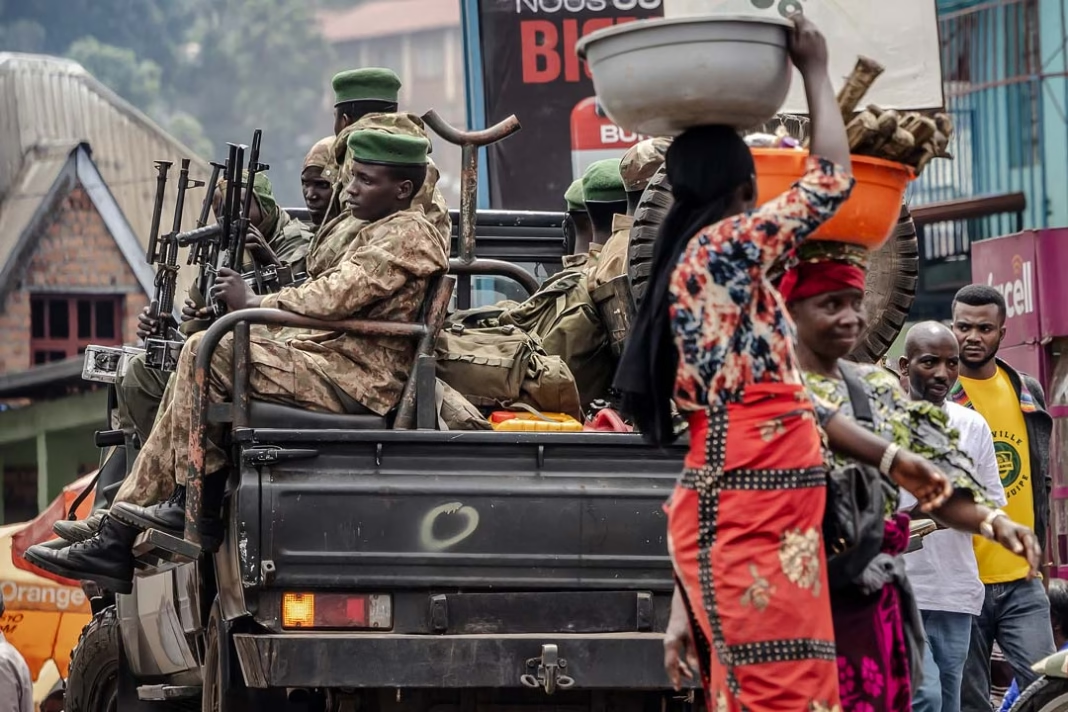

The United States on Wednesday imposed sanctions on Rwanda’s Ministry of Defence and Zigama Credit and Savings Society, accusing them of helping sustain the M23 rebellion in eastern Democratic Republic of the Congo despite a U.S.-brokered peace agreement.
The U.S. Treasury Department said Zigama, a financial institution serving Rwanda’s security services, facilitated payments for military equipment and helped transfer gold from areas controlled by the rebels to Rwanda. The department also accused the defense ministry of directing military operations and providing M23 with weapons, training and logistical support.
“Rwanda must halt its support for M23 and withdraw its troops from eastern DRC,” Treasury Secretary Scott Bessent said in a statement.
Rwanda denies supporting M23, which has seized large areas of eastern Congo.
Peace deal under pressure
The sanctions come as fighting continues despite the Washington Accords for Peace and Prosperity, signed by the Congolese and Rwandan presidents on Dec. 4, 2025. The agreement sought to end the conflict while expanding regional trade and investment.
M23 captured Goma and Bukavu, the provincial capitals of North and South Kivu, in early 2025. The group has also taken control of mineral-rich areas, including Rubaya, a major coltan-producing zone in North Kivu.
United Nations experts have previously reported that Rwanda exercised command and control over M23 during its advances. Kigali has rejected allegations that it supports the rebels, citing security concerns along its border.
Washington had already sanctioned the Rwanda Defence Force and four senior military officials in March 2026 over alleged support for M23. The latest action extends the pressure to the defense ministry and a financial institution.
The sanctions block property belonging to the designated entities under U.S. jurisdiction and generally prohibit U.S. persons from conducting transactions involving them, unless authorized or exempt.
Congo’s Foreign Ministry welcomed the latest measures, according to Reuters, while Rwanda reiterated its willingness to implement the peace agreement subject to commitments by the other parties.
The new sanctions increase Washington’s financial pressure on Kigali, but fighting has continued despite previous diplomatic initiatives. Whether the measures lead to changes on the battlefield or renewed progress toward a political settlement remains uncertain.
The sanctions mean that any assets belonging to Rwanda’s Ministry of Defence and Zigama Credit and Savings Society held in the United States or controlled by U.S. persons must be frozen, while U.S. individuals and companies are generally prohibited from conducting transactions with the two entities without authorization.
The measures could also complicate their access to international financial services and make banks and businesses more cautious about transactions linked to them, although the wider economic impact will depend on their exposure to U.S.-linked financial networks.
The move increases diplomatic and financial pressure on Kigali to end its alleged support for M23 and withdraw its troops from eastern Congo, but it does not automatically force a military withdrawal or end the fighting. The U.S. Treasury said the sanctions are intended to change behavior and enforce Rwanda’s commitments under the Washington Accords.