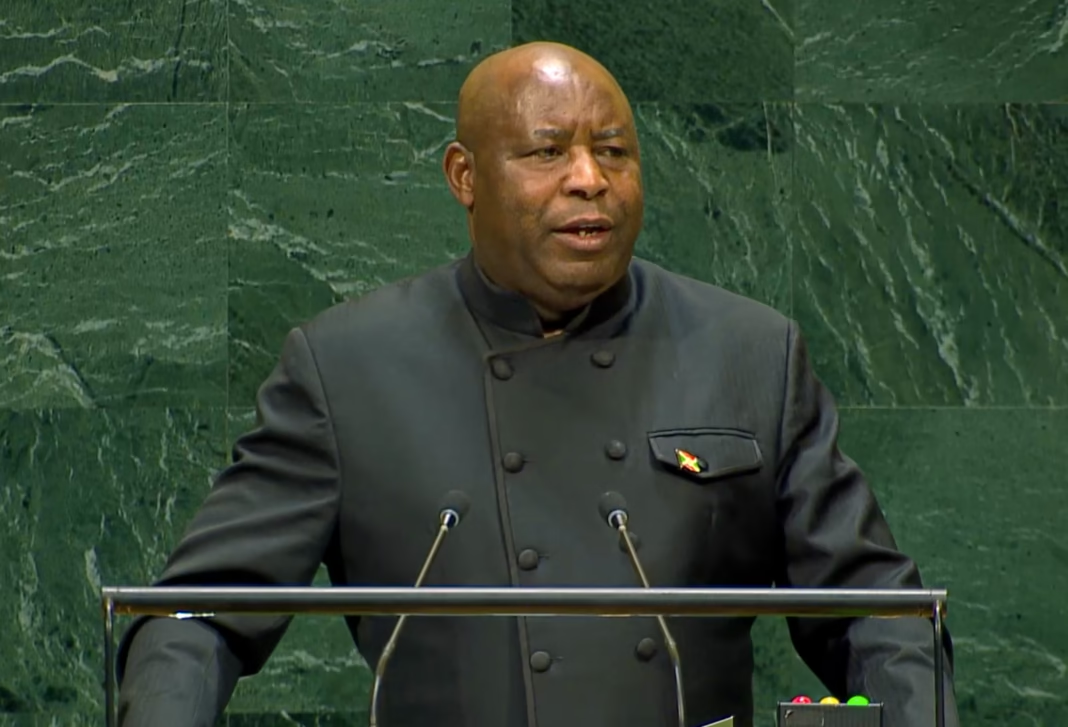
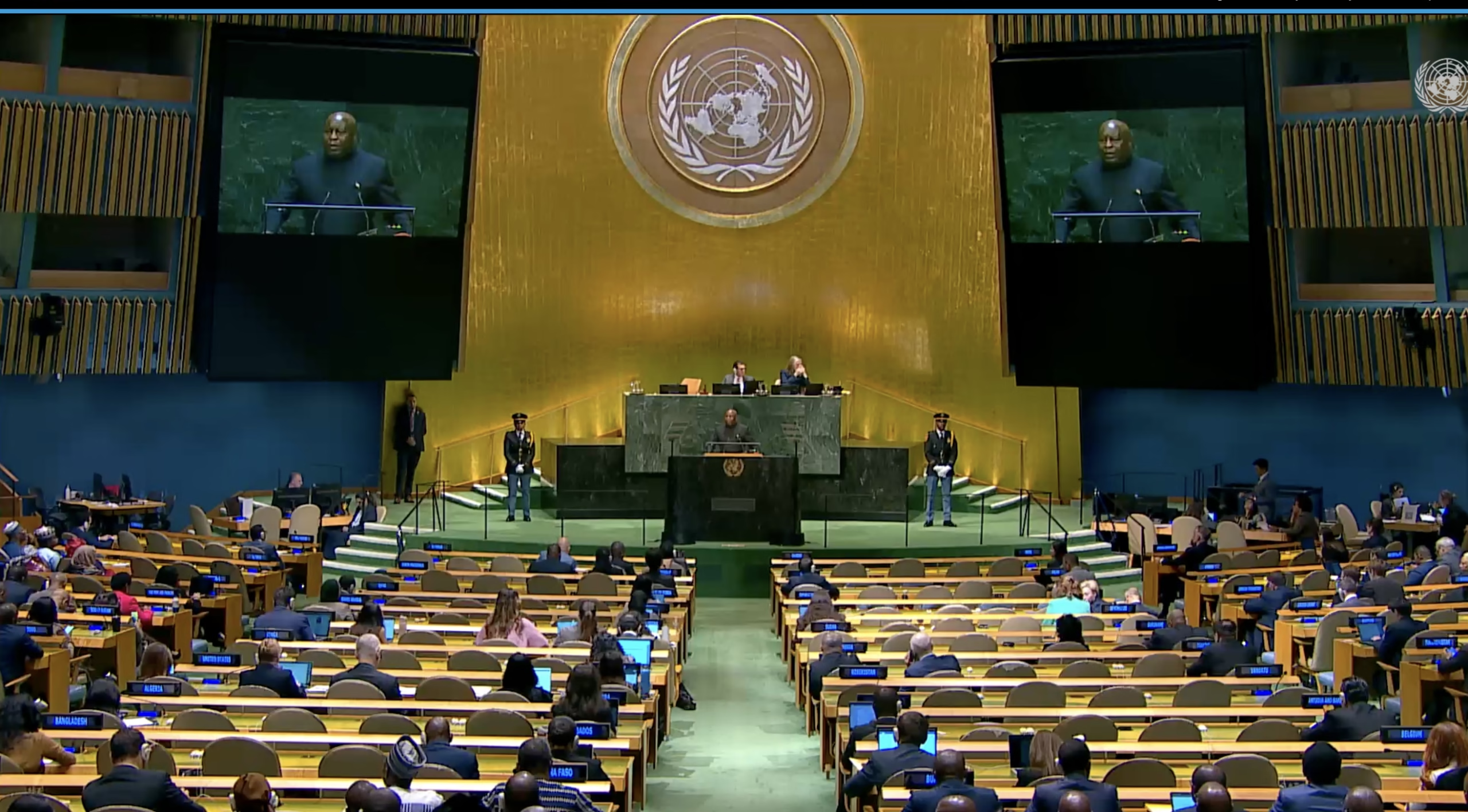

NEW YORK — Burundi President Évariste Ndayishimiye called Wednesday for permanent African representation on the U.N. Security Council, joining a growing push from the continent’s leaders to end what they describe as its exclusion from global decision-making.
Speaking at the 81st U.N. General Assembly, Ndayishimiye said Africa should be a full participant in decisions on peace and security.
“Africa intends to be a full-fledged actor and not a mere observer, called upon to applaud decisions in whose preparation it played no part,” he said. “Africa is not seeking any privileges. It is demanding justice, equity and representation.”
His remarks carry added weight because Burundi holds the African Union’s rotating chairmanship in 2026. He did not specify how many seats Africa should have or address the question of veto power, framing the issue instead as one of representation and equality.
“We therefore strongly reaffirm the need for reform of the United Nations Security Council, in order to allow for permanent African representation and more equitable participation by the continent in the international community’s decision-making mechanisms,” he said.
Ruto, Guterres echo call
Kenyan President William Ruto made a similar case at the General Assembly on the same day, arguing that the Council’s structure no longer reflects the world it is meant to represent.
“Africa has 54 member states, more than a quarter of this assembly, yet no permanent voice in the body entrusted with a primary responsibility of international peace and security,” Ruto said. “We are frequently the subject of its decisions. Permanently discussed yet permanently excluded.”
He said the current balance of power reflects the international order of 1945, not today’s.
“A continent of 54 countries and more than 1.4 billion people cannot remain at the margins of decisions central to global peace and security,” Ruto said. “This is not simply about fairness. It is about legitimacy.”
He added that “the equality proclaimed in this assembly ends at the doors of the Security Council.”
U.N. Secretary-General António Guterres also renewed his call for permanent African representation in a post on X.
“A 21st century Security Council without permanent African representation is unjust & indefensible,” he wrote.
Guterres has made the argument repeatedly this year. At the African Union summit in February, he called the absence of permanent African seats “indefensible” and said: “This is 2026, not 1946.”
Broader role, conflict concerns
Ndayishimiye said Africa should also have a bigger role in global financial and trade institutions. He linked Security Council reform to conflicts in the Great Lakes region, Sudan, the Sahel and Somalia.
“The African Union is deeply concerned by the persistence of conflicts and crises that continue to cause massive population displacements, destroy infrastructure and deprive millions of children of their right to education,” he said.
He called for stronger cooperation between the African Union and the United Nations on conflict prevention, mediation and peaceful settlement, and for more predictable financing for African-led peace operations.
The AU’s position
The African Union is seeking two permanent African seats and five additional non-permanent seats on an expanded Council. It says the new permanent members should have the same rights and privileges as existing ones, including the veto.
The Council has 15 members: five permanent members, China, France, Russia, the United Kingdom and the United States — and 10 elected by the General Assembly for two-year terms. No African country holds a permanent seat, though conflicts on the continent regularly appear on the Council’s agenda.
Reform of the Council has been debated for decades without result.