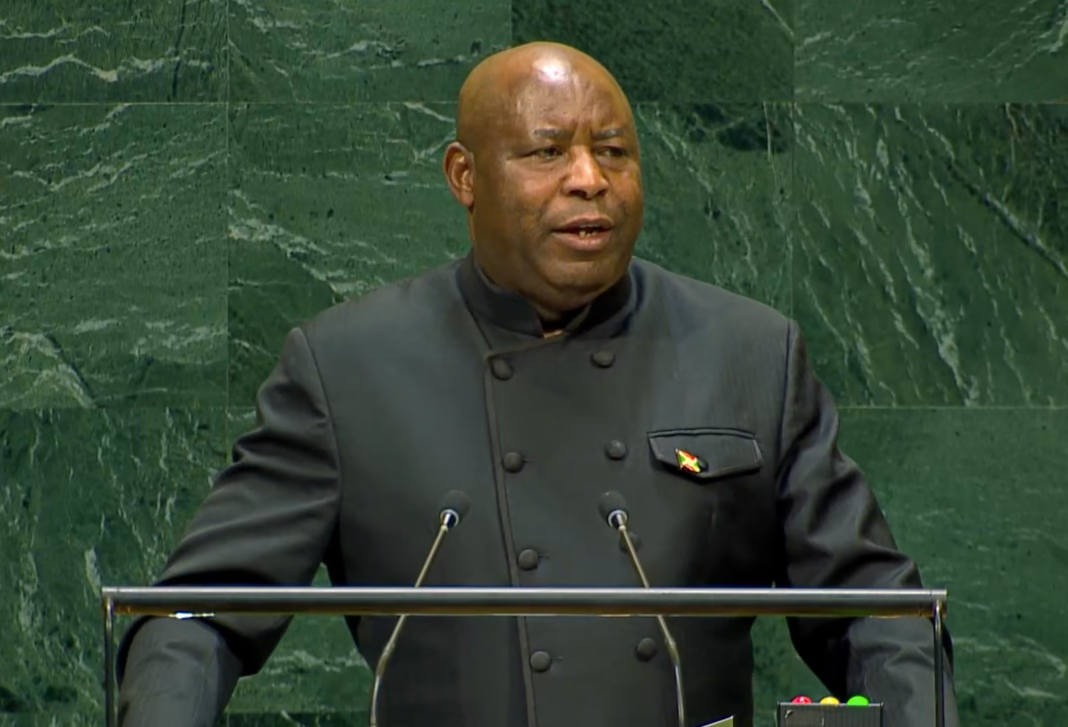

Burundian President Évariste Ndayishimiye used his address to the UN General Assembly on Wednesday to condemn xenophobia and intolerance, calling on governments to protect social cohesion as African migrants face growing hostility in parts of the continent.
Speaking at the 81st session, Ndayishimiye said some states were preventing their citizens from living alongside other peoples. “They cultivate and perpetuate xenophobia and intolerance,” he said, accusing them of sowing division by failing to take preventive and corrective measures. He did not name any country.
“How, then, can we build trust among nations without first starting with the link, connection and cohesion among our peoples?” he asked. He invoked the African concept of Ubuntu as the answer. “Ubuntu is the common denominator that must restore trust among all human beings,” he said.
Ndayishimiye holds the African Union’s rotating chairmanship this year. His remarks were part of a wider appeal for multilateralism, reform of global institutions and greater African representation.
Kenya
The speech comes as Burundians in Kenya face uncertainty after President William Ruto ordered a crackdown on foreigners running small-scale businesses. Hundreds of Burundian nationals turned to their embassy and cyber cafés in Nairobi to process documentation as scrutiny of foreigners increased.
The Kenyan government has said foreigners have a 90-day grace period to register, after which requirements will be strictly enforced. It has also said it maintains “absolute zero tolerance” toward harassment and xenophobia. Kenya’s Foreign Affairs Principal Secretary Korir Sing’oei apologised to Burundian nationals, saying the message was misunderstood and led some to face ridicule from neighbours and friends.
The African Commission on Human and Peoples’ Rights raised concern over reported attacks, intimidation and looting targeting foreign nationals’ businesses in Kenya, particularly those of Burundians. The East Africa Law Society warned that the directive could undermine confidence in East African integration. Burundi’s foreign minister, Édouard Bizimana, held the Kenyan government responsible for the lives of Burundians in Kenya, warning that Kenyan government is responsible for the lives of Burundians living in Kenya.
South Africa
In South Africa, Human Rights Watch has warned of a new wave of xenophobic attacks as anti-immigration groups such as March and March and Operation Dudula lead protests. One leading group gave undocumented immigrants until June 30 to leave the country. The UN Secretary-General said in April that he was deeply concerned by reports of xenophobic attacks and harassment of migrants in KwaZulu-Natal and Eastern Cape.
In Durban, home affairs officials removed about 400 people, mainly from the DRC, Burundi and Rwanda, who had camped outside a government office after repeated attacks. One recent commentary, citing Xenowatch, counts eight verified deaths linked to xenophobic attacks on Africans since June.
Four Burundian civil society groups had appealed to Ndayishimiye, as AU chair, to intervene over growing xenophobia and discrimination against Africans in other African countries.