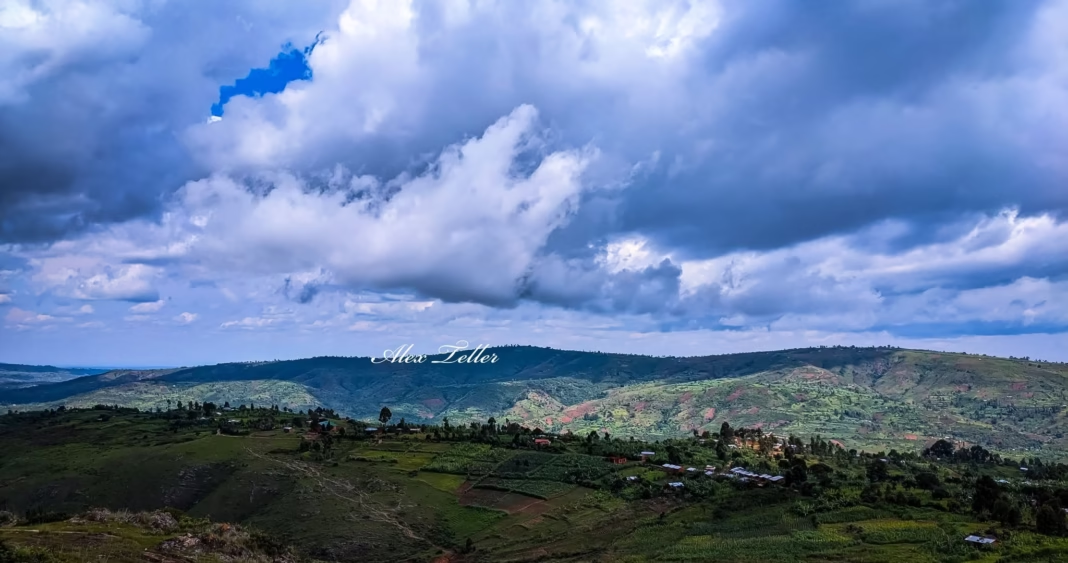

Burundi has spent years pitching its lakes, waterfalls, forests and tea plantations to the outside world. Now tourism officials are asking a more basic question: can Burundians themselves become a market for their own country’s travel industry?
The question is central to the government’s push to develop tourism as part of a broader economic diversification strategy. Tourism authorities currently promote destinations ranging from the Gishora Drum Sanctuary and Teza tea plantations to Karera Waterfalls, Nyakazu and Lake Cohoha but domestic demand for these sites remains thin.
At Burundi’s 2024 General States of Tourism, the Chamber of Commerce and Industry said the country had identified 249 tourism sites, including 123 already formally recognised among them Lake Tanganyika, Gishora, Kibira, Vyanda and Kigwena forests, Rusizi and Ruvubu national parks, and Karera Waterfalls. The chamber named weak domestic tourism as one of the sector’s major challenges.
That gap points to an opportunity: short trips taken by residents, not holidays built around foreign visitors. For someone living in Bujumbura, a weekend away might mean a relatively short trip elsewhere in the country — spending on transport, accommodation, food, guides and entrance fees that circulates among local businesses rather than leaving the country entirely.
The tourism ministry already lists encouraging domestic tourism among the responsibilities of its marketing and communications department, alongside developing tourism products, producing statistics, and working with private operators.
From attractions to experiences
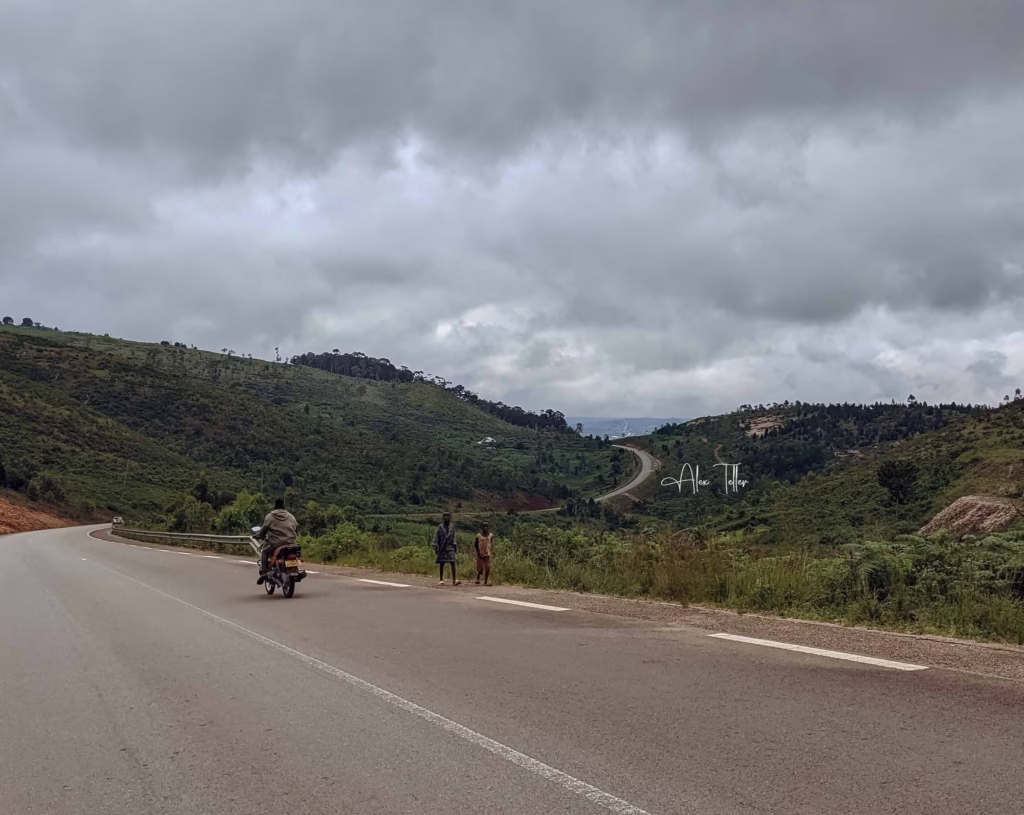
Burundi already has destinations suited to weekend travel. The Gishora Drum Sanctuary, about 7 kilometers from central Gitega, offers performances by traditional drummers and is one of the country’s best-known cultural sites. Further south, Karera Waterfalls in Rutana province offers three tiers of cascades set in forest, while the nearby Nyakazu-Nkoma area combines waterfalls, caves, wildlife and geological formations. Teza offers something different: tea plantations near Kibira forest. Lake Tanganyika and its beaches round out the government’s promotional pitch.
The harder problem is turning individual attractions into complete travel products. A weekend traveler needs more than a destination reliable transport, accommodation, food, information, guides, activities and a clear way to pay for services. Businesses, in turn, need enough visitors to justify investing in any of that. A 2024 assessment by the Burundi Press Agency, drawing on discussions at the tourism conference, pointed to limited marketing, inadequate hospitality training, weak gastronomic tourism and an underdeveloped domestic market as recurring weak points.
Tourism as a local business
The economic case for domestic tourism is straightforward: spending by residents reaches businesses that would otherwise depend on a narrow international visitor base. The World Bank has previously flagged tourism as a potential engine of inclusive growth and job creation in Burundi, with urban centers like Bujumbura positioned as hubs for accommodation, transport and other services feeding rural tourism sites.
Services now account for 51% of Burundi’s GDP — the country’s largest economic sector, ahead of agriculture at 31.6% — with the economy growing 4% in 2025. That gives tourism a role beyond hotels and marquee sites: a larger domestic market could support restaurants, transport operators, guides, cultural performers, photographers, craft producers and small accommodation businesses.
In the Burunga region, a 2024 assessment counted 177 hotels with 1,935 rooms, only three of them in the highest category. The same assessment flagged poor promotion, poorly maintained sites, under-professionalized guides and limited financial returns to local communities as weaknesses in the region’s ecotourism sector.
What would actually make Burundians travel more
Price will likely matter most. Burundi remains a low-income economy — the World Bank estimates the national poverty rate at roughly 74%, with inflation and limited job creation constraining household spending power. For domestic tourism to grow, operators need products priced for local incomes: a family weekend package priced in Burundian francs will do more than a tourism product built primarily for foreign visitors.
Accessibility matters too. In Kabezi, south of Bujumbura, the Burundi Press Agency reported in 2024 that Ku Kayange a site near Lake Tanganyika with thermal-water springs had real tourism potential but remained largely undeveloped, with residents saying few people visited. It’s a useful illustration of the broader problem: having an attraction doesn’t automatically create a market for it.
Starting small: the weekend trip
Domestic tourism in Burundi may not need to start with long or expensive vacations. The more realistic entry point is the weekend trip a family visiting a cultural site, young people heading to a waterfall, a couple spending a night near Lake Tanganyika, or a group combining Gitega with Gishora and other nearby stops. That kind of travel also lets businesses test demand before committing to larger facilities.
Burundi’s tourism authorities are already promoting the idea of exploring the country’s landscapes and cultural experiences. The open question is whether that promotion turns into regular spending by Burundians themselves — whether the industry can grow from one built mainly to attract foreign visitors into one where Burundians are customers of their own country’s tourism businesses.